Mostrando entradas con la etiqueta Sarchi costa rica. Mostrar todas las entradas

jueves, 12 de marzo de 2015

Orchid Festival 2015 opens at Else Kientzler Botanical Gardens in Costa Rica

Orchids at Else Kientzler Botanical Gardens Costa Rica

Orchids have a mystique
. A magic, beguiling beauty. Their complex patterns, colors and forms in a flower so delicate and fragile, simply boggle the senses. They are coveted like an elusive, exotic treasure, and bought, sold and traded around the world. Whole societies and organizations are dedicated to preserving these amazing beauties.

This weekend in Sarchi, Costa Rica at the Else Kientzler Botanical Gardens, you can immerse yourself in the enchanting world of orchids at their Orchid Festival 2015. The event will be held March 13, 14 and 15 from 8:00 a.m. to 4:00 p.m. at the botanical gardens, located in the artisan town of Sarchi, about an hour northwest of San Jose.

Else Kientzler Botanical Gardens Costa Rica

The setting couldn’t be prettier – 17 acres (7 hectares) of exotic botanical gardens with more than 2,000 species of exotic tropical plants from places like Guyana, New Zealand, Madagascar, Japan, the Bahamas, Java, Brazil, India, Korea, and of course Costa Rica. There are ponds, a river, and a large playground for children. Visitors can stroll two kilometers of trails; more than 40% of the gardens are wheelchair accessible.
Orchids are the largest and most diverse family of flowering plants on Earth. There are between 21,950 and 26,049 currently accepted species of Orchidaceae – more than twice the number of bird species, and about four times the number of mammal species on the planet, according to Wikipedia. Orchids are found in tropical areas on all continents except Antarctica. They are most abundant in warm rainforest-type climates.

Orchids at Else Kientzler Botanical Gardens Costa Rica

Costa Rica’s
National Flower is the purple orchid Guarianthe skinneri and you can find more than 1,400 species of orchids in Costa Rica. “Orchids flower in Costa Rica all year long,” noted Ovido Esquivel, director of the Else Kientzler Botanical Gardens. “But the majority of species flower during our summer from January to March.”

Costa Rica Orchids

At this weekend’s Orchid Festival 2015
, there will be an exposition of orchids with many rare species. Experts will be on hand to answer questions and talk about the orchids. You can buy your own orchid to take home, and learn about ways to care for your orchid at on-site orchid and gardening workshops during the festival. There will be a drama theater about the environment for families, live music and food and drink for sale. On Saturday, Mar. 14, at 1:30 p.m., folkloric dancers will have a show, and on Sunday, Mar. 15, you can join a relaxing yoga class at 9:00 a.m. on a beautiful yoga platform amid the gardens.
Admission is $10 for foreign tourists; 2,900 colones for residents; 2,200 colones for students and seniors; and 1,900 colones for children. The beautiful Costa Rica botanical gardens are open every day from 8:00 a.m. to 4:00 p.m. Guided walks are available in English, Spanish and German with advance reservations, or you can go on a self-guided tour.

Article by Shannon Farley

jueves, 5 de febrero de 2015

Sunday of Dogs and Flowers at Costa Rica botanical gardens

Canine event 2015 at Else Kientzler Botanical Garden Looking for something fun to do this Sunday? How about a day out in sunshine, fresh air and beautiful Costa Rica botanical gardens, and spend it with your best buddyyour faithful family dog.

Dogs and flowers at Else Kientzler Botanical Garden
The Else Kientzler Botanical Gardens in Sarchi, Costa Rica is hosting its second annual Canine Event – A Sunday of Dogs and Flowers – this Sunday, Feb. 8. The event will be held from 9:00 a.m. to 4:00 p.m. at the botanical gardens, located in the artisan town of Sarchi, just north of the main town center.

The setting couldn’t be prettier – 17 acres (7 hectares) of exotic gardens and ponds, a fruit tree orchard and a large playground for children. The community event will be a full day of fun for families and pets. At 9:00 a.m. there will be a 3 km walk in the gardens for dogs and owners. A “Doga” class – Yoga for humans and dogs – at 11:00 a.m. will show you how stretching and exercise is healthy both for you and your dog. The first 15 persons to attend will receive a free yoga mat.

Dog yoga Costa RicaThere will be talks on dog behavior, dog training and pet care. Lunch will be available and also live music. Local animal rescue and protection organizations will be on hand to inform people about their worthwhile programs and offer pets for adoption. Kids can get a thrill on a children’s zip-line. And at 3:00 p.m. there will be an exhibition of K-9 police dogs.

Entrance to the “Sunday of Dogs and Flowers” at Else Kientzler Botanical Gardens is 2,900 colones for adults; 2,200 colones for students and seniors; and 1,900 colones for children. For 3,500 colones, you get entrance and participation in the 3 km walk.
Post a cute photo of your dog on the Else Kientzler Botanical Garden Facebook page – “Jardín Botánico Else Kientzler” – with the hashtag ‪#‎DePerrosyFlores and you could receive free entrance tickets if chosen.

Else Kientzler Botanical Gardens Costa RicaThe beautiful Else Kientzler gardens features more than 2,000 plants and trees of Costa Rica and exotic tropical plants from around the world. Their sister company Innovaplant exports Costa Rican plants and flowers all over the planet. The gardens are open every day from 8:00 a.m. to 4:00 p.m. Guided walks are available in English, Spanish and German with advance reservations, or you can go on a self-guided tour. More than 40% of the gardens are wheelchair accessible.

Article by Shannon Farley
miércoles, 21 de enero de 2015

Flowers for export in Costa Rica

Costa Rica is indeed a gifted place! Not only has a lot to offer tourists in terms of places of interest for they to visit and enjoy, but also because it has one of the most outrageous variety of diverse agricultural, and ornamental products. One of the reasons this takes place on this natured covered part of the world is because of its rich soils and plentiful bodies of water combined with the ideal environmental conditions of weather and climate which has converted Costa Rica into an agricultural country with many options for export, retail and wholesale of organic flowers that has made them so popular and, so far, a world demand.


Agricultures and people involved in the flower export business have become very serious on this process that once a flower is being exported, during the whole process, it will retain its own and unique essence.  Costa Rica’s flowers come in all shapes, colors and sizes. Let us show you a little bit more by describing some of our most endearing treasures from our very own nature’s catalogue:

Heliconia

Found in rainforests, Heliconias are widely cultivated as ornamental flowers. It is a herbaceous plant with a simple but unique picturesque leave in different shades of yellow, red and deep orange tones growing opposite one another on non-woody petioles often longer than the leaf.

Anthurium

This bright spathed statement flower comes in a variety of shades which might include green, white, dark pink, pale pink and red . They quite extravagant and will look very elegant in a bouquet and arrangements.

Orchids

Costa Rica’s national flower comes in many colors including The most popular flower for most brides is the orchid.  Orchids come in many colors, including red, purple, fuchsia, white with yellow, white with purple, orange, green yellow, just to mention some. People have the tendency to think that due to its exuberant elegance and beauty, they may be quite expensive. Let me tell you they can be moderately too high priced, depending on season and availability.

As you can see Costa Rica keeps surprising their tourists among its own natural gardens gifted with all its wonderful creations. Visit Costa Rica and see for yourself what we are here talking about!
All of these flowers are growing in the Else Kientzler Botanical Garden in Costa Rica, and are grown for export by their business, Innovaplant.

The beautiful Costa Rica botanical garden of Else Kientzler features more than 2,000 species of exotic tropical plants from around the globe. The Else Kientzler Botanical Garden is open every day from 8:00 a.m. to 4:00 p.m. Guided walks are available in English, Spanish and German with advance reservations, or you can go on a self-guided tour.

By: Gabriela Serrano

viernes, 26 de diciembre de 2014

Bright ideas for Christmas plants from Costa Rica

To your holiday decorations this year, add some pretty Christmas plants for a living touch of good cheer. Surprisingly, many holiday plants are tropical in origin, which means that you care for them like a houseplant if you live in a cold climate.

The Else Kientzler Botanical Garden in Sarchi, Costa Rica, has several fun ideas for traditional and novel Christmas plants to decorate your home this holiday season. They recommend using decorative planters in different levels, along with hanging baskets, for Christmassy-colored plants. Or, create a small thematic “island garden” where you rotate plants that are in season. “We have a little garden at the entrance to our reception that right now is all Christmas plants,” noted Ovido Esquivel, director of the Else Kientzler Botanical Garden.  

Poinsettia Christmas tree 

Poinsettia (Euphorbia pulcherrima): Native to Mexico and Central America, the poinsettia is perhaps the most recognizable Christmas plant. In English, it is named after the first U.S. minister to Mexico, Joel Roberts Poinsett, who introduced the plant into the USA in 1825. The colored leaves on the plant – red, white, pink and dark green – look like flowers, even though they are really leaves. While in full bloom, poinsettias like semi-cool, humid locations in bright, indirect light with plenty of moisture and adequate drainage; you don’t want to drown them or have them sit in water-filled saucers, which can produce root rot. If you live in a warmer climate, you can plant your poinsettia after Christmas in a sunny area and it will grow into a shrub or small tree.

Diamond Frost 

Euphorbia Diamond Frost: This very pretty plant in the poinsettia family grows a cloud of tiny, delicate white flowers and small, rounded green leaves. “They are very beautiful to decorate the house with Christmas colors. They are easy to plant and maintain in baskets, planters and home gardens,” said Esquivel.

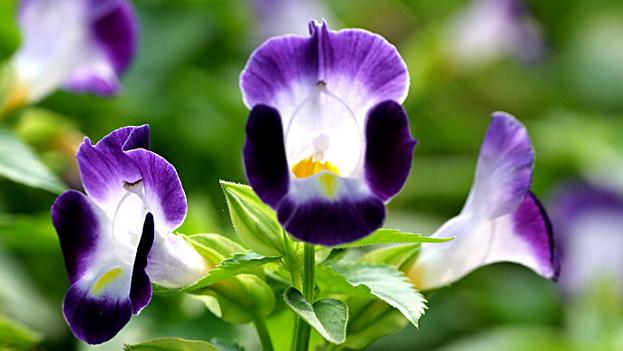
Torenia fournieri 

Torenia (torenia fournieri): Also called wishbone flower or bluewings, this beautiful flower comes in many shades of blue, rose, yellow, pink, purple or white; but most have purple blue flowers with a yellow throat. It is native to Africa and Asia and loves hot and humid weather; it grows well in semi-shade and can be put in a basket or a planter. The purple variety is good for Christmas color, noted Esquivel. He suggests planting Torenia with Euphorbia Diamond Frost for pretty Christmas colors.

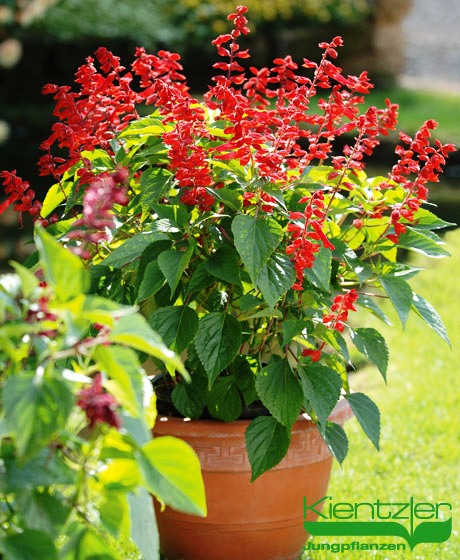
GoGo Scarlet 

GoGo Scarlet and GoGo Purple (Salvia): With bright scarlet red and bright purple flowers, these two varietals are another pretty possibility for your holiday garden. Plant them together in large stair-step planters for spectacular decoration.

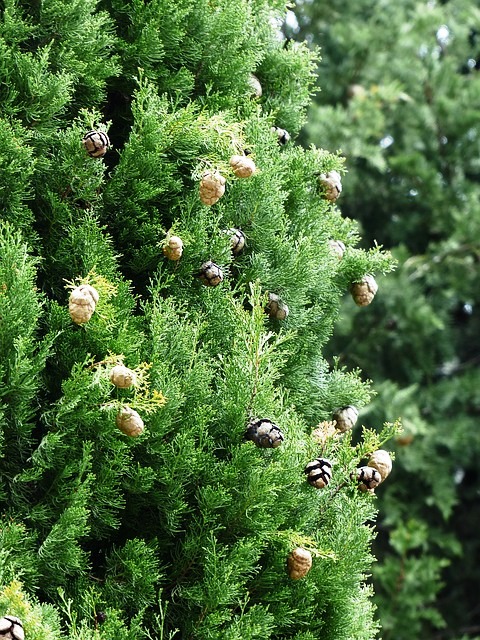
Cypress tree for Christmas 

 Mediterranean cypress tree (Cupressus sempervirens): The cypress tree is the traditional Christmas tree in Costa Rica. The evergreen conifer gives off a wonderful aroma, which fills the houses in Costa Rica from both trees and wreaths during the holidays.

All of these plants are growing in the Else Kientzler Botanical Garden in Costa Rica, and are grown for export by their business, Innovaplant. The beautiful Costa Rica botanical garden features more than 2,000 species of exotic tropical plants from around the globe. The gardens are open every day from 8:00 a.m. to 4:00 p.m. Guided walks are available in English, Spanish and German with advance reservations, or you can go on a self-guided tour.  

Article by Shannon Farley 
lunes, 1 de diciembre de 2014

Fascinating facts about plants of Costa Rica

Else Kientzler botanical gardens Costa Rica

The fascinating fact about plants and trees in Costa Rica is that each one has a story, or a folk tradition or a specific use. There is much more than meets the eye in this tropical paradise.
Ovido Esquivel, director of the Else Kientzler Botanical Garden in Sarchi, Costa Rica, uncovered the mystique of some of Costa Rica’s commonly found plants and trees, which you will more than likely see in your travels around Costa Rica.
Bougainvillea

Bougainvillea
(veranera in Spanish): Native to South America, the vibrantly-colored thorny climbing bush is a favorite plant in Costa Rica gardens, and can be found in shades from purple to fuchsia, red, pink, orange, white, and a myriad of hues in between. “People like to grow these in their gardens because they produce flowers all year long,” noted Esquivel. “In rural areas on farms, chickens use bougainvillea vines to make nests to sleep up off the ground. My grandmother had a bougainvillea and it was always full of chickens.”
Calathea lutea

Cuban cigar plant
(Bijagua in Spanish; scientific name: Calathea lutea): In Costa Rica, this plant is very popular in gardens and it also grows frequently along roadsides, especially in the Caribbean region. The Bijagua plant is so common in Costa Rica, that the town of Bijagua de Upala in northern Costa Rica is named after it. “The indigenous used the leaves to wrap their tamales and to cook fish over coals,” said Esquivel. “Field workers in Costa Rica use the leaves to wrap up their lunch in a pouch and carry it to work.”
Wandering Jew plant

Wandering Jew
(cucaracha in Spanish; scientific name: Zebrina pendula): This colorful and fast-growing plant grows wherever it touches soil. Wandering Jew can grow as a thick groundcover, or vertically on trellises or on the sides of buildings, or in hanging baskets. “Traditionally, grandmothers planted these in old buckets around the house, and used the leaves to regulate menstruation, for gastritis, or to cure cuts and skin rashes,” said Esquivel.
Walking palm

Walking Palm
(palmera maquenque or palmito amargo in Spanish; scientific name: Socratea exorrhiza): Native to Costa Rica, this palm tree produces a bitter fruit that traditionally was eaten during Easter Week, Esquivel noted. “It is very unique the wood of this tree,” he said. “It is super flexible and at the same time very hard and resistant. Indigenous people use this wood for their houses.”
Kapok tree

Kapok tree
(Ceiba in Spanish; scientific name: Ceiba pentandra): This tree is considered one of the giants of the tropics. Kapok trees can grow up to 165 feet (50 meters) tall, and are popular for their shade and quick growth. “In the indigenous culture of Central America the tree is sacred; they believe that the first humans were conceived from the Ceiba tree from the womb of the immense trunk,” Esquivel explained.
The Else Kientzler Botanical Garden in Sarchi is open every day from 8:00 a.m. to 4:00 p.m. Guided walks are available in English, Spanish and German with advance reservations, or you can go on a self-guided tour.
Article by Shannon Farley
miércoles, 5 de noviembre de 2014

Top place to go in Costa Rica: Else Kientzler Botanic Garden

Else Kientzler Botanic Garden in Sarchi Costa RicaOne of the top places to go in Costa Rica, in the Central Valley, is the spectacular Else Kientzler Botanical Garden in Sarchi, Costa Rica.
The flourishing Costa Rica botanical garden showcases more than 2,000 species of exotic tropical plants from around the globe in its 11 gardens on seven hectares (17.3 acres). The popular Costa Rica tourist attraction is located in Costa Rica’s Central Valley in the artisan town of Sarchi, just north of the main town center.
Visitors can stroll two kilometers of trails through the beautiful gardens; more than 40% of the gardens are wheelchair accessible Else Kientzler gardens are accessiblewith ramps and sidewalks.
There is a large diversity of tropical plants, from very rare plants to tall palms, succulents, orchids and trees filled with flowers and fragrance. Plants originate from Costa Rica, Guyana, New Zealand, Madagascar, Japan, the Bahamas, Java, Brazil, India, and Korea.
There is a succulents garden, a topiary labyrinth of hibiscus, a palm garden, an orchid garden, a selection of hardwood trees in danger of extinction, a garden of bromeliads that provide watery homes for frogs and flowers for hummingbirds, and a collection of Zingiberales with heliconias, Calateas, Bananas and Gingers.
An Labyrinth at Else Kientzler Botanic Gardenorchard of fruit trees and bushes produces Malay apples, blackberries, mangoes, guavas and more – visitors are permitted to pick the organic fruit and eat it. There is a large playground for children, and many ponds with aquatic plants. The River Trojas, flowing along one side of the property, adds the refreshing sound of running water. There are labels for each plant and tree giving scientific and common names.
The botanic garden has an educational nursery greenhouse and holds events such as workshops, dance performances, art exhibitions, small open-air concerts, and weddings.
Else KientzlerElse Hick Kientzler was born in Germany, and at the age of 19 began working in 1943 in the Kientzler nursery in Bad Kreuznach in the Rhineland region of southwest Germany. She fell in love with the nursery owner’s son, Ludwig Kientzler Jr., and they married in 1945. They continued working in the nursery while creating their own family with three children. When her husband suddenly died in 1960, Else had to take over running the nursery with her widowed mother-in-law. They eventually moved the successful nursery to Gensingen, Germany, where the headquarters of the Kientzler group of companies is now located.
The family company opened Innovaplant in Sarchi, Costa Rica in 1994. The agro-business exports ornamental plants around the world, and is a subsidiary of the Kientzler floriculture companies in Germany. Else Kientzler’s son, Ludwig Kientzler III, created the Costa Rica botanic garden for education and environmental conservation. When it opened on July 27, 2006, Ludwig dedicated the garden to his mother in recognition of her work. Else Kientzler passed away on Mar. 26, 2010.
The Else Kientzler Botanic Garden is open every day from 8:00 a.m. to 4:00 p.m. Guided walks are available in English, Spanish and German with advance reservations, or you can go on a self-guided tour.
Article by Shannon Farley