Mostrando entradas con la etiqueta adventure tours rincon de la vieja. Mostrar todas las entradas

lunes, 7 de diciembre de 2015

Do You Know These Fun Facts About Guanacaste Costa Rica?

Untitled Document

Rincon de la Vieja Volcano in Guanacaste Costa Rica

Guanacaste, Costa Rica is one of the most popular areas in the country and a preferred Costa Rica vacation destination. But did you know these interesting details?

Fun facts about Guanacaste, Costa Rica: 1. Try to pronounce the indigenous word “quahnacaztlan” and you will find that Guanacaste is a lot easier. The province is named after the beautiful tree indigenous to tropical areas of the Americas. Also known as the “Elephant Ear Tree” (Enterolobium cyclocarpum) for the shape of its dark brown seed pods, it was named the national tree of Costa Rica in August, 1959.

Guanacaste tree in Costa Rica

2. Guanacaste’s name actually dates back to a real tree which grew in the intersection between the roads that take you to Nicoya and Bagaces in Costa Rica, and Rivas in Nicaragua, back in the middle of the 17th century. Today, the park across from the Catholic Church of Liberia occupies the spot where the historical tree stood. 3. Known as the sunny side of Costa Rica, Guanacaste's climate is unique in the country. Guanacaste receives little rain and consistent heat from November to May, resulting in its ubiquitous tropical dry forest. The region typically records less than 130 days of rainfall annually.

Rincon de la Vieja, Guanacaste, Costa Rica

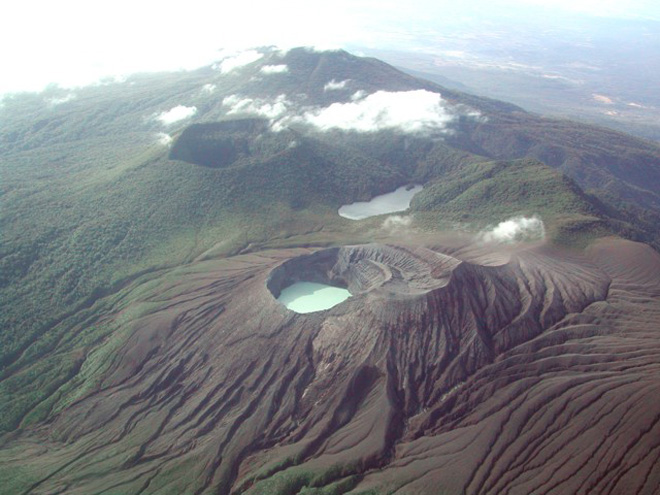
4. It may be hard to imagine, but Guanacaste was once heavily forested. Its precious hardwoods were cut down to satisfy great demands for export. The result left rolling savannah grasslands and contributes greatly to the region’s sparse rainfall. 5. The largest and most active volcano in Guanacaste is Rincón de la Vieja. At 6,286 feet (1,916 meters) high and 15 kilometers (9 miles) wide, the approximately 9,000-year-old caldera is called the “Colossus of Guanacaste”. The giant bridges the Continental Divide with at least nine contiguous craters. Its last big eruption was in 1998. Rincón de la Vieja means “Corner of the Old Woman after an indigenous legend about a girl whose lover was thrown into the crater by her father; she became a recluse living on the mountain, and was known as being a healer.

Rincon de la Vieja Volcano and Santa Maria crater

6. The first humans came to what is now Costa Rica thousands of years before Europeans arrived in the Americas. A tribe known as the Chorotegas migrated south from Mexico to Guanacaste in about 900 AD. They lived along the coast and Nicoya Peninsula. Archaeological findings show that a different people – probably who spoke a Chibchan language – lived in the interior of Guanacaste from about 10,000 BC.

Chorotega indigenous people in Costa Rica

7. Most of the population in Guanacaste descends from a mix of indigenous peoples and Spaniards, with a significant African influence from a large number of slaves during the Spanish colonial period. 8. Ever wonder what the Costa Rican holiday of Guanacaste Day is all about? During colonial times, Guanacaste was not part of Costa Rica. Inhabitants of the territory chose to annex to Costa Rica rather than Nicaragua on July 25, 1824 and the country celebrates that event every year.

Guanacaste Costa Rica

9. Cattle ranching, of Brahman cattle and related breeds, was historically the main source of income in Guanacaste. For the past two decades, tourism has become the top economic activity. 10. Guanacaste’s famous cowboys are called “Sabaneros”, which literally translated, means “Savannah Dweller” for the grasslands found here.

Guanacaste cowboy rides off into the sunset in Costa Rica

Discover Guanacaste, Costa Rica

Take the archaeology tour at Hotel Hacienda Guachipelin to learn more about Guanacaste history and the indigenous peoples who lived near the massive Rincon de la Vieja Volcano. More than 14 archaeological sites – mostly cemeteries, petroglyphs and tomb markers – have been found around Hacienda Guachipelin, dating from about 300 to 800 AD.

Archaeology Tour at Hotel Hacienda Guachipelin in Guanacaste Costa Rica

Hotel Hacienda Guachipelín is an ideal place to experience authentic Guanacaste culture and enjoy an active vacation at Rincón de la Vieja Volcano. The ecotourism hotel has the best Costa Rica adventure tours. Hotel Hacienda Guachipelín is located 15.5 miles (25 km) northeast of Guanacaste’s main city of Liberia by the Pailas section of the Rincon de la Vieja Volcano.

Article by Shannon Farley

lunes, 23 de noviembre de 2015

Top Costa Rica Canopy Zip Line Tour At Hotel Hacienda Guachipelin

Untitled Document

Canyon Canopy Tour at Hotel Hacienda Guachipelin in Costa Rica

Ever since the first commercial canopy zip line tour came into being in Costa Rica in 1997, the zip line industry has soared quickly into big business with dozens of zip lines all over the country and across the world. I recently took a friend, who is a bit of an anomaly, on her first-ever Costa Rica canopy zip line tour. She is an anomaly because after more than 15 years of living in Costa Rica, she had never experienced a zip line tour – quite difficult to do given zip lines’ popularity in Costa Rica.

Hacienda Guachipelin canopy tour in Costa Rica

Zip lines are probably the all-time favorite adventure tour in Costa Rica for visiting tourists. There are dozens of zip line tours – more often called “canopy zip line tours” or simply “canopy tours” – all over the country. We were at the Canyon Canopy Tour at Hotel Hacienda Guachipelin by the Rincon de la Vieja Volcano in the northwestern province of Guanacaste, Costa Rica. Designed and built by a long-time friend of mine, Costa Rican architect Jose Manuel Pizarro, owner of the Costa Rica zip line design and vertical training company, Linea Vertical, the one-of-a-kind canopy zip line tour in Costa Rica began operating at Hotel Hacienda Guachipelin in 2000. Besides being incredibly fun and full of adrenaline-charged moments, the distinctive factor about the Canyon Canopy Tour is that it has so much more than zip lines. You get to fly high above the treetops and back and forth between narrow canyon walls over the White River (Rio Blanco) on seven zip lines. You get to cross three hanging bridges and have fun on two Tarzan swings. There is a controlled 20-meter (65-foot) rappel, and two routes on a natural rock climbing wall to come back up those same 20 meters. And finally, there are three via ferrata traverses and climbs. Overall, you will travel to 21 platforms on the whole tour, which takes about 90 minutes to two hours to complete.

Hacienda Guachipelin canopy tour in Costa Rica

The spectacular setting alone is worth going on the tour. You are deep in the dry tropical forest – a unique ecosystem in Central America – by the Rincon de la Vieja Volcano. The tour starts off with the longest zip line, crossing a wide canyon high above the trees. A couple more zip lines later and now suddenly you are in a narrow, densely forested, rock canyon above the rushing White River. Simply beautiful!

After initial trepidation, my friend loved the tour and said she’d do it again! For me, it has become one of my favorite canopy tours in Costa Rica.

Hacienda Guachipelin canopy tour in Costa Rica

Hacienda Guachipelin’s Adventure Center operates some of the best adventure tours in Guanacaste, Costa Rica. The Adventure Center is open seven days a week from 8:00 a.m. to 5:00 p.m. for both hotel guests and day visitors. Besides the zip line tour, you can go horseback riding, river tubing, waterfall rappelling, mountain biking, hiking in the Rincon de la Vieja Volcano National Park, and soak in natural volcanic hot springs. For the best day of Costa Rica adventure tours, get the One Day Adventure Pass, which includes four tours and a delicious lunch.

Hotel Hacienda Guachipelin

Hotel Hacienda Guachipelin at Rincon de la Vieja Volcano

At the base of the Rincon de la Vieja Volcano in Guanacaste, Costa Rica, Hacienda Guachipelin is an award-winning eco-hotel on a 3,400-acre ranch. It is an idyllic setting of waterfalls and natural hot springs in distinctive dry tropical forest. The hotel is 15.5 miles (25 km) northeast of Guanacaste’s main city of Liberia. A Little History of Zip Lines Zip lines were first invented in Costa Rica. Back in 1974, U.S. resident and California State University, Northridge graduate student, Donald Perry, pioneered the new method for climbing into and moving around the Costa Rica rainforest canopy, the world’s most complex living community, for his field work. It is in the tree canopy where upwards of 40 percent of all life on earth exists. Perry used a crossbow to shoot a rope into the branches of a 120-foot tree in the Osa Peninsula, and then climbed it using mountaineering ascenders. He later strung webs of ropes and pulleys between trees to move freely in the canopy without having to return to the ground. You can read about Perry’s adventures in his book, “Life Above the Jungle Floor,” published in 1986. This led to the invention of the commercial canopy tour — a billion-dollar industry that has been reproduced all over the world. The first commercial canopy zip line tour came into being in Costa Rica in 1997 – the Original Canopy Tour in Monteverde. Article by Shannon Farley
lunes, 25 de noviembre de 2013

Go for the Guanacaste cowboy life at Hacienda Guachipelin.

It is said in Costa Rica that the best "all-terrain vehicle" for navigating the country is a horse. Costa Ricans love horses and their riding traditions – their equestrian roots coming from the Spanish who brought horses with them to Central America in the 16th century.

Guanacaste cowboy rides off into the sunset in Costa RicaThe northwestern province of Guanacaste is the heart and soul of Costa Rica's equestrian life. Here, vast rolling plains, towering volcanoes and mountains, and a sunny, dry and hot climate of the dry tropical forest create perfect ranching conditions. For generations, Guanacaste has been dedicated to working the land, and cattle and horse ranching. Even though the region's main economic activity is now tourism, the traditions of "sabanero" (cowboy) folklore, customs, music and dance are deeply rooted.

In the golden savanna at the base of the Rincon de la Vieja Volcano, Hacienda Guachipelin Hotel is a working horse and cattle ranch, in addition to being an active eco-tourism hotel. In the 19th century, the immense Hacienda ranch once stretched from the tip of the Rincón de la Vieja Volcano all the way to the Pacific Ocean. Since 1975, Tomás Batalla Esquivel, a renowned cattle rancher and purebred Spanish horse breeder, has been keeping the ranching legacy alive with his family.

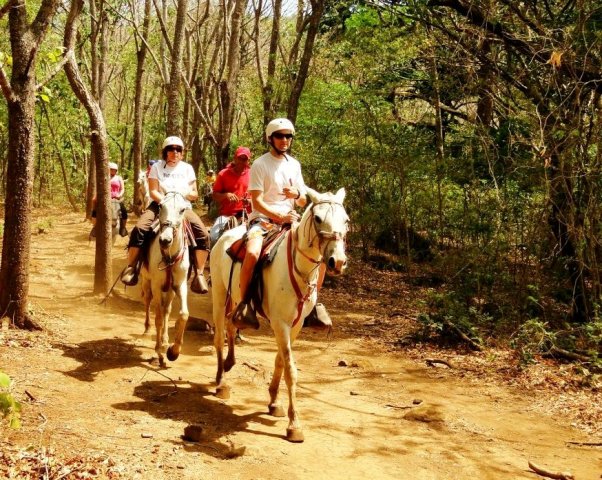
Horse riding through the forest at Rincon de la ViejaToday, the property measures nearly 3,400 acres and includes conservation areas for tropical dry forest and endangered native tree species. Hacienda Guachipelin offers seven different horseback riding tours riding the trusty ranch horses on scenic forest trails to the Rincon de la Vieja National Park or waterfalls or natural thermal springs. There is even a "Cowboy for a Day" tour, where you help out the real ranch cowboys in the stables and corral, milk cows, saddle and ready the horses, and ride out to herd cattle or other horses.


For an authentic experience of Guanacaste culture, and an active vacation at the Rincón de la Vieja Volcano, Hacienda Guachipelín Hotel is an ideal place to stay. The first-class ecotourism lodge offers thrilling canopy ziplines, canyoning, waterfall rappelling, river tubing, horseback riding, nature trails, mountain biking and thermal springs.

Article by Shannon Farley
jueves, 29 de agosto de 2013

Costa Rica’s next clean energy solution?

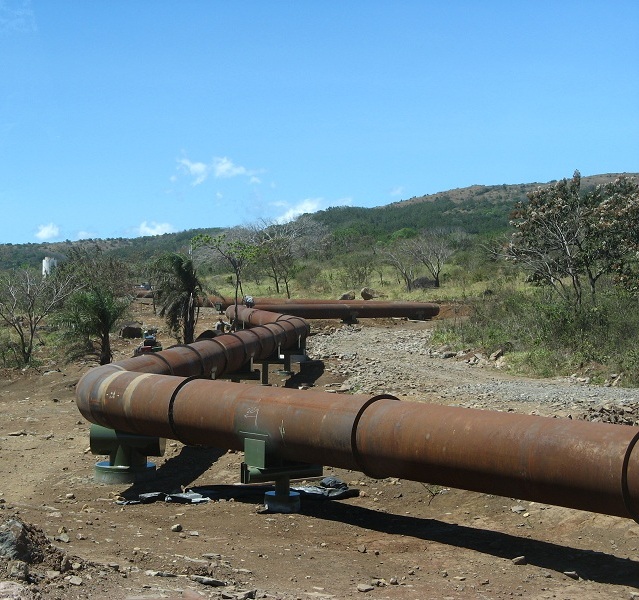
Piping for geothermal energy snake through dry forest around Rincon de la Vieja VolcanoLong, fat, round pipes in dark brown and off-white snake along the rust red ground through the underbrush. They remind me of giant worms from some prehistoric setting … though not quite like that terrible 1990 movie Tremors.

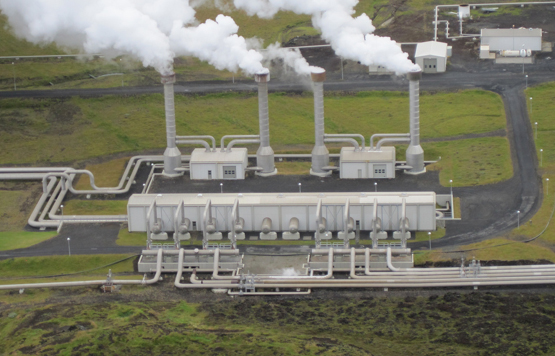
The pipes belong to the Pailas Geothermal Power Plant at the Rincón de la Vieja Volcano in Costa Rica's northwestern Guanacaste region. As the world investigates alternative energy solutions that are sustainable and not harmful to the environment, Costa Rica is actively exploring its own clean energy options.

The small Central American nation currently produces more than 90% of its electricity from renewable sources, mostly hydroelectric projects. However, hydroelectric power is weather-dependent, and during the driest months of summer it is stretched to its limits when water reserves are low. Wind turbine technology is being installed in many places as one solution. The Ad Astra Rocket Company, founded by famous Costa Rican astronaut and scientist Franklin Chang, in Liberia, Guanacaste, is researching the possibility to extract hydrogen from water also to produce renewable energy.

Geothermal electric plants in Costa RicaCosta Rica has a plentiful resource however that is largely untapped – volcanic geothermal energy. Geothermal power uses underground steam from volcanoes. The energy is harnessed by drawing hot water and steam from within the Earth's crust, and then cooling it to move power turbines. An advantage of geothermal power is that it is continuously generated, and not dependent on weather conditions.

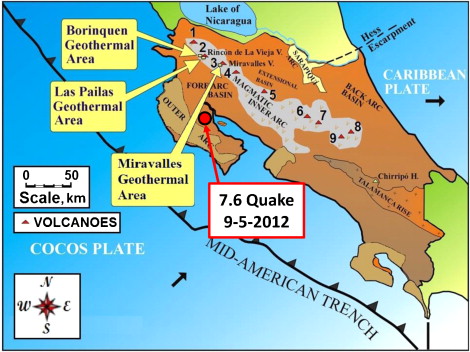
Being on the Pacific "Ring of Fire," Costa Rica is bursting with volcanoes. So far, the North Volcanic Mountain Ridge in Guanacaste has been the ideal region for geothermal power generation, with its Rincón de la Vieja, Miravalles and Tenorio volcanoes. The Miravalles Geothermal Field, which consists of five plants, produces nearly 14% of the National Electrical System's (SEN) capacity; it opened in 1994.

Las Pailas geothermal energy plant at Rincon de la Vieja Volcano, Costa RicaThe Pailas Geothermal Power Plant opened in July 2011 just outside the Pailas section of the Rincón de la Vieja National Park. The 600,000-year-old Rincón de La Vieja Volcano is the largest volcano in Costa Rica's northwest region. "Pailas" means cauldrons, and a hike in the national park will show you why this area is so popular for geothermal energy; steam pours out of fumaroles, sulfur lagoons boil with minerals, and volcanic mud pits bubble and spit.


At present, Costa Rica's Legislative Assembly is debating a bill that would allow exploration and production of geothermal energy inside the Rincón de la Vieja National Park. Costa Rica has a law that prohibits the extraction of resources from national parks, so lawmakers would either have to modify park boundaries and add territory somewhere else to compensate, or reform the National Parks Law.

Rincon de la Vieja Volcano and Santa Maria craterConservationists and officials with the Costa Rica Electricity Institute (ICE) are working to implement environmental considerations to plans for the geothermal plant to minimize impact. While Costa Rica's volcanoes are a huge wellspring for geothermal energy, most are located within national parks, which were created to protect natural resources. For instance, the 11,000-hectare Rincón de la Vieja National Park and the neighboring Guanacaste Conservation Area have been declared a "World Heritage Site" by the United Nations. It will be a big step forward for Costa Rica if the country can create better sustainable clean energy solutions while at the same time protect the natural resources it has worked so hard to preserve.
Visit Rincón de la Vieja

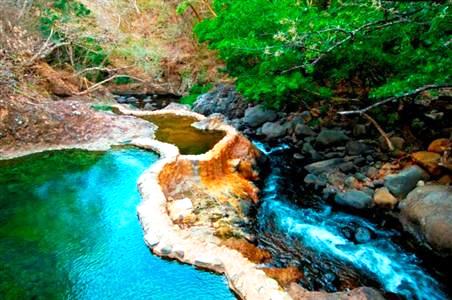
Natural volcanic thermal springs at Hotel Hacienda GuachipelinHotel Hacienda Guachipelín is the ideal place to stay when visiting Rincón de la Vieja Volcano. The first-class ecotourism lodge is a leading adventure and nature tours center, offering canopy zip lines, canyoning, waterfall rappelling, river tubing, horseback riding, nature trails, and natural thermal springs – all on a working horse and cattle ranch.

Hacienda Guachipelín offers guided hikes in the Pailas section of the Rincón de la Vieja National Park; you will visit the outside of the Pailas Geothermal Power Plant on this tour.