Mostrando entradas con la etiqueta manuel antonio. Mostrar todas las entradas

lunes, 21 de septiembre de 2015

Cute baby sloths in Costa Rica feature in PBS and BBC program

Cute baby sloths in Costa Rica feature in PBS and BBC program Sloth baby being weighed in plastic basket Costa Rica Credit Sam Trull 2014
Baby animals are cute, there’s no denying it. And what could be cuter than baby sloths?
The cute and cuddly sloths of Costa Rica will once again feature in international television and online programming. The award-winning production Nature will air a two-part program called Nature’s Miracle Orphans on PBS on September 23 and 30, 2015 at 8:00 p.m. (ET). After each broadcast, the episode will be available for online streaming at pbs.org/nature. Nature is a production of THIRTEEN Productions LLC for WNET. Nature’s Miracle Orphans is a BBC Production. The series has been consistently among the most-watched primetime series on public television in the USA.
Sloth babies two-toed hugging. Credit Sam Trull 2014
The show tells the story of orphaned baby sloths at The Sloth Institute Costa Rica (SICR) in Manuel Antonio, run by Sam Trull, who is “dedicated to helping one of the most charismatic animals in Costa Rica, the sloth.” The Sloth Institute collaborates with the nonprofit organization Kids Saving the Rainforest in Manuel Antonio, Costa Rica, for sloth rescue, rehabilitation and release. In the episodes, storylines follow “Newbie”, a baby three-toed female sloth that has been battling pneumonia since her rescue, a condition Trull thinks may have been triggered by the stress of losing her mother. “In the wild, Newbie would have spent nine months clinging to her mother for comfort and security, feeding on her milk and learning what to eat. The tasks of feeding Newbie and showing her what foods to eat now fall to Trull as surrogate mother,” show information explains. Another sloth in the limelight is “Pelota”, a two-toed female sloth that Trull is preparing to release back into the wild, and so must teach her to climb, swim, and spend nights outside alone.
Sloth Newbie the baby female three-toed sloth in Costa Rica. Credit Sam Trull 2014
The PBS documentary Nature’s Miracle Orphans also follows the stories of koalas, wallabies, kangaroos and fruit bats in Australia as they cope with survival without parents, and learning the life skills needed to survive back in the wild from their rescuers.
Sloths in Costa Rica have become famous, and are one of the most sought-after animals to see by travelers visiting Costa Rica. Animal Planet featured rescued sloths at the Sloth Sanctuary of Costa Rica, on the southern Caribbean Coast, in several shows in 2014 – “Meet the Sloths” and “Sloth Week”. The Costa Rica Tourism Board also promotes sloths in its tourism campaigns to Costa Rica.
See sloths in the wild in Costa Rica
Sloth at Portasol Rainforest in Costa Rica
The private rainforest reserve and 1,335 acres of protected land at Portasol Rainforest & Ocean View Living eco-development, just south of Manuel Antonio, is a great place to see sloths in the Costa Rica jungle.
Portasol has Costa Rica vacation rentals and Costa Rica property for sale in a sustainable community. You can stay on the rainforest property for a vacation and enjoy Portasol’s trails and waterfalls, or take a wildlife day tour with Bushmaster Adventures.
Sloth mother and baby at Portasol Rainforest in Costa Rica
Portasol’s location is ideal – between Manuel Antonio National Park and the Ballena National Marine Park on Costa Rica’s Central Pacific Coast. The beautiful uncrowded beaches of Playa Linda and Playa Matapalo are a few miles away. Portasol Rainforest & Ocean View Living appears in the new 2015 Hollywood movie After Words, with Marcia Gay Harden and Oscar Jaenada that was filmed in Costa Rica.
Whale watching in Costa Rica
NOW in September and October
Whales in southern Costa Rica
See the annual migration of southern Pacific Humpback Whales to the Ballena National Marine Park in southern Costa Rica now in September and October. Portasol Rainforest & Ocean View Living is offering a special promotion during Costa Rica whale watching season 2015. Stay two nights at the Costa Rica sustainable community, with full breakfast included, and receive a whale-watching tour for two persons with transportation from Portasol to the Ballena National Marine Park.
Article by Shannon Farley

lunes, 29 de julio de 2013

It's sea turtle season at Matapalo Beach, Costa Rica

Olive Ridley Sea Turtle arriving to nest on Matapalo Beach, Costa Rica
We set out down the beach under a leaden sky stuffed with clouds. It was 8:00 at night, close to my bedtime (I know, I'm on Costa Rica "country" time). At first it was hard to see, with the nearly full moon sliding in and out of clouds; but soon our eyes adjusted to the dimness. A light mist began to dust us, and not a soul stirred nearby.
We were on sea turtle patrol.

Five of us were decked out in dark colors to blend with the night. Sea turtles don't like bright lights – and, ergo, light-colored clothes – which distract and possibly dissuade them from coming ashore to lay their eggs. Cell phones on low ring, and backpacks and water bottles in hand, we started along the smooth, dark sand for a 6 km reconnaissance of Matapalo Beach.

Matapalo Beach, Central Pacific Coast, Costa RicaThe long, tree-lined Matapalo Beach is halfway between Manuel Antonio to the north and Dominical to the south on Costa Rica's Central Pacific Coast. There is nothing here but a small community, unspoiled beach, and the Matapalo Beach Sea Turtle Conservation Project. Run by the non-governmental, not-for-profit Association of Volunteers for Service in Protected Areas in Costa Rica (ASVO), the project protects Matapalo Beach for the three species of endangered sea turtles that come here to lay their eggs.

Sea Turtle nesting beaches in Costa RicaBeing in the tropics, Costa Rica's Caribbean and Pacific Coasts are a major breeding, nesting and hatching ground for five of the world's sea turtle species, all of which are endangered – Green Turtles (Chelonia mydas), Leatherback (Dermochelys coriacea), Hawksbill (Eretmochelys imbricata), Pacific Black Turtle (Chelonia mydas agassizi), and Olive Ridley Turtles (Lepidochelys olivacea).
The Sea Turtle Conservation Project began in Matapalo in the 1990s. In 2005, ASVO took over and used its large volunteer base, in the form of college students from both Costa Rica and abroad, to grow the project.
Every year from June 1 to the beginning of December, several hundred Olive Ridley, Hawksbill and Pacific Black turtles come to Matapalo Beach to nest. The peak arrival time is from August to October. Only female sea turtles return to the beaches where they hatched; male turtles never return to shore.

An Olive Ridley turtle prepares to lay its eggs at Matapalo Beach, Costa RicaOn patrol, we were watching for any movement or tell-tale tracks across the sand that signal the presence of a sea turtle laying her eggs. We also were watching for the possibility of poachers coming to steal turtle eggs or kill the turtles, though that isn't as frequent at Matapalo as it is on Costa Rica's Caribbean Coast, assured Daniel Segura, head of the Matapalo Sea Turtle Conservation Project. "Here people don't kill turtles for meat. Sometimes people steal eggs, but we have excellent relations with the Coast Guard and the community here," Segura said. Turtle eggs are thought to be an aphrodisiac and are stolen for consumption and sale.

Sea turtles in the world are threatened by poachers, pollution in the water including plastics, fishing lines (causing entanglement and drowning) from shrimp nets and long-line fishing, the loss of habitat due to beach development, and global warming causing the sea water temperature to rise. Last year, volunteers at Matapalo found 20 dead turtles.

Turtle nursery at the Matapalo Beach Sea Turtle Conservation ProjectProject volunteers patrol 5.4km of Matapalo Beach every night during turtle season; they monitor the turtle hatchery 24 hours a day, and do beach clean-up. When a nest is found, volunteers wait for the sea turtle to return to the ocean, and then recover the eggs carefully in plastic bags to bring them to the hatchery to be safe from predators. Incubation lasts from 45 to 60 days and a nest will have from 80 to 150 eggs. Female turtles lay two to three nests per season.

Around 80 to 100 baby turtles hatch from the average nest. However, only one in 1,000 sea turtles survives to adulthood. On average, turtles live to about 50 or 60 years. According to ASVO data, they have freed tens of thousands of baby turtles over the years. To celebrate the turtle project and baby hatching, an annual Turtle Festival is held on Matapalo Beach in late November with music, food, parades, surfing contests and a small fair.

Volunteering:

Volunteer gathers sea turtle eggs to bring to the hatchery at Matapalo BeachVolunteers come from all over the world to help at the Matapalo Beach Turtle Conservation Project. The night I was visiting, there were 46 volunteers in house – from the USA, Canada, England, Spain, New Zealand, Belgium, Colombia, Venezuela, and Costa Rica. There is space for 60 volunteers. Help is needed in the turtle nursery, patrolling the beach, beach clean-up, and teaching turtle conservation to schoolchildren and the community. Volunteers stay from one week to six months (or longer). Corporate groups from Costa Rica are welcome for weekend volunteer projects.

Turtle Tours:

There are two tours. One involves an educational talk and turtle release, depending on whether there are births in the nursery. The other is an educational talk and patrol, where visitors walk a sector of the beach with a guide to hopefully see a turtle nesting. Tour groups can be from two to seven persons.
Tour cost is $25 per person; three or more in a group and the price lowers to $20 each. All funds go directly to the turtle project.

Turtle babies heading to the sea in Costa RicaWhat to bring: Wear dark-colored clothes apt for walking the beach at night and comfortable shoes. Bring a water bottle, small flashlight (can only be used on the road to get to the beach and not out on the sand), and camera (no flash allowed). No smoking or perfumes allowed – turtles have a sensitive sense of smell and can be repelled by strong scents.

Where to stay in the area:
Stay 5 minutes away from Matapalo Beach in pristine rainforest at Portasol Rainforest & Ocean View Community. The sustainable residential community has vacation rentals and properties for sale. Its 1,300 acres offer private trails in the jungle, rivers, waterfalls with natural pools, comfortable lodging, and spa services.

Portasol is a key supporter of the Matapalo Beach Sea Turtle Conservation Project. Said Portasol owner Guillermo Piedra about the project's tour: "Offering this tour is very important for our guests to inform them about the importance of preserving endangered species and their significance to the environment. The Matapalo Project is aligned with our community work and our mission and vision to work toward a better world."

By Shannon Farley

Esperanza animal

El pasado 24 de abril fue publicada en el diario oficial La Gaceta la nueva Ley de Conservación de Vida Silvestre. Con ella se declaró ilegal y penalizada la cacería deportiva en el país.
Fue un hecho histórico, puesto que por primera vez el Congreso aprobó una ley que no fue colocada en la corriente legislativa por diputados o por el Poder Ejecutivo.
Dentro de ella se incluyen diversas sanciones. Por ejemplo, impone una de hasta ¢1,5 millones a quien cace animales silvestres, sin que medie el principio de subsistencia. Además incluye penas de hasta ¢900.000 por el tráfico de especies. Otro punto innovador fue la ampliación de su cobertura tanto a especies marinas como continentales.

No obstante lo anterior, sigue habiendo casos de maltrato animal. Recién el sábado 20 de junio, el diario local La Nación reportaba acerca de la gran cantidad de especies amenazadas por la negligencia de las personas.
Y es que la crueldad hacia estos seres es común en todas partes sin importar la prohibición. Por eso, independientemente del lugar donde vivan –en la selva o en los hogares– el maltrato es el factor común. Este se presenta en varias formas: desde la agresión directa hasta la desnutrición de las mascotas. Más allá de la forma en que se manifiesta, igual se la considera como violencia.
En cualquier caso, lo importante es tomar cartas en el asunto. El apoyo de la ciudadanía es imprescindible para detener este flagelo. Existen pequeñas acciones que todos podemos llevar a cabo para encontrar una solución a dicha problemática.

Voluntariado con grupos de rescate y refugios locales.
Aunque sea difícil de creer, usted hace una gran diferencia en el bienestar de los animales cuando se convierte en voluntario. No hace falta que dedique todo su tiempo a ello: con un par de horas al mes será suficiente. Por ejemplo, al estar en centros de acogida temporales, los perros y gatos presentan problemas de socialización. Los períodos largos sin contacto con humanos disminuyen las posibilidades de ser adoptados. De no ser por los voluntarios, sería imposible que los pequeños encuentren un hogar nuevo y apropiado.
En general también hay solicitudes de ayuda por parte de grupos de rescate. Su ayuda puede emplearse de maneras diversas. Las mascotas necesitan «guardaespaldas» o patrocinadores. Esta es una versión ideal para quienes desean invertir parte de sus ingresos en la protección natural. De nuevo, unos pocos minutos al mes pueden mejorar enormemente la calidad de vida de estos animales.

Comprométase y edúquese.
Como quedó en evidencia al principio de este artículo, la ciudadanía se ha implicado en el tema. En ese sentido, hay movimientos locales con los que uno puede involucrarse. Existen muchos motivos para contar con su apoyo y entusiasmo. Puede ayudar incluso promoviendo medidas disciplinarias más estrictas con los infractores. El punto fundamental es que enfrentar el maltrato animal es una batalla que vale la pena librar.
Ame a sus mascotas.

Al hablar de animales o mascotas deténgase un momento. ¿Cuántos programas de televisión ha visto en Animal Planet o en otros canales al respecto? ¿Cuántas personas tienen excelentes intenciones pero están desubicadas al atenderlos? Podemos ver un gran escaparate de las tragedias que enfrentan estos seres debido a la ignorancia de sus amos. Aquellos no se han informado sobre los cuidados que se requieren. Los animales tienen necesidad de afecto y amor, además de ejercicio; entre otros.

Todo lo anterior facilita la buena relación entre el hombre y la naturaleza. En ese sentido, existen empresas que han emprendido ese camino hacia el equilibrio entre ambas partes. Un caso de éxito es Portasol, que se ha avocado a la protección del medio ambiente. Sus iniciativas de responsabilidad social van más allá de la mera preservación natural. También buscan el desarrollo humano integral por medio de programas sociales y educativos. Visite el Pacífico central costarricense para que viva en primera persona esta experiencia tan especial.

martes, 19 de febrero de 2013

Water activities rule at top Costa Rica beach, Manuel Antonio

Dazzling white sandy beaches backed by tropical rainforest, shimmering tropical-warm blue-green water, fresh ocean breezes, and a diverse array of wildlife – Manuel Antonio is one of Costa Rica’s most popular beach destinations. Conveniently located on Costa Rica’s Central Pacific Coast, here you can experience nearly all of the country’s enchanting attractions in one place. There is little that the Quepos/Manuel Antonio area does not offer tourists, from top beaches to lush rainforest, abundant wildlife, wild rivers, mangrove estuaries and the famous Manuel Antonio National Park.

Abundant marine life make Manuel Antonio a fun place for ocean activities

The pristine sparkling waters of the Pacific Ocean along this stretch of Costa Rica coastline make for an enormous “playground” of nature and adventure activities. So too do the big, wild rivers of the nearby Savegre and Naranjo, and the mysterious tangled mangrove waterways of the Damas Island Estuary.

Water activities in Manuel Antonio lead the way for the top things to do in the Manuel Antonio area. Here’s our top 10 list for water adventures to enjoy during your stay in the Manuel Antonio area.

River and Estuary Adventures
Whitewater Rafting
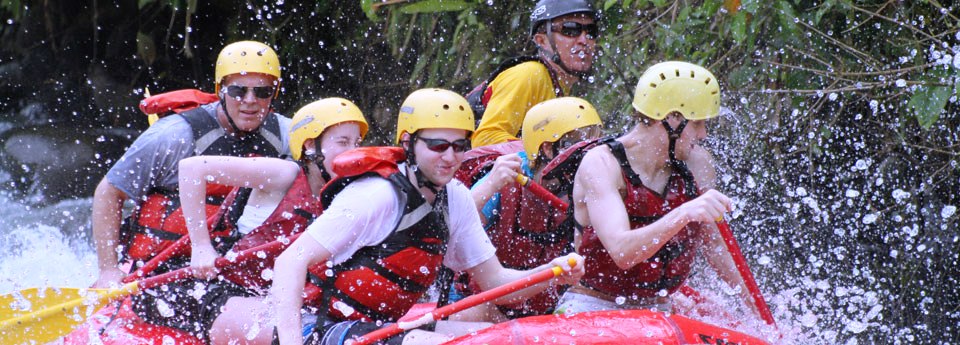
Manuel Antonio has great whitewater rafting on the Savegre and Naranjo rivers

Costa Rica offers some of the world's best whitewater rafting on beautiful, wild rivers that flow through spectacular tropical wilderness. In the Manuel Antonio area, the Naranjo River and Savegre River both fit this bill perfectly. The Savegre River features class 2-3 rapids surrounded by lush vegetation and is perfect for beginners and families. Outfitter H2O Adventures even offers a river tubing adventure on a class 1-2 section of the Savegre River. The Naranjo River is bigger and bolder, with fun and exciting class 3-4 rapids; the El Chorro section is a solid class 4 run through a tight gorge. H2O Adventures, a franchise of the famous company Rios Tropicales in Costa Rica, is one of the best whitewater rafting companies in Quepos/Manuel Antonio.

Mangrove Estuary Kayaking

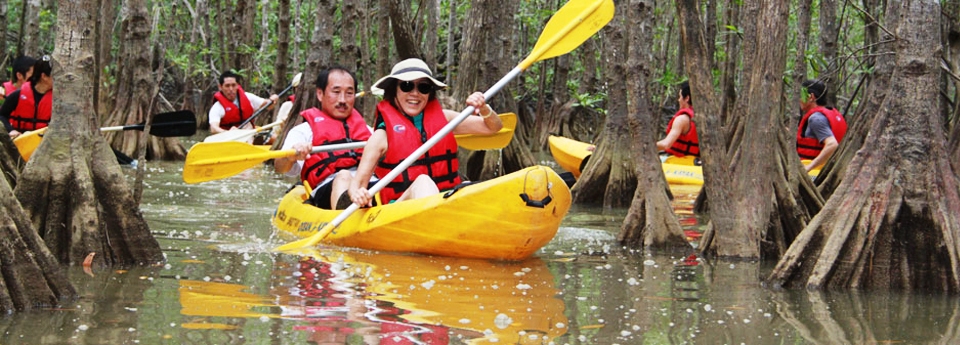
Explore the world of a mangrove estuary on this Manuel Antonio kayaking tour

The Damas Island Estuary, just 15 minutes from Manuel Antonio, is a completely different world where the ocean’s salt water meets the fresh waters of the Damas River, creating a tidal lagoon and forest of interlacing aerial roots of mangrove trees. In easy sit-on-top ocean kayaks, H2O Adventures will take you paddling through the calm labyrinth waterways of the estuary, and learn the importance of this delicate ecosystem. Here, live a wealth of animal and bird life, such as mangrove wrens, swallows, shore birds, and crocodiles. On the banks of the estuary, you’ll see “Sally light foot” crabs, and possibly boa constrictors tangled in the aerial roots, and silky anteaters and white-faced monkeys in the upper branches.

Ocean Adventures
Catamaran Sailing & Snorkeling

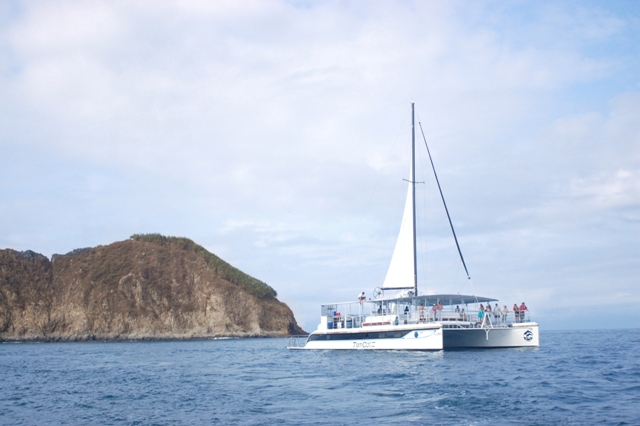
Planet Dolphin catamaran sailing & snorkeling tour in Manuel Antonio, Costa Rica

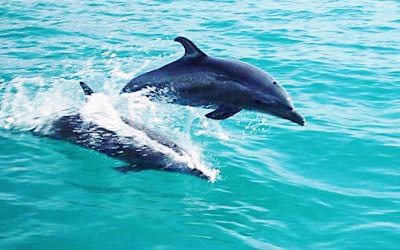
Delight in seeing dolphins, sea turtles, manta rays, sea birds, and maybe even a passing migrating humpback whale while you cruise along the Manuel Antonio Marine Preserve on a sleek and comfortable sailing catamaran. Planet Dolphin is the longest-running operator of catamaran tours in Manuel Antonio. They offer two tours daily, one in the morning and one in the afternoon, on three different catamarans ranging in size from 37 feet to 70 feet-long. All boats are equipped with U.S. Coast Guard-approved life preservers, marine radio, stereo system, snorkel equipment, and are led by a bilingual Captain with a naturalist guide. After touring the coastline, you will anchor in a protected cove within the pristine Biesanz Bay for snorkeling. Planet Dolphin provides all you need to enjoy the underwater experience of swimming with large schools of colorful tropical fish. You’ll also be served lunch of fresh fruits, grilled fish brochettes, pasta salad, and drinks.

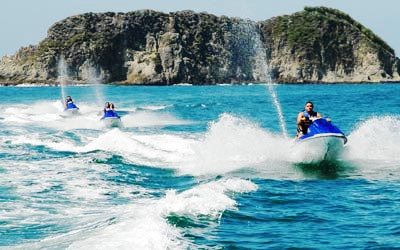
Jungle Coast Jet Ski tour off the Manuel Antonio, Costa Rica coastline

Jet Ski Tour

Cruise out on the ocean on individual wave runners along the Manuel Antonio National Park coastline. You’ll ride around small islands and spot marine life up close. Jungle Coast Jet Ski Tours uses easy-to-use Yamaha and Honda wave runners on their 2-hour tour. You can jump off and swim at any time and even do a bit of snorkeling.

Scuba Diving & Snorkeling

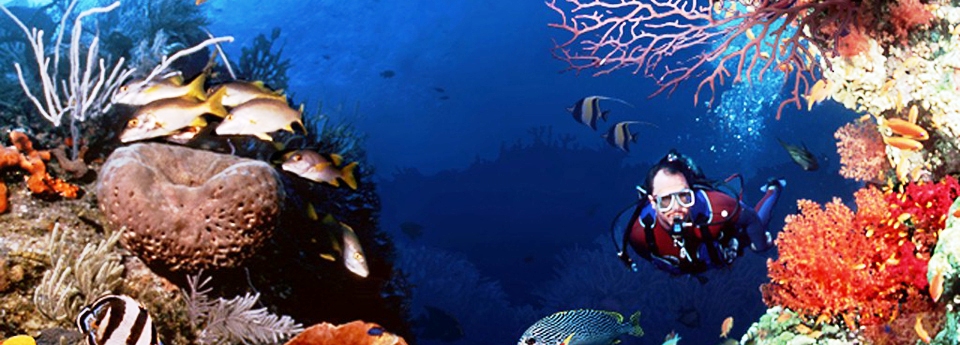
Thrill to great tropical diving at Manuel Antonio, Costa Rica

The underwater world off of Manuel Antonio is full of volcanic formations and a multitude of colorful tropical fish – perfect for exploring while scuba diving. Quepos/Manuel Antonio is home to the only 5-star PADI scuba diving center on Costa Rica’s Central Pacific Coast. Oceans Unlimited offers guided dive and snorkeling trips, PADI dive courses, introductory resort courses and Nitrox. Whether you are a certified diver or this is your first time, Oceans Unlimited professional instructors and dive crew are fully certified, and ready to show you the best of Costa Rica's world under the sea.

Oceans Unlimited offers fun snorkeling tours along Manuel Antonio's coast

There are many opportunities for snorkeling in Manuel Antonio. Whether you take a tour, or simply slip on a mask and float right off the National Park’s beaches, you’re bound to see plenty of tropical fish, rock formations, crustaceans, mollusks and the like. Many other tours, like the catamaran sailing, Jet Ski and scuba diving, include snorkeling. Or Oceans Unlimited offers guided snorkeling trips.
Explore the Manuel Antonio coast by kayak with H2O Adventures

Sea Kayaking

Enjoy a scenic paddling tour of the Manuel Antonio coastline. From a vantage point only possible in sea kayaks, you can experience up close Manuel Antonio’s impressive cliffs and rock formations. Outfitter H2O Adventures uses easy sit-on-top ocean kayaks that fit one or two persons. Guides are bilingual and are trained in water and ocean safety.

Sailing
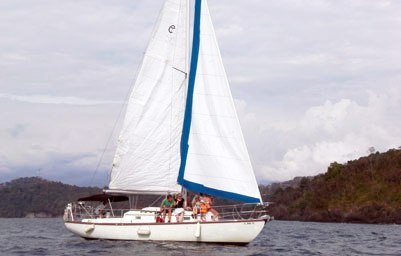
The Perla Azul sail boat tour is a peaceful, fun tour in Manuel Antonio, Costa Rica

This tour on the beautiful sailboat, “Perla Azul” (Blue Pearl), takes you through the serene, crystal-clear waters of Quepos and Manuel Antonio along the coastline. Hear the snap of the sails and sheets as the wind propels the craft skimming over the ocean’s surface. The nice thing about sailing is no motor noises that may frighten off marine animals you want to observe. Morning tours look for marine life, and the afternoon tours include watching Manuel Antonio’s spectacular sunsets.

Sportfishing

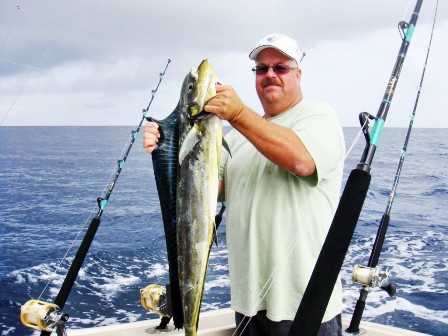
Manuel Antonio is a sportfishing hot spot in Costa Rica, including Dorado like this one

The beauty and excitement of a day out on the open blue Pacific is hard to beat. Quepos/Manuel Antonio is one of Costa Rica’s hot spots for world class sportfishing. Catch marlin, sailfish, Mahi Mahi (Dorado), Wahoo, tuna and roosterfish year round. Tropical Waters Sport Fishing offers half-day, three-quarter, and full-day charters, as well as customized multi-day trips, for both offshore and inshore fishing. Offshore fishing is normally done 20 to 40 miles out in blue water. Tropical Waters always uses circle hooks for “Catch and Release” fishing.

Surfing
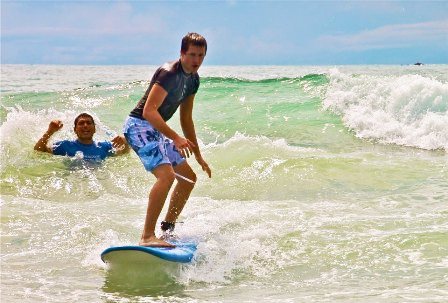
Manuel Antonio Surf School will rent boards and teach you to surf

Manuel Antonio’s waves cater more to beginner and moderate surfers; however, with a good swell, the local breaks can be fun for all levels of surfers. Rent boards and take surf lessons with Manuel Antonio Surf School, a fully insured surf school with bilingual instructors who are trained in water safety, first aid, and the International Surfing Association.
Parasailing
Adrenaline and fun-filled parasailing tour by Manuel Antonio, Costa Rica

While parasailing is technically an aerial adventure, this popular Manuel Antonio activity takes off from the beach while being towed by a boat and flies you over the ocean. You’ll get a bird’s-eye view of the stunning Manuel Antonio coastline from 600 feet up in the air above the blue Pacific. On the Aguas Azules tour, you can fly alone or in tandem with one or two other persons. Aguas Azules is fully licensed and insured with an impeccable safety record. Their website says parasailing is so easy, that anyone from age 3 to 80 can do it.

Where to stay in the Manuel Antonio area

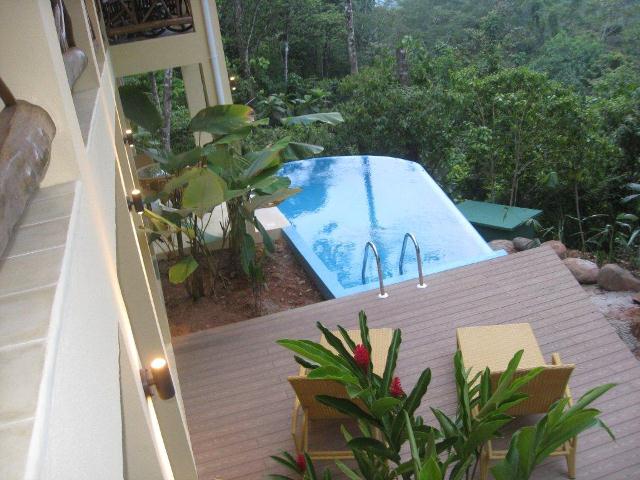
Enjoy fantastic vacation home rentals at Portasol near Manuel Antonio, Costa Rica

Portasol
, a sustainable community located near Manuel Antonio along the Central Pacific Coast of Costa Rica, offers impressive properties in the rainforest with ocean views. Portasol is a fantastic vacation home rental option for visitors to the Manuel Antonio area. Three spectacular vacation homes are available for rent, along with bungalows built on high stilts that simulate tree houses with decorative wrap-around verandas. Enjoy private trails through the jungle to rivers and waterfalls with natural pools.

Looking to own your own piece of paradise in Costa Rica? Portasol offers for sale scenic mountain lots, ranging in size from 2 to 10 acres, equipped with electricity, water, gravel roads and at least one building site.

By Shannon Farley