martes, 10 de junio de 2014

Join the Rincon de la Vieja Bird Count in Costa Rica, June 14-16

Bird Count Rincon de la Vieja 2014The massive Rincon de la Vieja in northern Costa Rica is known for its imposing outline on the horizon, its steaming fumaroles and bubbling mud pits, and impressive tropical dry forest. The highly-popular adventure tourism location also is becoming known for spectacular bird-watching.

This weekend, birders from all over Costa Rica will gather at the Rincon de la Vieja hotel Hacienda Guachipelin for the fifth annual Bird Count Rincon de la Vieja.

Bird Count Rincon de la Vieja 2014 will be held June 14 to 16 at Hacienda Guachipelin and the neighboring Rincon de la Vieja National Park in Guanacaste.

Rincon Birds - Slaty tailed trogonThe annual bird count is being co-hosted by the Costa Rica National Parks Association (SINAC), Ornithological Association of Costa Rica, Ornithological Union of Costa Rica and Neo Travel.
Space is still available; contact Hacienda Guachipelin for reservations.

Professional birders and avid bird-watching fans will meet at the top Guanacaste hotel on June 13. The count will begin the morning of June 14 on the trails in the Rincon de la Vieja National Park and on the Hacienda’s enormous property that encompasses protected dry tropical forest and a working cattle and horse ranch, in addition to the hotel facilities and Costa Rica adventure tour center.

Rincon de la Vieja National Park is part of the Guanacaste Conservation Area, a World Heritage Site. Diverse micro-climates produce a wide variety of ecosystems. Rincón de la Vieja is home to approximately 300 bird species, including: the Blue-crowned Motmot, Whitefronted Parrot, Spectacled Owl, Laughing Falcon, Lesser Ground Cuckoo, Slaty-tailed Trogon, Black-faced Solitaire, Curassow, Royal Flycatcher, Emerald Toucanet and the Montezuma Oropendola.
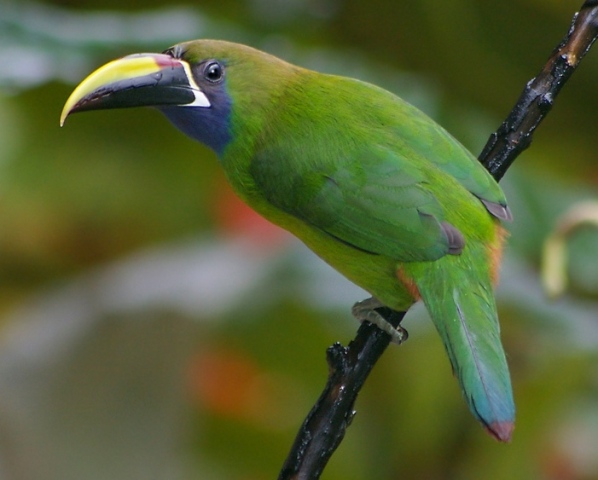
Rincon Birds - Emerald ToucanetSee a list of more than 60 birds spotted near Hacienda Guachipelin in the Rincon de la Vieja National park. Get a full list of Costa Rica’s birds here.

One of the best times to visit Rincon de la Vieja is now in the green season (May to November) when the active volcano’s fumaroles and boiling mud pots are most active. The hiking is fantastic while birding at Rincon de la Vieja. Afterward, one of the benefits of Hacienda Guachipelin is to enjoy a warm volcanic mud bath and soak in natural hot springs to relieve sore muscles.

In green season, you also can enjoy great Costa Rica travel deals at Hacienda Guachipelin. The Rincon de la Vieja hotel was recently awarded the TripAdvisor Certificate of Excellence 2014.

Article by Shannon Farley

lunes, 9 de junio de 2014

Raise your voice on World Environment Day

“When multiplied by a global chorus, our individual voices and actions become exponential in their impact.” – United Nations, World Environment Day Committee
World Environment Day 2014 United Nations

Today is all about working together for the good of the planet. It is World Environment Day (WED)!
Every year on June 5, the United Nations celebrates the biggest day of the year for positive environmental action. This year’s host nation for World Environment Day is the small Caribbean island of Barbados, which is rising as a world leader in solar energy. The host nation fits perfectly with the United Nations naming 2014 the International Year of Small Island Developing States.
Rising sea levels graphicThis year’s slogan, “Raise your voice not the sea level,” addresses the issue of rising sea levels around the world and global warming, and calls to people to work together to do something about it. According to the UN, the global sea level has risen by about 10 to 25 cm (up to about 10 inches) over the past 100 years, and is continuing to surge upward due to climate change.
World Environment Day is the United Nations’ global campaign to encourage worldwide awareness and action for the environment. Celebrated by over 100 countries, it is an opportunity for every person to realize they are responsible to care for the Earth and can effect change. We can combine “individual actions into a collective power that generates an exponential positive impact on the planet,” states the UN.
How will you make your voice heard this year for the environment?
world-environment-day-2014-themeIt doesn’t have to be just on June 5. Every day is a good day to start clean-up campaigns, initiatives to reduce food waste, walk-to-work days, recycling drives, using re-usable containers instead of plastic, tree-planting drives, social media campaigns, and different contests. Every action counts.
World ecotourism pioneer Costa Rica is working toward reforestation, reducing transport carbon emissions, controlling harmful and illegal fishing practices, and protecting the country’s natural resources.
Article by Shannon Farley

jueves, 29 de mayo de 2014

Go Stand-Up Paddling in Santa Teresa Costa Rica


SUP (Stand-up paddling) is a great all-body workout, is relatively easy to learn, and is lots of fun. Surfers started using Hawaiian-style stand-up paddle boarding as a way to keep fit when there aren’t any waves, and also as a way to power into waves that are hard to catch.

To Stand-up Paddle, you stand on a wide, long, modified surfboard while using a long paddle (like a one blade kayak paddle) to maneuver in the water. Your weight balance and the strength of your core body is how you stay up and move.

When you stay at Hotel Tropico Latino, on the beach at Playa Carmen in Santa Teresa, the Reception staff can arrange Stand-up Paddling tours for you.

SUP Santa Teresa Costa RicaThe tour goes from the nearby beach of Mal Pais paddling down the coast toward the famous Cabo Blanco Nature Reserve at the southern tip of the Nicoya Peninsula. Tours usually last between 60 to 90 minutes on the water, and are better suited for the smooth water of early morning or calm afternoons around sunset.

Santa Teresa Beach in Costa Rica is known for its spectacular sunsets, gold and light sand, warm and clear aquamarine water, and great surf.

Beach House at Hotel Tropico LatinoOne of the best beachfront hotels in Santa Teresa, Costa Rica is Hotel Tropico Latino. The relaxed and charming oasis on four acres of lush gardens features tropical bungalows and suites, a beachfront spa, yoga classes and retreats, and surf instruction and surf camps.

Article by Shannon Farley
Keeping water clean in Santa Teresa Costa Rica

“Without water, there can be no life. Without clean water, there can be no healthy life.”

WaterKeeper AllianceThis is the driving force behind the worldwide environmental organization Waterkeeper Alliance. Based in the United States, the Waterkeeper Alliance aspires to protect every major watershed around the world, to advocate for every person’s right to clean water and the equitable use of water resources globally.

Water is at the center of the world’s most pressing issues today: security, scarcity, energy, climate change, and infectious diseases. Fresh water resources are declining in virtually every part of the world in quality and quantity. It is reported that more than 1 billion people on the planet live without access to safe drinking water.

More than 200 Waterkeeper grassroots organizations on six continents strive to defend clean water in their communities. In Central America, Costa Rica is the only nation with a Waterkeeper organization.

WaterKeeper Nicoya PeninsulaThe environmentally-friendly town of Santa Teresa, Costa Rica, on the southern Nicoya Peninsula, is the lucky home of Costa Rica’s Waterkeeper Alliance. Founded in October 2012, the Nicoya Peninsula Waterkeeper group is focused on improving the quality of water in the Santa Teresa area, and helping the community properly deal with its waste waters.
“One of our primary priorities is the lack of water and quality of water in Santa Teresa,” said Carolina Chavarria, in charge of the Nicoya Peninsula Waterkeeper group. “Another priority is how residual waters are treated in Santa Teresa – from private residences to hotels and restaurants.”

Costa Rica - Santa TeresaLike many coastal communities in Costa Rica, especially ones that have developed rapidly from tourism, Santa Teresa faces water shortages during the Costa Rican “summer” months of January to May. Residents and businesses in the area are forced to buy tanker-trucks of water almost weekly to meet their needs until the rains begin again.

Waterkeeper is part of the local community’s Committee for Water and Health of Santa Teresa that is working with the Costa Rican Institute of Aqueducts and Sewers (AyA) to solve the area’s water issues.

The Santa Teresa Waterkeeper group is targeting two community campaigns: “One River at a Time” to clean each of the area’s 18 rivers, and helping people properly treat their waste waters with practical and affordable solutions such as bio-gardens. Waste water is treated to be used safely in landscape irrigation. “Besides being pretty, they are really practical and useful,” Chavarria said.

Pranamar biogardenOn Santa Teresa Beach, Pranamar Oceanfront Villas & Yoga Retreat is creating a bio-garden for their restaurant kitchen’s gray water. “All of the water from the kitchen is going to be treated to get rid of the grease to be able to use for irrigation,” said Pranamar hotel manager, Mario Matarrita.

Pranamar Oceanfront VillasThe Costa Rica beach resort already uses a completely independent septic system that recycles treated water to irrigate the hotel’s gardens. “We save water all year long this way,” noted Matarrita.

The Balinese-style oceanfront villas closely follow sustainable tourism practices. Two fresh water wells on the property reinforce the boutique hotel’s water supply. Water is filtered and purified in the restaurant and made available for guests. “The idea is for our guests to not buy so many plastic bottles of water, but rather to re-fill their bottles in our restaurant with our purified water,” Matarrita explained.

Pranamar Oceanfront Villas and Yoga Retreat is a top beachfront hotel in Santa Teresa Costa Rica. The holistic resort specializes in yoga and surfing holidays, daily yoga classes, and yoga retreats.

Article by Shannon Farley

miércoles, 28 de mayo de 2014

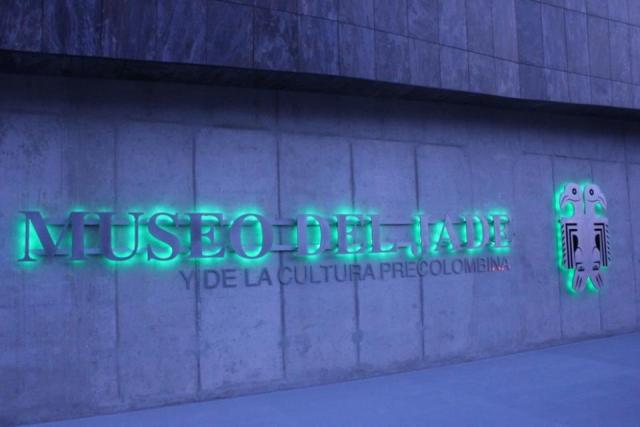
New Costa Rica Jade Museum shows off indigenous art and culture

Jade bird pendant from Guanacaste Costa RicaIn Central America, Costa Rica is one of two regions where jade was extensively carved by indigenous peoples in Pre-Columbian times. The earliest evidence for carved jade dates to 500 B.C., and is a bird pendant excavated from a burial tomb on the Nicoya Peninsula.

Jade pendants and other ornaments made in Costa Rica are among the country’s most unique historic art forms. Fashioning items out of Jadeite, which was most prevalent in Costa Rica, remained in favor for hundreds of years until approximately 700 A.D., when its popularity appears to have been replaced by gold ornaments. Costa Rican jade comes in many green tonalities, from pale blue-green to intense, almost black greens.

Jade Museum Costa RicaYou can now see Costa Rica’s entire collection of nearly 7,000 pieces of indigenous jade, ceramics and stone artifacts, purportedly the largest collection of Pre-Columbian jade in the world, at the new national Museum of Jade and Pre-Columbian Art in San Jose Costa Rica.

Open to the public as of May 26, 2014, the new Jade Museum is located in the Plaza de la Democracia (Democracy Plaza) opposite the Costa Rica National Museum. Since 1977, Costa Rica’s impressive collection of ancient jade had been housed in a small wing of the National Insurance Institute (INS) building, which prevented the museum from displaying its full collection.

Jade collection Costa RicaThe new Jade Museum spans 75,000 square feet over five floors. The building itself is exceptionally modern and eye-catching. The architect designed the commanding edifice to capture the shape and texture of a piece of jade. Conveniently located in the center of downtown San Jose’s cultural attractions, the Jade Museum is just a few blocks from the National Theatre, one of the capital city’s most popular tourist attractions.

See the best of San Jose with Costa Rica Special Deals, a professional online travel service. Costa Rica Special Deals offers you San Jose hotel reservations, Costa Rica travel deals, and Costa Rica vacation packages.

Article by Shannon Farley

martes, 27 de mayo de 2014

Car rentals and transportation in Costa Rica

Transportation in Costa RicaWhether you are visiting Costa Rica for your honeymoon, a family vacation, adventure tourism or eco-tourism, you will need a way to get around the country.

Renting a car in Costa Rica gives you the most freedom to explore the country as you like.

2Costa Rica Travel can help you with rental cars in San José, Tamarindo, Liberia, Jacó and Manuel Antonio. 

In many cases, you can arrange for a vehicle to be delivered directly to your hotel, or meet you at the airport (international or local). You also can arrange to pick up a vehicle at one location, and then drop it off at another agency location.

Car rental Costa Rica2Costa Rica Travel has access to an up-to-date fleet of sedans and 4x4s. On Costa Rica’s roads, it is generally recommended to have a 4WD vehicle, especially in rainy season. In Costa Rica, most cars have manual transmissions; however with car rentals, both automatic and manual transmissions are available, depending on availability and the car model type. 2Costa Rica Travel includes the cost of mandatory car insurance and unlimited mileage in its pricing.

The Costa Rica travel agency has a list of mileage distances and approximate driving times between major Costa Rica towns and cities on their website.

Get tips on what to pack and other important Costa Rica travel information, along with hotel and tour reservations, and Costa Rica vacation packages from 2Costa Rica Travel.

Article by Shannon Farley

Surfing the southern Caribbean Coast of Costa Rica

Surfing Costa Rica Caribbean, image by Costa Rica EscapadesLess crowded than the beaches of Southern California, Hawaii and Australia, the warm water waves of Costa Rica are a favorite destination for world surfers. And lesser known than the very-developed Pacific Coast, the laid-back southern Caribbean Coast of Costa Rica is a hot spot for Costa Rica surfing with lots of great waves.

The popular Caribbean town of Puerto Viejo, Costa Rica, is an ideal location for laid-back surfers and travelers looking for a more relaxed Costa Rica travel experience over the highly commercialized Pacific Coast. Playa Cocles and Puerto Viejo hosted the 2014 Olympus National Surfing Circuit competition, the Lime Coral Caribbean Classic II, in January of this year.

Surfing Salsa Brava wave in Puerto ViejoPuerto Viejo also is home to the most powerful wave in the country – Salsa Brava, a thick Hawaiian-style barrel wave that builds in deep water and pours over a shallow coral reef lining the coast. It is called the “heaviest wave” in the country, and is for expert surfers only.

The beaches of Playa Cocles, Playa Negra, Cahuita and Manzanillo offer waves for all levels. Beginner and intermediate surfers will enjoy the sandy-bottom beaches of both Playa Cocles and Playa Negra.

Surfing Playa Cocles Costa RicaA lifeguard watches Playa Cocles and right in front is where most surfers gather. “This beach break offers a more consistent break, with lefts and rights breaking close to the beach. This wave tends to jack up with a big swell due to the steep beach entry … beware of currents. 

Best conditions in the early morning before the winds blow it out. However, you can surf here all day as the wind often improves the lack of form,” according to Surf Costa Rica.

Playa Negra in Cahuita is also good for surfing, and is lesser known and not crowded. Playa Negra “offers a great beach break with waves year-round. Best conditions in the early morning with swell from the south or east at almost any tide,” according to Surf Costa Rica.
Playa Grande, between Punta Uva and Manzanillo, is frequented by local surfers, as is Manzanillo Beach.

Le Cameleon Hotel, South Caribbean, Costa RicaWhen visiting, be sure not to go surfing alone, and always check with local surfers about riptides, strong currents and reefs.

Costa Rica boutique hotel Le Caméléon, at Playa Cocles, can arrange surfing classes and board rentals for you. Their in-house concierge organizes all of the top tours in the southern Caribbean region. 

The upscale Enchanting Hotel of Costa Rica is chicly designed in exuberant tropical gardens. Their La Sula Sea Lounge and beach club is the best place to be on Playa Cocles. You will be minutes from all of the surfing action.

Article by Shannon Farley