Mostrando entradas con la etiqueta birding costa rica. Mostrar todas las entradas

martes, 2 de diciembre de 2014

Great Green Macaws return to northern Costa Rica Eco Lodge


One of the most magnificent birds in Costa Rica is the Great Green Macaw.
This time of year, from October through December, Great Green Macaws (Ara ambiguus) return to the Maquenque Wildlife Refuge, Costa RicaMaquenque National Wildlife Refuge in northern Costa Rica from the Indio Maiz Biological Reserve in Nicaragua. Following their main food source of mountain almond tree fruits that are now in season, the Macaws return to this vital habitat of rainforest and wetlands in Costa Rica.
The Maquenque National Wildlife Refuge preserves nearly 150,000 acres that contain mountain almond trees (Dipteryx panamensis) which endangered Great Green Macaws use for food and nesting. Formed in June 2005, the refuge is one of the biggest habitats for Great Green Macaws in Costa Rica, and is an important part of the Mesoamerican Biological Corridor.
Great Green Macaws at Maquenque LodgeGreat Green Macaws are the largest parrots native to Costa Rica, along with Scarlet Macaws. “The Great Green Macaw is a stunning parrot with vibrant plumage,” notes Wildscreen Arkive.org. The head, back and upper wings are bright green in color with turquoise blue on the edges of the wings and tip of the tail. There is a scarlet red patch on the tail and across the forehead; the rest of the face is bare with distinctive lines of black feathers.
Great Green Macaws are only found in the Atlantic wet lowlands of Central America, from Honduras to northern Colombia, with a small isolated population in Ecuador. Loss of habitat and logging of mountain almond trees has largely caused their population to decline to only between 1,800 to 2,500 mature Great Green Macaws left in the world, according to Bird Life International.
Maquenque Eco-lodge bungalowsVisit Maquenque Eco-lodge now in November and December to see the Great Green Macaws. The Costa Rica eco-lodge is located next to the Maquenque National Wildlife Refuge on 68 acres of tropical rainforest with eight kilometers of trails. With more than 410 identified species of birds, Maquenque is one of the top bird-watching hotels in Costa Rica.
Article by Shannon Farley

martes, 30 de septiembre de 2014

South for the winter: Costa Rica bird migration season begins

Neotropical bird migrants, image by Cornell University

This time of year, the crisp fall weather of the north sends birds packing south to warm tropical climates. Bird migration season in Costa Rica is here.
According to the Cornell University Lab of Ornithology, approximately 350 bird species from the United States and Canada migrate south to winter in the Neotropics of the Caribbean, Mexico, Central America and South America. These birds include raptors, vultures, waterfowl, shorebirds, and passerine species such as hummingbirds, thrushes, warblers, orioles, and tanagers.

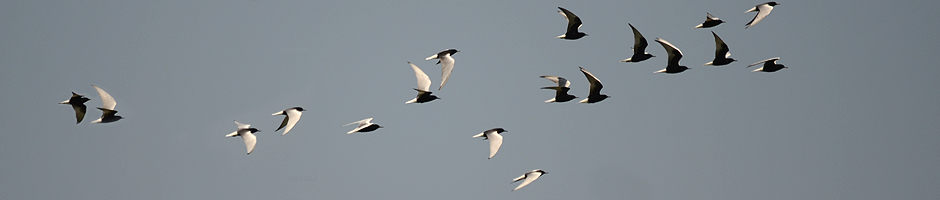
Migratory Birds - blue and white swallow
Avid Costa Rica birder and blogger, Pat O’Donnell, reports in his Costa Rica Living and Birding blog that a “river of raptors is flowing through the Caribbean lowlands, thousands of shorebirds are stopping off in the Gulf of Nicoya (and some are staying) … and there’s a lot of migration going on.”
The place to be for bird-watching in Costa Rica starting in October is Maquenque Eco-lodge in the Northern Plains. “We are already seeing the beginning of the migration of the birds,” said hotel manager Julio Cesar Artavia Munguia.

Maquenque Eco-lodge bungalowsMaquenque is one of the top Costa Rica bird watching hotel. The Costa Rica eco-lodge is located in Boca Tapada on the San Carlos River by the Maquenque National Wildlife Refuge, 15 kilometers from the Nicaraguan border and that country’s vast Indio Maiz Biological Reserve. Lodge information cites more than 410 identified species of birds, out of approximately 870 species of birds recognized in Costa Rica.

Artavia at Maquenque Eco-Lodge said October and November are usually big months to see migrating species. Some birds stay weeks to a month, while others only pass through the area in a day, he said. Notable birds Artavia has seen in years past include: raptors like peregrine falcons, black chested hawks, double-toothed kites and red-tailed kites; black swifts, white-collared swifts, blue and white swallows, barn swallows, bank swallows, mangrove swallows, and different tanagers, wrens, and warblers.

Ducks usually stay in Maquenque’s lagoon for a few weeks before moving on – ducks like the lesser scaup, least grebe, blue winged teal, Muscovy ducks, and big groups of black-bellied whistling ducks.

Great Green Macaw in Costa Rica
September and October are also when the endangered Great Green Macaws (Ara ambiguus) return to Maquenque from the Indio Maiz Biological Reservefor the almond fruits that are in season.
In addition to guided bird-watching tours at Maquenque Eco-lodge, you can canoe on the lagoon, hike in the rainforest, ride horses, go float river rafting and boating. Accommodations at the eco-lodge are simple and comfortable in 14 bungalows with balconies overlooking the lagoon. Eight kilometers of trails wind through the lodge’s 68-acre property.
Article by Shannon Farley
Migratory Birds - swallows flying

martes, 10 de junio de 2014

Join the Rincon de la Vieja Bird Count in Costa Rica, June 14-16

Bird Count Rincon de la Vieja 2014The massive Rincon de la Vieja in northern Costa Rica is known for its imposing outline on the horizon, its steaming fumaroles and bubbling mud pits, and impressive tropical dry forest. The highly-popular adventure tourism location also is becoming known for spectacular bird-watching.

This weekend, birders from all over Costa Rica will gather at the Rincon de la Vieja hotel Hacienda Guachipelin for the fifth annual Bird Count Rincon de la Vieja.

Bird Count Rincon de la Vieja 2014 will be held June 14 to 16 at Hacienda Guachipelin and the neighboring Rincon de la Vieja National Park in Guanacaste.

Rincon Birds - Slaty tailed trogonThe annual bird count is being co-hosted by the Costa Rica National Parks Association (SINAC), Ornithological Association of Costa Rica, Ornithological Union of Costa Rica and Neo Travel.
Space is still available; contact Hacienda Guachipelin for reservations.

Professional birders and avid bird-watching fans will meet at the top Guanacaste hotel on June 13. The count will begin the morning of June 14 on the trails in the Rincon de la Vieja National Park and on the Hacienda’s enormous property that encompasses protected dry tropical forest and a working cattle and horse ranch, in addition to the hotel facilities and Costa Rica adventure tour center.

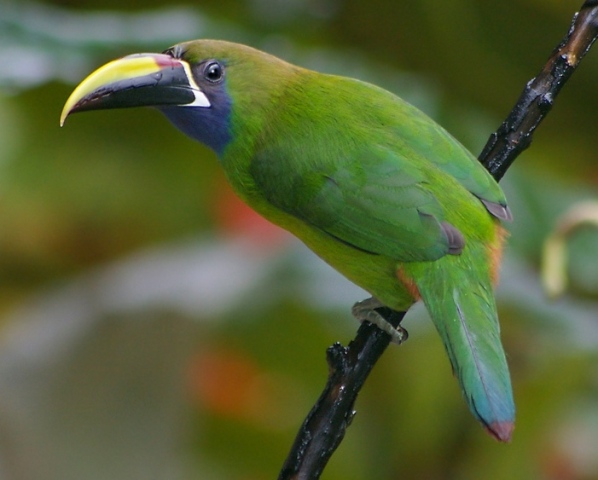
Rincon de la Vieja National Park is part of the Guanacaste Conservation Area, a World Heritage Site. Diverse micro-climates produce a wide variety of ecosystems. Rincón de la Vieja is home to approximately 300 bird species, including: the Blue-crowned Motmot, Whitefronted Parrot, Spectacled Owl, Laughing Falcon, Lesser Ground Cuckoo, Slaty-tailed Trogon, Black-faced Solitaire, Curassow, Royal Flycatcher, Emerald Toucanet and the Montezuma Oropendola.

Rincon Birds - Emerald ToucanetSee a list of more than 60 birds spotted near Hacienda Guachipelin in the Rincon de la Vieja National park. Get a full list of Costa Rica’s birds here.

One of the best times to visit Rincon de la Vieja is now in the green season (May to November) when the active volcano’s fumaroles and boiling mud pots are most active. The hiking is fantastic while birding at Rincon de la Vieja. Afterward, one of the benefits of Hacienda Guachipelin is to enjoy a warm volcanic mud bath and soak in natural hot springs to relieve sore muscles.

In green season, you also can enjoy great Costa Rica travel deals at Hacienda Guachipelin. The Rincon de la Vieja hotel was recently awarded the TripAdvisor Certificate of Excellence 2014.

Article by Shannon Farley

lunes, 27 de enero de 2014

Bird watching in Costa Rica

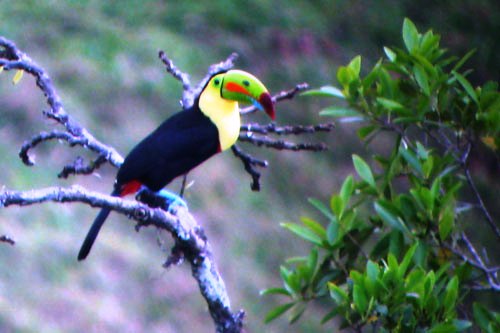
Birds Costa Rica - ToucanIf bird-watching is your passion, then you definitely want to add Costa Rica to your “Top 10 list of places to go birding.” The small Central American country is home to more than 870 bird species – more than in all of the United States, Canada and Mexico combined – and is a bird-watching hotspot. A single day of bird-watching in this enchanted corner of the globe can earn sightings of up to 85 to 150 different species.

Costa Rica’s strategic location in the tropics bridging North and South America, and rugged topography with numerous mountains, valleys and microclimates, offer optimum conditions for high biodiversity. The country protects more than 25% of its territory in national parks and private reserves, allowing access to intensely diverse habitats for widely varied bird-watching.

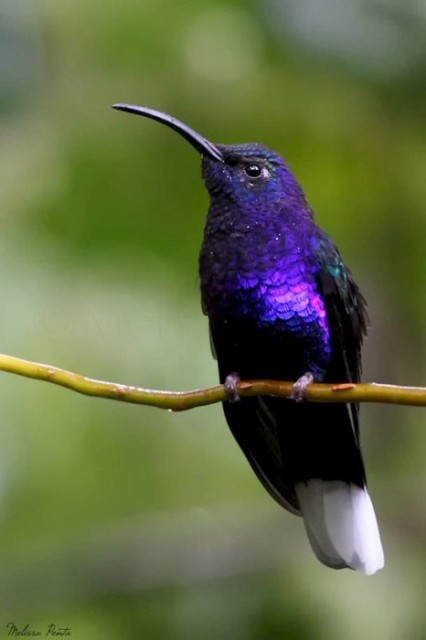
Violet Sabrewing Hummingbird Costa RicaScarlet and Green Macaws, Toucans, Oropéndolas, Resplendent Quetzals, Crimson-Collared Tanagers, Harpy Eagles, and Violet Sabrewing Hummingbirds are just some of the species you may see in this birding paradise.

The best way to go birding in Costa Rica is on a bird-watching tour. For instance, the eight-day Bird Watching in Costa Rica by Valle Dorado Tours takes you to Sarapiqui, the Arenal Volcano, and the cloud forest of the Central Highlands by the Juan Castro Blanco National Park.

Valle Dorado’s 11-day Costa Rica Nature Adventure that explores the Tortuguero National Park, the Arenal Volcano, Monteverde cloud forest, and beaches of the Manuel Antonio National Park, also would be a good choice for birding
.
Valle Dorado Tours offers customized Costa Rica vacations using their 20+ years of local experience in Costa Rica travel to ensure you receive only the best in accommodations, transportation, tours and activities. They design their travel packages as a suggestion, and their travel experts are happy to make any changes to custom fit the perfect Costa Rica Bird-watching Tour package for you.

Travel Tip: Download the Costa Rica Birds Field Guide, a full-featured birding field guide for Costa Rica, available on iTunes.

Article by Shannon Farley

jueves, 19 de diciembre de 2013

Birders in the Americas join in 114th Christmas Bird Count.

For more than 100 years, every year at Christmastime, rather than searching for the perfect present, tens of thousands of active passionate folks explore the great outdoors looking for the most splendid birds.
Outfitted with binoculars, bird guides and checklists, birding devotees throughout the Americas brave snow, wind, rain, or maybe even tropical sun, to take part in the Christmas Bird Count. The National Audubon Society of the USA and other organizations use data collected in the annual Christmas Bird Count to assess the health of bird populations, and to help guide conservation action.

This year, the 114th annual Christmas Bird Count in the United States is from Dec. 14 through Jan. 5. Down in the tropics, Costa Rica also participates in the Christmas Bird Count. This year, the count began Dec. 1 at Selva Verde Lodge in Sarapiqui, and ends Jan. 5 near San Carlos, with nine other counts in between at locations around the country.

Last year, the highest number of birds counted in Central America was in Costa Rica. A record number of 417 different bird species, and 12,665 individual birds, were identified in a 24-hour period on Dec. 5 in the Central Caribbean by Veragua Rainforest.
Male Shining Honeycreeper at Veragua, photo by Patrick O'DonnellAccording to avid Costa Rica birder and blogger, Patrick O’Donnell, local birders rave about the excellent birding at Veragua Rainforest. O’Donnell’s Costa Rica Living and Birding blog provides a wealth of information about bird watching in Costa Rica.

Veragua Rainforest Eco-Adventure is a 1,300 hectare (3,212 acre) biology research and rainforest adventure park located in the Talamanca Mountain Range about an hour inland from Costa Rica’s Caribbean port of Limón. It is an area of breathtaking tropical rainforest bordering the La Amistad (“Friendship”) International Park, the largest nature reserve in Central America. Veragua Rainforest is an excellent one-day tour in the Costa Rica rainforest to enjoy wildlife exhibits, science labs, and adventure tours.

Travel Tip: Download the Costa Rica Birds Field Guide, a full-featured birding field guide for Costa Rica, available on iTunes.
Article by Shannon Farley