Mostrando entradas con la etiqueta ecotourism costa rica. Mostrar todas las entradas

lunes, 25 de mayo de 2015

A tale of dreams and adventure: Beginning Playa Nicuesa Rainforest Lodge

Playa Nicuesa Rainforest Lodge in Costa Rica

Guests staying at Playa Nicuesa Rainforest Lodge always ask: how did the Costa Rica eco-lodge get started?

The question is a reasonable one given Nicuesa Lodge’s isolated location in southern Costa Rica. It is a wild place of dense steamy rainforest and tranquil ocean, intensely populated by thousands of species of tropical wildlife. Playa Nicuesa is a little crescent-shaped beach and small bay on the pristine Golfo Dulce – “Sweet Gulf” – a critical habitat for migrating Pacific Humpback Whales, dolphins and hammerhead sharks. The region is a giant conservation area including the world-famous Corcovado National Park on the Osa Peninsula, the Piedras Blancas National Park and three other private reserves.

Playa Nicuesa on Golfo Dulce from the air

What keeps Playa Nicuesa Rainforest Lodge so unique and private is that the lodge is accessible only by boat. Almost directly across the gulf from the town of Puerto Jimenez, Nicuesa Lodge’s 165-acre private preserve is backed by rugged mountains and wild jungle of the Piedras Blancas National Park. There are no roads, and there is no development.

Dolphins in Golfo Dulce
So, how did a high-end eco-lodge come to be in this pure, remote place?

martes, 21 de abril de 2015

Costa Rica eco-lodge named cleanest beach in the country

The trash problem of the world’s oceans has reached epic proportions. However, in the small Central American nation of Costa Rica, 108 beach communities have taken a stand against litter and pollution and are working to make a difference in the world predicament.

The record number of Costa Rica beaches received Ecological Blue Flag Awards for 2014 for having good ecological practices, clean beaches, community cooperation and coastal protection. The annual awards were given out in a ceremony held in March 2015.

One of these Costa Rica beaches that are tackling the world problem of ocean pollution is Playa Nicuesa. The small beach on the Golfo Dulce in southern Costa Rica is home to Playa Nicuesa Rainforest Lodge, a sustainable Costa Rica eco-lodge known for its pristine tropical beach, beautiful rainforest, and jade green Pacific Ocean so clear you can see to the bottom. The region is a giant conservation area that includes the world-famous Corcovado National Park on the Osa Peninsula, the Piedras Blancas National Park and three other private reserves. The unique Golfo Dulce – “Sweet Gulf” – is a critical habitat for migrating Pacific Humpback Whales, and dolphins and sea turtles.

Beach at Playa Nicuesa Rainforest Lodge, Golfo Dulce

Keeping these beaches unspoiled is important, and is a full-time job that Nicuesa Lodge staff undertakes with conviction. This is the fifth time Nicuesa Lodge has been honored with receiving the Blue Flag Award for being one of Costa Rica’s cleanest beaches.

“We are proud to say that Playa Nicuesa is a very clean beach, where our guests can enjoy it without any danger. We constantly hold beach cleanups to keep our beach clean,” said Natalia Solis, Sustainability Coordinator at Playa Nicuesa Rainforest Lodge. “These efforts to help nature are of the utmost importance to Playa Nicuesa since it is part of the philosophy and principles that we have as a sustainable hotel.”

Blue Flag Award received by Nicuesa Lodge 2015

Playa Nicuesa Rainforest Lodge
is one of only three dozen hotels in Costa Rica that have received the highest rating in the Certification for Sustainable Tourism Program (CST) by the Costa Rica Tourism Board (ICT).
In addition to its participation in the 19-year-old Costa Rica Blue Flag Ecological Program (Bandera Azul Ecológica), Nicuesa Lodge is involved in many sustainable environmental projects:

Beach cleanup at Nicuesa Lodge Costa Rica

  • Beach cleanups every four to six weeks by staff and guests.
  • Maintain five trash receptacles near the beach at Playa Nicuesa.
  • Work with the Costa Rica Health Ministry campaign against dengue fever in the region.
  • Hold workshops on environmental issues.
  • Test the hotel’s potable water at least every three months to ensure its safe drinkability.
  • Test the ocean water at Playa Nicuesa twice a year.
  • Reforestation with native Costa Rican tree species to create a biological corridor.
“We know that we only have one planet and it is our home; this is why we try to improve our sustainable practices,” said Solis. “We hope that many more people join this program and that there are more beaches like Playa Nicuesa to set an example and motivate others to work together to protect our country’s precious natural resources.”

Playa Nicuesa luxury bungalow in rainforest

Playa Nicuesa Rainforest Lodge
A true Costa Rica rainforest lodge, Playa Nicuesa Rainforest Lodge is located on a 165-acre private rainforest preserve. Being a unique adventure travel destination, the only way to get there is by boat across the pristine waters of the Golfo Dulce from either Golfito or Puerto Jimenez. Contact Playa Nicuesa Rainforest Lodge to book your Costa Rica family vacation, honeymoon, nature and adventure vacation, or yoga retreat.

Article by Shannon Farley

lunes, 30 de marzo de 2015

What’s cooking at Playa Nicuesa Rainforest Lodge in Costa Rica?

Let’s face it; we all care about what we eat. So if visiting a remote jungle eco-lodge is in your plans, you might be wondering if mealtime will resemble a Mission Survive episode with creepy-crawlies and vermin.

In fact, remote Costa Rica eco lodge Playa Nicuesa Rainforest Lodge gets regular rave reviews from guests about its exceptional, fresh, gourmet cuisine. The abundance of fresh, healthy and wholesome ingredients is inspiring, and head chef Edixon Lezcano adds a huge helping of creativity to Nicuesa’s menus. There are Asian influences – soy, ginger, citrus and tamarind sauces and dressings. There are Latino influences – quinoa, rice, beans, sauces and cooking methods. And then there are “Edixon influences” like homemade rich dark chocolate cake served with a sweet citrus sauce made from cas fruit (a kind of guava).

“I try to serve healthy cuisine that is low in fat, using natural products that are not artificial,” noted Lezcano, who has delighted guests with his fantastic meals for the past eight years at Nicuesa Lodge.


Dine gourmet and healthy at Playa Nicuesa Rainforest Lodge

One of the great aspects about Playa Nicuesa Rainforest Lodge is that you don’t have to worry about where you are going to eat or what you will eat. All meals are included with your stay at the premier Costa Rica rainforest lodge, due to its remote wilderness location. Playa Nicuesa sits on the Golfo Dulce (“Sweet Gulf”) in southern Costa Rica, next to the Piedras Blancas National Park and across from the Osa Peninsula. It is an area of pristine tropical wilderness – a unique adventure travel destination.
Playa Nicuesa Rainforest Lodge Costa Rica

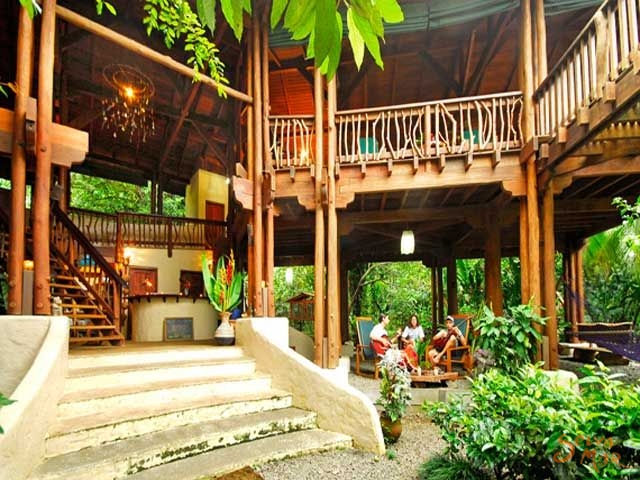
Meals are served with flair in Nicuesa Lodge’s magnificent two-story tree house-style main lodge building. The open-air dining area lets you look out at the tree canopy (great for wildlife spotting), the forest, beach and ocean; an open side deck is perfect for gazing at the night sky packed with stars. Seating is family-style with everyone at the lodge, which leads to wonderful engaging conversations about that day’s adventures, other travels and the beauty of life.

Dining in the tree canopy at Nicuesa Lodge

On Nicuesa’s 165-acre private reserve they grow tropical fruit trees like mangoes, star fruit, cas guava, oranges, lemons, papayas, water apples, bananas, plantains and coconuts. The edible garden supplies pineapples, sugar cane, basil, spinach, and other vegetables and herbs. They even grow cacao trees and offer a chocolate tour to show you the delicious process of making organic chocolate.

All breads, tortillas, desserts, juices and sauces are made fresh on-site
.
Fishing is a popular pastime at the Costa Rica eco-lodge, which is a bonus for the kitchen. “If someone goes fishing and catches fish, we serve it the same day along with dinner to treat everyone,” said Lezcano.

Dock fishing at Playa Nicuesa Lodge

There are always vegetarian and kids’ options at all meals. Happy hour is one of the best times of the day, when guests gather for exotic tropical drink specials and tempting appetizers every night before dinner in the candlelit bar.

Contact Playa Nicuesa Rainforest Lodge to book your Costa Rica family vacation, honeymoon, nature and adventure vacation, or yoga retreat.

Playa Nicuesa luxury eco lodge

Article by Shannon Farley

martes, 2 de diciembre de 2014

Great Green Macaws return to northern Costa Rica Eco Lodge


One of the most magnificent birds in Costa Rica is the Great Green Macaw.
This time of year, from October through December, Great Green Macaws (Ara ambiguus) return to the Maquenque Wildlife Refuge, Costa RicaMaquenque National Wildlife Refuge in northern Costa Rica from the Indio Maiz Biological Reserve in Nicaragua. Following their main food source of mountain almond tree fruits that are now in season, the Macaws return to this vital habitat of rainforest and wetlands in Costa Rica.
The Maquenque National Wildlife Refuge preserves nearly 150,000 acres that contain mountain almond trees (Dipteryx panamensis) which endangered Great Green Macaws use for food and nesting. Formed in June 2005, the refuge is one of the biggest habitats for Great Green Macaws in Costa Rica, and is an important part of the Mesoamerican Biological Corridor.
Great Green Macaws at Maquenque LodgeGreat Green Macaws are the largest parrots native to Costa Rica, along with Scarlet Macaws. “The Great Green Macaw is a stunning parrot with vibrant plumage,” notes Wildscreen Arkive.org. The head, back and upper wings are bright green in color with turquoise blue on the edges of the wings and tip of the tail. There is a scarlet red patch on the tail and across the forehead; the rest of the face is bare with distinctive lines of black feathers.
Great Green Macaws are only found in the Atlantic wet lowlands of Central America, from Honduras to northern Colombia, with a small isolated population in Ecuador. Loss of habitat and logging of mountain almond trees has largely caused their population to decline to only between 1,800 to 2,500 mature Great Green Macaws left in the world, according to Bird Life International.
Maquenque Eco-lodge bungalowsVisit Maquenque Eco-lodge now in November and December to see the Great Green Macaws. The Costa Rica eco-lodge is located next to the Maquenque National Wildlife Refuge on 68 acres of tropical rainforest with eight kilometers of trails. With more than 410 identified species of birds, Maquenque is one of the top bird-watching hotels in Costa Rica.
Article by Shannon Farley

martes, 30 de septiembre de 2014

South for the winter: Costa Rica bird migration season begins

Neotropical bird migrants, image by Cornell University

This time of year, the crisp fall weather of the north sends birds packing south to warm tropical climates. Bird migration season in Costa Rica is here.
According to the Cornell University Lab of Ornithology, approximately 350 bird species from the United States and Canada migrate south to winter in the Neotropics of the Caribbean, Mexico, Central America and South America. These birds include raptors, vultures, waterfowl, shorebirds, and passerine species such as hummingbirds, thrushes, warblers, orioles, and tanagers.

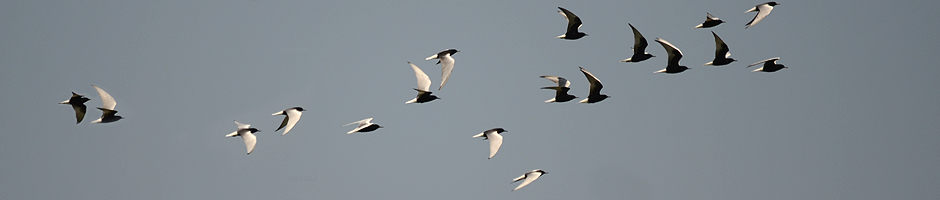
Migratory Birds - blue and white swallow
Avid Costa Rica birder and blogger, Pat O’Donnell, reports in his Costa Rica Living and Birding blog that a “river of raptors is flowing through the Caribbean lowlands, thousands of shorebirds are stopping off in the Gulf of Nicoya (and some are staying) … and there’s a lot of migration going on.”
The place to be for bird-watching in Costa Rica starting in October is Maquenque Eco-lodge in the Northern Plains. “We are already seeing the beginning of the migration of the birds,” said hotel manager Julio Cesar Artavia Munguia.

Maquenque Eco-lodge bungalowsMaquenque is one of the top Costa Rica bird watching hotel. The Costa Rica eco-lodge is located in Boca Tapada on the San Carlos River by the Maquenque National Wildlife Refuge, 15 kilometers from the Nicaraguan border and that country’s vast Indio Maiz Biological Reserve. Lodge information cites more than 410 identified species of birds, out of approximately 870 species of birds recognized in Costa Rica.

Artavia at Maquenque Eco-Lodge said October and November are usually big months to see migrating species. Some birds stay weeks to a month, while others only pass through the area in a day, he said. Notable birds Artavia has seen in years past include: raptors like peregrine falcons, black chested hawks, double-toothed kites and red-tailed kites; black swifts, white-collared swifts, blue and white swallows, barn swallows, bank swallows, mangrove swallows, and different tanagers, wrens, and warblers.

Ducks usually stay in Maquenque’s lagoon for a few weeks before moving on – ducks like the lesser scaup, least grebe, blue winged teal, Muscovy ducks, and big groups of black-bellied whistling ducks.

Great Green Macaw in Costa Rica
September and October are also when the endangered Great Green Macaws (Ara ambiguus) return to Maquenque from the Indio Maiz Biological Reservefor the almond fruits that are in season.
In addition to guided bird-watching tours at Maquenque Eco-lodge, you can canoe on the lagoon, hike in the rainforest, ride horses, go float river rafting and boating. Accommodations at the eco-lodge are simple and comfortable in 14 bungalows with balconies overlooking the lagoon. Eight kilometers of trails wind through the lodge’s 68-acre property.
Article by Shannon Farley
Migratory Birds - swallows flying

miércoles, 20 de agosto de 2014

Best rainy season day trip in northern Costa Rica: Caño Negro

Cano Negro everglades in Costa Rica 

Rainy season in Costa Rica
is the best time to visit the Caño Negro Wildlife Refuge. Known as the “everglades of Costa Rica”, its 25,100 acres have been designated a “world protected area” by conservation groups like the Ramsar Convention, for being home to some of the world’s rarest plant, animal and bird species.
Cano Negro Refuge in Costa RicaLocated near Costa Rica’s northern border with Nicaragua, by the small town of Los Chiles, Caño Negro Wildlife Refuge is one of the best places for bird-watching in Costa Rica. The best time to visit Caño Negro is now in rainy season, when the calm Rio Frio (Cold River) spills out over the grassy marshland creating a massive lake and intricate network of waterways.
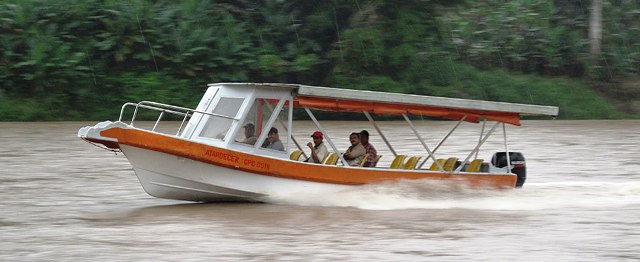
The only way to explore these fascinating wetlands is by boat. You can go wildlife and bird-watching, or fishing, on guided tours in motorized covered boats. Early mornings or late afternoons are the best times for viewing wildlife.

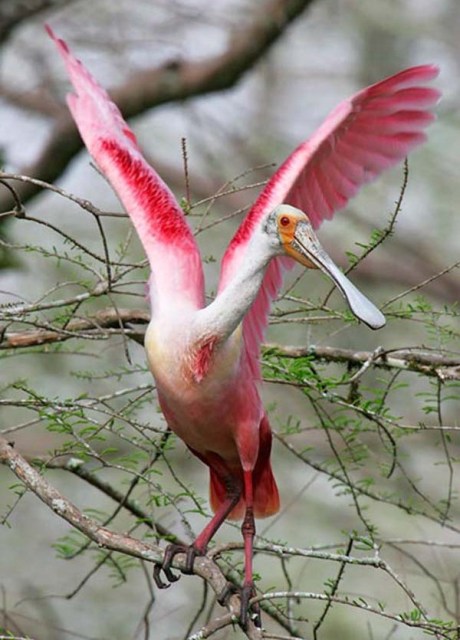
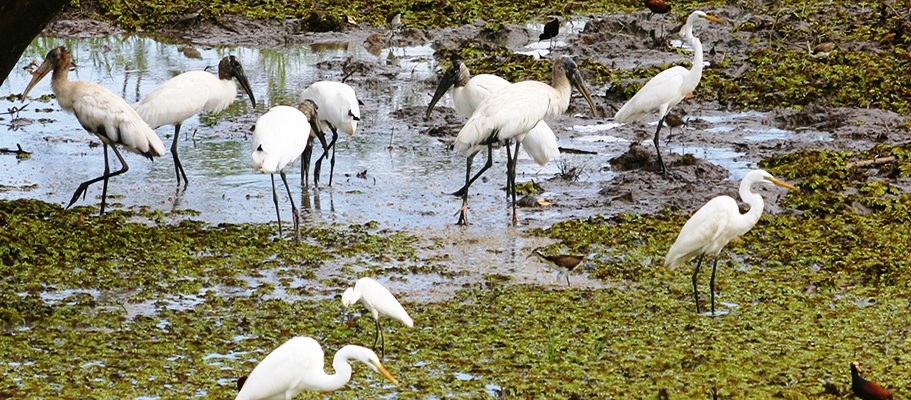
Roseate SpoonbillMore than 350 species of birds live in the Caño Negro tropical everglade, and record numbers of migratory waterfowl visit during migration season. You can see beautiful and interesting birds such as anhingas, roseate spoonbills, Jabiru storks, ducks, kingfishers, herons, egrets, Northern Jacanas, ibises and cormorants. The Frio River is full of fish like snook, silver-gold tarpon, the rare garfish, and also caimans. Along the shoreline and in the trees you may see other animals like emerald basilisks, White-faced Capuchin monkeys, howler monkeys, two and three toed sloths, iguanas, river turtles, anteaters and bats.

When visiting the Arenal Volcano and Northern Plains of Costa Rica, unique Caño Negro is one of the most amazing and worthwhile Costa Rica day trips. It is a good day trip also to do from Maquenque Eco-Lodge – or on your way from Arenal to Maquenque.

Top Costa Rica bird-watching hotel, Maquenque Eco-Lodge, records more than 410 bird species in its area by the San Carlos River and Maquenque National Wildlife Refuge. The Costa Rica eco-lodge offers guided bird-watching tours, and river canoeing, rafting and boating trips.

Article by Shannon Farley

lunes, 7 de julio de 2014

Costa Rica Northern Plains and Arenal Volcano are hot spots to visit

Arenal Volcano Costa Rica

Two must-see destinations on your Costa Rica vacation are the Arenal Volcano and Northern Plains of Costa Rica.
Arenal Volcano erupting 2006, courtesy of wikipediaThe tall, impressive Arenal Volcano rises 5,437 feet above the verdant rainforest and neighboring Lake Arenal, framing the skyline with its near perfect cone shape. The spectacular live volcano is easily one of the most photographed landscapes in Costa Rica.
Formed nearly 7,000 years ago, after four centuries of inactivity, Arenal Volcano roared into life with the famous 1968 eruption. From then on, the volcano became Costa Rica’s hottest tourist attraction with its nightly lava shows and regular pyroclastic explosions.
Although the much-loved volcano quieted into a resting phase in October 2010, Arenal and the town of La Fortuna, Costa Rica, are still hotspots for adventure activities. It is thrilling to stand close to an active volcano, and you can sometimes hear the volcano’s rumblings and see plumes of gas. Popular with everyone, of course, are the area’s natural volcanic hot springs.
Arenal Lake and Volcano, Costa Rica, image by arenal.netLocated northwest of the capital city of San Jose, the Northern Plains region offers an abundance of outdoor adventures. You can enjoy hiking in the Arenal Volcano National Park, tours on canopy zip-lines and suspension bridges, aerial trams, horseback riding, waterfall rappelling and canyoning, whitewater rafting and river float safaris. Lake Arenal offers kayaking, boating, fishing and world-class windsurfing and sailboarding.
Map to Maquenque LodgeThe Maquenque National Wildlife Refuge lies
just north of Volcano Arenal in the Northern Plains by the San Carlos River. Maquenque is an important sanctuary for birds in Costa Rica, and is a migratory stop for many North and South American bird species.
One of the top bird-watching hotels in Costa Rica is Maquenque Eco-Lodge. More than 410 bird species have been identified in the area. The Costa Rica eco-lodge features guided bird-watching tours, and river canoeing, rafting and boating trips.
Maquenque Eco-Lodge is an excellent complement to any travel itinerary that includes the Arenal Volcano.
Article by Shannon Farley

jueves, 26 de junio de 2014

Costa Rica river trips and bird-watching at Maquenque Eco Lodge

The rivers in Costa Rica are as diverse as the terrain of mountains, volcanoes, rainforest valleys and lowland jungle through which they flow.

A trip down one of Costa Rica’s rivers, either by raft, canoe, kayak or small boat, is an excellent way to see some of the country’s extraordinary wildlife. Trees that line most river banks may hold troops of monkeys, lounging iguanas and boas, and birds such as egrets, herons, ibis, ospreys, and colorful kingfishers. Crocodiles and caimans like to sun themselves on muddy banks, or may be cleverly disguised as that “log” you see floating in the water. You may even catch sight of playful river otters or sunning river turtles.

Maquenque Wildlife Refuge, Costa RicaIn the Northern Plains of Costa Rica, the San Carlos River flows 148 kilometers from near Volcano Arenal to where it joins the San Juan River on the northern border with Nicaragua. On the banks of the San Carlos River, Maquenque Eco-Lodge opens the door for travelers to experience the remarkable rainforest of the Maquenque National Wildlife Refuge. Maquenque is an important region for birds in Costa Rica, and is on the migratory path for many bird species between North and South America.

Maquenque Eco-Lodge is one of the top bird-watching hotels in Costa Rica, with more than 410 species identified in the area. When a guest, be sure to go on a guided bird-watching tour through their gardens, wetlands and forest paths.
Trips on the San Carlos River, nearby Tres Amigos River, and on the lagoon at the Costa Rica eco-lodge are excellent for bird-watching and wildlife viewing.

Boating on San Carlos RiverSan Carlos River Boat Tour

This trip explores downstream on the San Carlos River by boat. Wildlife you might see include crocodiles, river turtles, bats, herons, kingfishers, king vultures, and much more. Close to the Nicaragua border, the boat stops to visit the small village of Boca Tapada San Carlos.

Tres Amigos River Float Trip
Paddling a raft down the serene waters of the remote Tres Amigos River, through rainforest with overhanging trees and vines, is one of the most tranquil ways to discover Costa Rica’s great beauty. Crystal clear water harbors river otters, crocodiles and river turtles, and the surrounding forest is home to Great Green Macaws, Scarlet Macaws, toucans, aquatic birds, iguanas, and several species of monkeys.

Wetland birds at Maquenque LodgeCanoeing on the Lagoon

Early morning is the best time to float softly on the water of the lagoon at Maquenque Eco-Lodge. Listen to the rainforest wake up with all of its amazing sights and sounds.

Maquenque Eco-lodge bungalowsAccommodations at the eco-lodge are simple and comfortable in 14 bungalows, each having private bathrooms with hot water, and balconies overlooking the lagoon. Eight kilometers of trails wind through the Costa Rica rainforest lodge’s 68-acre property.
Maquenque Eco Lodge produces 70% of their fruits and vegetables for their restaurant in a large garden and fruit orchard.

Article by Shannon Farley

jueves, 22 de mayo de 2014

Bird-watching in Costa Rica’s Northern Plains

Scarlet Macaw in Costa RicaIf you think bird-watching is, well, “for the birds”, then you haven’t traveled to Costa Rica. The first time you see a brilliant flash of scarlet, yellow and blue fly past – a Scarlet Macaw, or the bright yellow and black with the multicolored beak of a toucan, or the iridescent flitting jewel of a hummingbird, you’ll be hooked.

Soon, you’ll be asking, “Hey, what kind of bird is that?” You’ll remember names and start noticing movement in trees and bushes. You’ll find yourself taking photos of vividly colored birds throughout your trip. And when you recount the wildlife you’ve seen in Costa Rica, birds will be in the list.

Costa Rica has long been a famous destination for serious bird watchers. With approximately 870 species of birds registered in Costa Rica – more than the total in all of North America, packed into an area about the size of West Virginia or Switzerland – it’s easy to get enthused about the eye-catching feathered creatures you see while on a Costa Rica vacation.

Sunbittern at Maquenque LodgeCosta Rica enjoys extraordinary bird life due to its geographic position as a land bridge between North and South America, and the country's many habitats: rainforests, cloud forest, mangrove swamps, beaches, rivers, lakes, wetlands, etc.

The lowland tropical rainforest and wetlands of the Northern Plains of Costa Rica are one of the more prolific sites for bird-watching in the country. Last year’s annual Christmas Bird Count in Costa Rica finished in the region at Maquenque Eco-lodge.

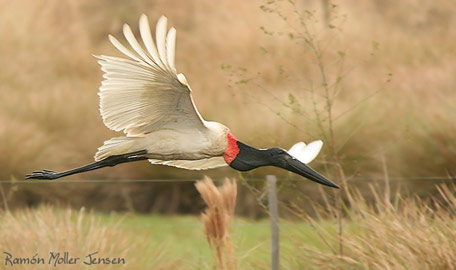
Jabiru at Maquenque LodgeMaquenque is one of the top bird-watching hotels in Costa Rica. The Costa Rica eco-lodge is located in Boca Tapada on the San Carlos River by the Maquenque National Wildlife Refuge. Lodge information cites more than 410 identified species of birds in the area, including endangered Great Green Macaws (Ara ambiguus) and Scarlet Macaws (Ara macao). Other species that can be found in the rainforest and wetlands by Maquenque are: toucans, Oropendolas, Honeycreepers, Tanagers, Chestnut-bellied Herons, Muscovy Ducks, Great Curassows, Jabirus, Roseate Spoonbills, Green Ibis, and Sunbitterns.

Birders from North America who visit Costa Rica during the northern winter months usually recognize familiar faces in the forest, since many species migrate to Costa Rica every winter.

Maquenque Eco-Lodge Costa RicaMaquenque Eco-Lodge offers fun and informative guided bird-watching tours with their naturalist guide. Accommodations at the eco-lodge are simple and comfortable in 14 bungalows, each having private bathrooms with hot water, and balconies overlooking a beautiful lagoon. Eight kilometers of trails wind through the Costa Rica rainforest lodge’s 68-acre property.

Travel Tip: Download the Costa Rica Birds Field Guide on iTunes.

Article by Shannon Farley

martes, 17 de diciembre de 2013

Activists seek to protect Costa Rica’s rich marine life.

Humpback Whale breaching in Golfo DulceThe southern Pacific Ocean off the Osa Peninsula in Costa Rica is an amazing natural wonder of marine biodiversity, home to more than 25 species of dolphins and whales, four of the world’s eight different sea turtles, along with manta rays, sailfish, marlin, tuna and sharks. The southern Pacific, and especially Golfo Dulce (Sweet Gulf) on the eastern side of the Osa Peninsula, are vital breeding and reproducing areas for endangered hammerhead sharks and migrating endangered Humpback Whales.
All of this extraordinary marine life, however, is almost entirely unprotected, except for small areas around a few national parks – the Ballena Marine National Park off the coast of Uvita, the Caño Island Biological Reserve, and off the coast of the Corcovado National Park.

Map of proposed no fishing area off Osa Peninsula, Costa RicaActivists say the waters along the entire coast of the Osa Peninsula, Costa Rica, need to be protected, and have begun a campaign to create aMultiple Use Marine Protected Area.” The MPA for OSA group (Marine Protected Area for Osa Peninsula) states that Costa Rica’s marine life is threatened by commercial shrimp trawlers, long line fishing, over fishing, tuna nets, and ocean pollution.

“Commercial fishing techniques such as long lining, shrimping, gill netting and tuna fishing are wreaking havoc on this delicate and biologically diverse area and its marine inhabitants, and if urgent and drastic actions are not taken immediately, the world will lose this treasure forever. Costa Rica's dolphins, whales, sea turtles and other marine flora and fauna are being decimated at alarming rates,” declares the MPA for OSA website.
By declaring the southern Pacific Coastal waters, from the Ballena Marine National Park out to Caño Island and down the Osa Peninsula, a “Multiple Use Marine Protected Area,” the MPA for OSA group hopes that that private, commercial and sport fishing, as well as scientific research, tourism and marine transportation can all work together sustainably.

Sea turtle off Costa Rica's southern Pacific CoastThe MPA for OSA has created a petition on Avaaz to ask the Costa Rican government to fast track the establishment of the marine protected area. The group is calling for an immediate moratorium on commercial fishing in the area while details are worked out. The group also has a crowd funding campaign to source funds to continue their research and get local communities and the government to work together.

Costa Rica’s South Pacific is one of the “most biologically diverse ocean ecosystems in the world,” according to the MPA for OSA. Off the coast of Costa Rica is an immense habitat called the Costa Rican Thermal Convection Dome, where shallow warm waters lie on top of low-oxygen cold water creating a perfect ecosystem for diverse marine life. This dome is the only one in the world that is constant year-round, producing extraordinary ecologically-rich waters.

Sunset boat tour on Golfo Dulce, Costa RicaAt Playa Nicuesa Rainforest Lodge, an environmentally sustainable eco-lodge on the inner coast of the Golfo Dulce, you can see and experience Costa Rica’s amazing marine life. The award-winning eco-lodge offers boat tours of the Gulf to see marine life such as dolphins, sea turtles and whales.

Located on a 165-acre private preserve backing up to the Piedras Blancas National Park, Playa Nicuesa Rainforest Lodge is a unique adventure travel destination for its remote, pristine wilderness location. They offer family vacations, honeymoon trips, nature and adventure vacations, and yoga classes and retreats.
Article by Shannon Farley

lunes, 25 de noviembre de 2013

Guarding the King of the Jungle on the Osa Peninsula

Like the lion or the tiger, the jaguar is the "king of the jungle" in the Americas. It is the largest feline in the Americas and the third largest in the world, notes Wikipedia. With a range extending from Southwestern United States and Mexico across much of Central America and south to Paraguay and northern Argentina, there are only an estimated 15,000 jaguars left in the wild, according to the World Wildlife Fund (WWF).

"The jaguar is still an abundant species, but is threatened by habitat loss and persecution," notes a 2008 report by the International Union for Conservation of Nature (IUCN). "Due to loss of habitat, poaching of prey and fragmentation of populations across portions of the range, this species is considered to be 'near threatened.' If threats continue at the current rate, the species will likely qualify for 'vulnerable' status in the near future."

This spotted cat most closely physically resembles the leopard, although it is usually larger and stockier, and its behavior is more similar to that of the tiger. Jaguars prefer dense rainforest for their habitat, but will range across a variety of forested and open terrains; they usually stay near water, and jaguars are noted for enjoying swimming like tigers.

In Costa Rica, the Osa Peninsula is an important refuge for the jaguar. The large cats roam between the vast Corcovado National Park, the biological corridor of the Golfo Dulce Forest Reserve, and the Piedras Blancas National Park. The biggest threat to the jaguar population is being killed by farmers, reported a 2011 article on jaguar conservation by the Tico Times. According to Eduardo Carrillo, biologist and director of the International Institute of Conservation and Wildlife at the National University (ICOMVIS-UNA) in Heredia, the conflict between farmers and jaguars has resulted from the loss of the wildcats' natural prey.

"Much of the reason that jaguars enter farms to attack cattle is because sport hunting has diminished their principal prey and sources of food in protected areas," Carrillo said. "People kill the principal prey of the jaguars and it leaves them without sufficient food. As a result, they leave the protected areas and kill cows and pigs, which results in the jaguars being killed by farmers. In Costa Rica, it is the principal cause of the decreasing population of jaguars."

Wildlife conservation groups on the Osa Peninsula are actively trying to educate farmers and landowners located near national forests on how to protect their animals while also safeguarding the jaguars.

In Puerto Jiménez, Yaguará (the native word for jaguar) is a non-profit, non-governmental organization that protects wildlife, mainly wild cats. They work with the community and the National Parks system to study jaguars and ensure their survival and also for their prey throughout southern Costa Rica and northern Panama. Yaguará is experimenting with alternative strategies, such as a farmer compensation program when a wildcat kills an animal.

The organization has created an extensive network of infrared "camera traps," which use motion detectors to capture on film anything that passes by the camera. Yaguará's scientists use the information to study the Osa's wildcat populations, especially those of ocelots, pumas and jaguars.

Playa Nicuesa Rainforest Lodge, across the Golfo Dulce from the Osa Peninsula, also has installed camera traps to record wildlife activity in their 165-acre private rainforest preserve. The Playa Nicuesa Reserve borders the Piedras Blancas National Park, which connects to the Osa Peninsula and Corcovado National Park, so it is feasible that they could capture on camera the same jaguars that roam the Osa.

Playa Nicuesa Rainforest Lodge is an environmentally sustainable lodge on the pristine Pacific coastline of the Golfo Dulce. The award-winning eco-lodge caters to travelers interested in ecotourism, nature and adventure. They offer family vacations, honeymoon trips, nature and adventure vacations, and yoga classes and retreats.

martes, 12 de noviembre de 2013

What to do for nature and adventure vacations in Costa Rica.

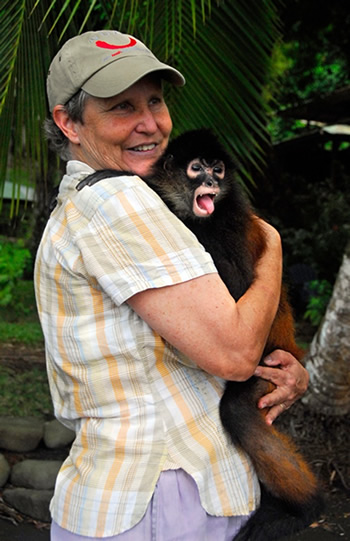
Osa Wildlife Sanctuary founder Carol Patrick and Winkie the spider monkeyMeet sloths, kinkajous, tayras, ocelots, peccaries and anteaters. Stand next to Scarlet Macaws feeding on almond trees. Watch white-faced monkeys swing and play next to you, and have your heart melt when a spider monkey comes to hold your hand.

This isn't some exotic zoo, but rather the Osa Wildlife Sanctuary on Golfo Dulce in the South Pacific of Costa Rica. The Costa Rica wildlife refuge helps orphaned and injured animals that are indigenous to this southern Pacific rainforest. Sadly, many of the animals are victims of illegal pet trade

Monkeys, wild cats, kinkajous, Scarlet Macaws and other prized creatures are captured as babies, and then abused or abandoned when their owners find they don't know how to deal with a wild animal. The Osa Wildlife Sanctuary works closely with the Costa Rica Ministry of Environment and Energy (MINAE) to rescue illegally-held animals.

The sanctuary on the beautiful Golfo Dulce coast by the Piedras Blancas National Park was originally an eco-lodge started by owners Carol Patrick and Earl Crews. Carol got a reputation for tending to injured animals, and soon locals began dropping off orphaned and injured wildlife until there was no time for guests. The Osa Wildlife Sanctuary was then established in 1996.

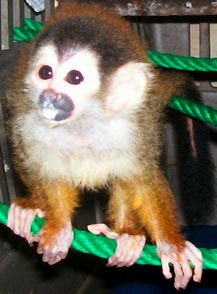
Osa Wildlife Sanctuary, baby squirrel monkeyAt first primarily an avian sanctuary, after Poppy the spider monkey arrived in 2003, all sorts of wonderful critters started showing up. Carol and her staff try their best to rehabilitate animals to release back into the wild. For each animal that enters the refuge, a complex and often unconventional playground, specifically designed to mimic its natural habitat, is created for housing. Environmental enrichment features – like species-appropriate toys, imitation streams with cascading water, and tree branches –encourage natural behaviors and prevent boredom.

Osa Wildlife Sanctuary, Boogie the Tayra
The Osa Wildlife Sanctuary is a non-profit organization and relies on donations and tour fees to help with expenses like food, staffing, veterinary medical care, and supplies. Guided tours for visitors cost $25 per person and reservations must be made in advance.

Playa Nicuesa Lodge reception main buildingThe animal refuge is a popular eco-tour for guests at Playa Nicuesa Rainforest Lodge, just 10 minutes away by boat down the Golfo Dulce coast. Playa Nicuesa Rainforest Lodge is an environmentally sensitive eco-lodge set on a 165-acre private preserve

The award-winning eco-lodge caters to travelers interested in ecotourism, nature and adventure. They offer family vacations, honeymoon trips, nature and adventure vacations, and yoga classes and retreats.

Article by Shannon Farley

lunes, 28 de octubre de 2013

Can agriculture co-exist with rainforest in Costa Rica's Caribbean lowlands?

Evidence shows that Costa Rica's 17-year-old deforestation ban on cutting "mature" forests may actually be working, according to a study published recently in the journal Environmental Research Letters.

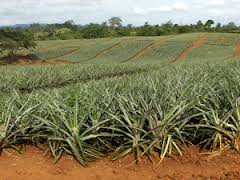
Pineapple plantation in Costa Rica's Caribbean lowlandsIn Costa Rica's northern Caribbean lowlands, in an area where pineapple production tripled over the past decade, a study led by Matthew Fagan of Columbia University found that the annual loss rate of old-growth forest dropped 40 percent despite the region's agricultural boom. Researchers used satellite imagery to determine whether deforestation has been happening to make way for pasture and cropland in the area since the 1996 law was enacted.

"We observed that following the ban, mature forest loss decreased from 2.2% to 1.2% per year, and the proportion of pineapple and other export-oriented cropland derived from mature forest declined from 16.4% to 1.9%," the researchers wrote. "The post-ban expansion of pineapples and other crops largely replaced pasture, exotic and native tree plantations, and secondary forests."

What appears to be happening is that the primary industrial agricultural crops in the region – pineapples and bananas – have shifted to taking over pastureland and non-protected green areas. Mature forests are being protected for the most part; however, there is still not an ecological solution to the agriculture vs. rainforest issue.

Spraying pineapple fields by forest in Costa RicaThe researchers note that intensive agriculture has taken over important non-protected forests, including wetlands and secondary forests, and that their use of agricultural chemicals puts animals and aquatic habitats at risk. Additionally, they observe that these monocultures offer fewer habitats for wildlife than, for instance, a typical cattle pasture, which usually includes scattered tree cover that can be used by many species. A pineapple farm, on the other hand, is usually devoid of trees and in effect is a biological desert.

"Pineapple and banana production in Costa Rica depends on extremely high applications of fertilizer and toxic pesticides," the study's authors write. "In Costa Rica these agro-chemicals have degraded water quality and disrupted downstream ecosystems, and contaminated forests with pesticides."

Forests and coffee production

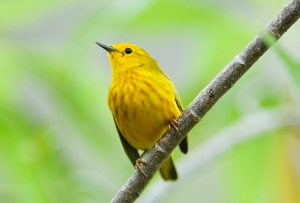
Protecting coffee farms from pests is the yellow warbler, image by Nature JournalPineapple-producing companies could perhaps learn a lesson from Costa Rica's coffee farmers, who have found that the more trees their farms have, the more birds live in the area and help reduce pest infestations.

 According to a study reported in the Nature Journal, insect-eating birds reduced damage from a devastating coffee pest, the coffee berry borer beetle (Hypothenemus hampei), by about half. The African borer beetle is invulnerable to most pesticides, and can cost farmers up to 75% of their crop.

"Based on this study, we know that native wildlife can provide you with a pretty significant benefit," states Daniel Karp, a conservation biologist at Stanford University in California, who led the study. "Incorporating their conservation into your management of pests is absolutely something you should do."
Costa Rica's success with reforestation

Costa Rica is the first tropical country in the world that has reversed a decades-long process of deforestation – dropping from 85% forest in 1940 to 35% forest by 1980. According to a 2012 World Bank report, Costa Rica was back up to 51.02% forest in January 2010.

Costa Rica lush rainforestDeforestation and forest degradation, through agricultural expansion, conversion to pastureland, development, destructive logging, fires, etc., account for nearly 20% of global greenhouse gas emissions.

 That is more than all of the transportation on the planet, and second only to the energy sector, according to the United Nations Collaborative Program on Reducing Emissions from Deforestation and Forest Degradation in Developing Countries (UN-REDD).
Luckily for Costa Rica, the big business of ecotourism has become an important revenue source and is pushing reforestation and greater environmental protection measures.

Hiking in the rainforest at VeraguaAn exemplary conservation project in Costa Rica's Caribbean mountains is Veragua Rainforest Research & Adventure Park. "We're a perfect example of an ecotourism project," says Veragua owner Marti Jimenez. "We're located in a poor area that traditionally was involved in logging, mono-agriculture and hunting. We're turning the region into a conservation-focused area, giving locals jobs and teaching them to protect their resources."

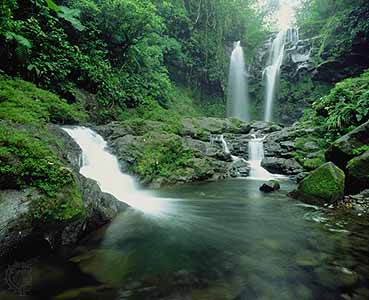
Veragua Rainforest is a 1,300-hectare (3,212-acre) biology research center and adventure park, located about an hour inland from the historic Caribbean port town of Limon. It is an area of breathtaking tropical rainforest next to the Talamanca Mountain Range and the La Amistad ("Friendship") International Park.

 Visitors have a complete Costa Rica rainforest experience in a one-day tour at Veragua. The park is a principal day tour for cruise line passengers docking in Limón. Attractions include wildlife exhibits and science labs, an aerial tram, canopy zipline tour, hiking trails, a river with waterfalls, and of course, the rainforest.

Article by Shannon Farley