Mostrando entradas con la etiqueta sustainable travel costa rica. Mostrar todas las entradas

lunes, 25 de mayo de 2015

A tale of dreams and adventure: Beginning Playa Nicuesa Rainforest Lodge

Playa Nicuesa Rainforest Lodge in Costa Rica

Guests staying at Playa Nicuesa Rainforest Lodge always ask: how did the Costa Rica eco-lodge get started?

The question is a reasonable one given Nicuesa Lodge’s isolated location in southern Costa Rica. It is a wild place of dense steamy rainforest and tranquil ocean, intensely populated by thousands of species of tropical wildlife. Playa Nicuesa is a little crescent-shaped beach and small bay on the pristine Golfo Dulce – “Sweet Gulf” – a critical habitat for migrating Pacific Humpback Whales, dolphins and hammerhead sharks. The region is a giant conservation area including the world-famous Corcovado National Park on the Osa Peninsula, the Piedras Blancas National Park and three other private reserves.

Playa Nicuesa on Golfo Dulce from the air

What keeps Playa Nicuesa Rainforest Lodge so unique and private is that the lodge is accessible only by boat. Almost directly across the gulf from the town of Puerto Jimenez, Nicuesa Lodge’s 165-acre private preserve is backed by rugged mountains and wild jungle of the Piedras Blancas National Park. There are no roads, and there is no development.

Dolphins in Golfo Dulce
So, how did a high-end eco-lodge come to be in this pure, remote place?

sábado, 15 de noviembre de 2014

Sustainable travel in Costa Rica leads world in green economic performance.

Green Global EconomyRight behind Sweden and Norway as the top Green Countries in the World, is the little Central American nation of Costa Rica.

According to the recently released 2014 Global Green Economy Index™ (GGEI), Costa Rica is the third best Green Country in the World.

The Global Green Economy Index™ (GGEI) measures the green economic performance of 60 countries and 70 cities in the world. The GGEI also assesses the public’s perception of a nation’s green performance. The fourth edition of the GGEI, published by private U.S.-based consultancy Dual Citizen LLC was released at the end of October 2014.

For Green Performance, the top 10 countries are: Sweden, Norway, Costa Rica, Germany, Denmark, Switzerland, Austria, Finland, Iceland and Spain. For Perception, Germany leads, followed by Denmark, Sweden, Norway, Netherlands, United States, Japan, UK, Finland and Switzerland; Costa Rica comes in at 14th place in this ranking. The Perception index is interesting given that Costa Rica ranks third in performance but 14th in perception; while China ranks 13th in perception and 55th in performance.

This is the first time that Costa Rica has been included in the GGEI.

Golfo Dulce in Costa Rica“Covered for the first time, Costa Rica records an impressive result, ranking third behind Sweden and Norway on performance and in the top 15 for perceptions overall, a notable accomplishment for such a small country,” states the GGEI. “Costa Rica’s overall top result on the performance measure is driven by impressive results on both the Efficiency Sectors and Environment and Natural Capital dimensions, making it one of only a few countries to achieve such strong results in both areas.”

Costa Rica is the top ranked country in green tourism in terms of performance in the five areas assessed by the GGEI, the report notes.

Ecotourism or green tourism, also called sustainable travel, is extremely important in Costa Rica. Playa Nicuesa Rainforest Lodge is a leading hotel in sustainable travel in Costa Rica. The Costa Rica rainforest lodge by the Osa Peninsula is one of only three dozen hotels in Costa Rica that have received the highest rating in the Certification for Sustainable Tourism Program (CST).

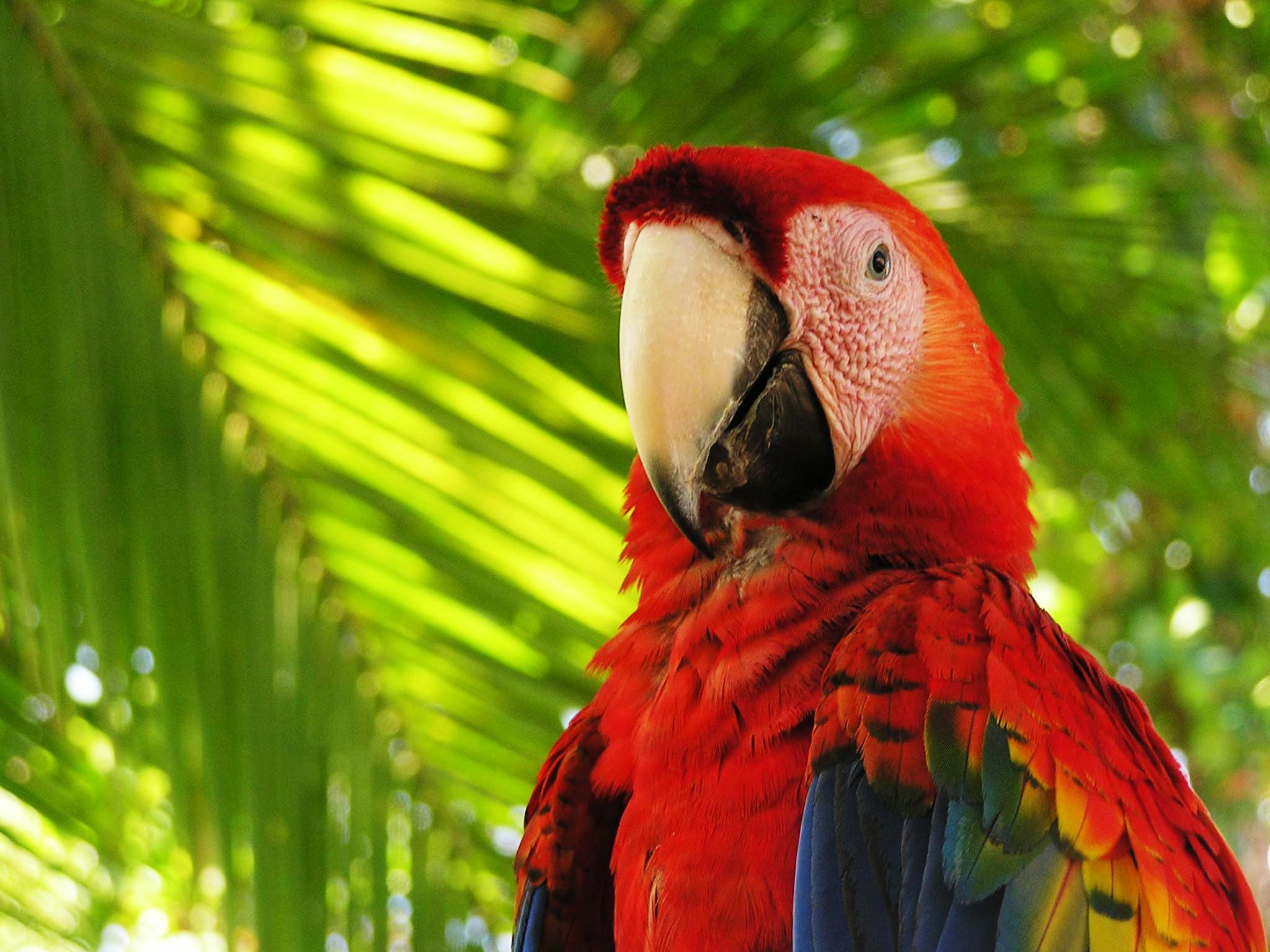
Scarlet Macaw at Playa Nicuesa Rainforest LodgeLocated on a 165-acre private preserve in southern Costa Rica, Playa Nicuesa Rainforest Lodge is bordered by the Piedras Blancas National Park and the pristine Golfo Dulce (Sweet Gulf) across from the Osa Peninsula. The region is a critical habitat for migrating Pacific Humpback Whales, hammerhead sharks, dolphins, sea turtles, Scarlet Macaws and jaguars.

The lodge is offering Green season specials through Dec. 15, 2014.
Article by Shannon Farley

miércoles, 15 de octubre de 2014

Giving thanks on a Thanksgiving yoga retreat in Costa Rica

This year, why not spend the Thanksgiving holidays giving thanks for all that is good in life on a revitalizing yoga retreat in Costa Rica.
Beach at Playa Nicuesa Rainforest Lodge, Golfo DulceImagine taking a break from the busyness of everyday life to relax and restore your energy in the rainforest, with 80-degree warm gulf waters at your doorstep and monkeys, Scarlet Macaws and coatis as your neighbors. This is Playa Nicuesa Rainforest Lodge in southern Costa Rica.
Accessible only by boat, the remote oceanfront Costa Rica rainforest lodge is located on the breathtaking Golfo Dulce across from the famous Osa Peninsula by the Piedras Blancas National Park. The extraordinary Costa Rica eco-lodge was designed for sustainable travel and holds the highest rating in the Certification for Sustainable Tourism Program (CST) in Costa Rica.

Yoga retreat by Shonna & JohnStarting Nov. 23, 2014, international yoga instructor Shonna Annapurna Brown and international recording artist John William Bauld will lead a Yoga Meditation and Sound retreat. The retreat lasts five, six or seven nights, depending on how long you choose to stay.

The yoga retreat includes two daily yoga classes, meditation, and evening kirtan concerts with the instructors. Yoga classes will be held on the beautiful yoga deck on the beach (shaded) or at the tree canopy-level main lodge building. There will be classical hatha yoga; Mantrasana Yoga with live music, a meditative hatha yoga class set to live mantra music; and restorative yoga. Kirtan is soothing participatory music using ancient Sanskrit mantras.
Mango House guest room at Playa Nicuesa LodgeThe retreat package includes accommodation at Playa Nicuesa Rainforest Lodge, all meals, boat transfers, guided adventure activities, unlimited self-guided hikes in the preserve, and use of kayaks, snorkeling and fishing equipment. To get to Playa Nicuesa Rainforest Lodge, drive or fly (NatureAir or Sansa Airlines) to either Puerto Jimenez or Golfito. Nicuesa Lodge will pick you up by boat and transfer you to the lodge (about 30 minutes one-way).
Article by Shannon Farley

jueves, 4 de septiembre de 2014

Does real eco-tourism exist in Costa Rica?

Trails Playa Nicuesa Costa RicaThere is a lot of talk in travel about eco-tourism and being sustainable. But what does that really mean? Is that simply turning off a few lights, not wasting water and recycling the trash?

According to the United Nations, sustainability is “meeting the needs of the present without compromising the ability of future generations to meet their own needs.” Costa Rica pioneered sustainable tourism over the past decade through its Certification for Sustainable Tourism Program (CST), validated as a global model by the United Nations.

Created by the Costa Rican Tourism Board (ICT), the CST program rates and certifies tourism businesses based on their compliance with natural, cultural and social resource management. CST consists of five levels, called “Leaves”; Level five, or Five Leaves, signifies that the company is considered “outstanding in terms of sustainability.” The rating process can take more than a year to complete, with frequent inspections and evaluations, and the highest levels are very difficult to obtain.

Beach at Playa Nicuesa Rainforest LodgePlaya Nicuesa Rainforest Lodge is one of only three dozen hotels in Costa Rica that have received the highest rating for sustainability of Five Leaves

The extraordinary Costa Rica eco-lodge was constructed in harmony with the environment from naturally fallen trees and recycled materials. A true Costa Rica rainforest lodge, it is located on a 165-acre private preserve in the dense tropical rainforest bordering the Piedras Blancas National Park and the pristine Golfo Dulce (Sweet Gulf) by the Osa Peninsula in southern Costa Rica

Since the only way to get there is by boat across the pristine waters of the Golfo Dulce from either the towns of Golfito or Puerto Jimenez, you can imagine how difficult it was to build.
“We traveled all over Costa Rica and other parts of Central America to find and create a special place where one can intimately experience the natural world of both the tropical rainforest and the Pacific Ocean,” explained Playa Nicuesa owners, Michael and Donna Butler. “Our plan was to create a place that offers the comfort of a lodge and the activities and diversity of an adventure tour.”
    Playa Nicuesa bungalow
  • Lodge buildings are located on less than 2% of property – 98% is a private protected area.
  • Used recycled construction materials, such as: roof tiles on the lodge and cabins made from recycled plastics, including banana bags.
  • Wood came from naturally fallen trees, permitted by the government to be pulled out of the forest by oxen, or from farmed trees.
  • Electricity is provided by solar energy. Panels are located on main lodge structure. Back-up generator runs on recycled vegetable oil.
  • Solar drying room used to dry all of the lodge wash.
  • Hot water is provided by on-demand propane which means that the propane is used only when the hot water faucet is turned on.
  • Received the Ecological Blue Flag Award for clean beaches.
Check out Playa Nicuesa Rainforest Lodge Green Season Specials for adventure, nature, yoga, relaxation and comfort at great prices through Sept. 30, 2014.
Article by Shannon Farley

viernes, 16 de mayo de 2014

Jaguars and monkeys and whales on Osa Peninsula Costa Rica! Oh my!

Piedras Blancas National ParkDown in the very south of Costa Rica there is a rainforest you dream to see. Thankfully off the tourism “superhighway” and explored only by adventurous intrepid travelers, it is a place of rugged mountains, plunging waterfalls, free-flowing rivers, striking beaches and magnificent towering trees in dense rainforest.

Jaguars roam freely, scarlet macaws soar overhead, and humpback whales and dolphins splash in the calm blue waters of the Golfo Dulce in this wilder side of Costa Rica. There aren’t many roads, and there are far more trees than people.

Piedras Blancas National Park treesIn the southwestern corner of this peaceful Central American nation, renowned for eco-tourism, the Piedras Blancas National Park is much less visited than its famous neighbor, the Corcovado National Park. One third smaller, the Piedras Blancas National Park spans 34,642 acres that tie into the more than 366,000 acres of land and sea protected in national parks, wildlife refuges and private reserves on the Osa Peninsula Costa Rica.

Sandwiched between the Golfito National Wildlife Refuge to the east and the Golfo Dulce Forest Reserve to the west, Piedras Blancas was heavily logged and hunted until land was donated or slowly bought by charitable groups and turned over for public use. The national park was created in 1993.

Jaguar on the Osa PeninsulaToday, the park protects the remaining lowland tropical rainforest near the Golfo Dulce, and provides a habitat for all five species of Costa Rica wild cats – jaguars, ocelots, margays, jaguarundis and pumas – and all four kinds of monkeys – spider, howler, white-faced capuchin and endangered squirrel monkeys. The park is considered to be one of the top bird-watching locations in Costa Rica, with more than 330 species recorded.

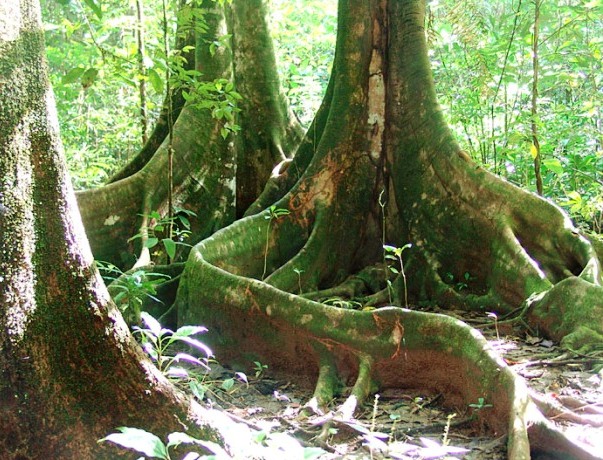
Playa Nicuesa treehouse main lodgeThe best way to visit Piedras Blancas National Park is to stay in the area. Playa Nicuesa Rainforest Lodge is the top Costa Rica eco-lodge on the Golfo Dulce. Its 165-acre private preserve backs into the Piedras Blancas National Park. While visiting, you can explore thriving rainforests and immaculate beaches, powerful waterfalls and the fascinating Esquinas River and mangrove estuary. Just off the coast are many intact coral reefs, providing excellent places to snorkel and swim.

Article by Shannon Farley


martes, 8 de abril de 2014

A favorite place to visit in Costa Rica: the Osa Peninsula

“In a remote and lush corner of Costa Rica, lies a realm of giant trees, roaring monkeys, jaguars on the prowl, and breaching whales. This is one of the last places on Earth where virgin rainforest grows right to the high tide line, and a visitor might walk for hours – or days – along its isolated coast without meeting a single person. This is the Osa Peninsula and there is no other place in the world like it.” Osa: Where the Rainforest Meets the Sea by ecologist Dr. Trond Larsen and photographer Roy Toft.
Osa Peninsula map, courtesy of Osa ConservationFor me, the Osa Peninsula is one of the most worthwhile places to visit in Costa Rica.
The small stretch of remote rugged jungle in the southwestern corner of the country, bounded by the deep blue Pacific Ocean to the west and the placid Golfo Dulce (Sweet Gulf) to the east, is renowned as an astounding paradise by scientists, explorers and nature lovers.

This last remaining stretch of tropical humid lowland rainforest in Costa Rica, covering an area of 700 square miles, is estimated to hold 2.5% of the world’s biodiversity. With more than 700 species of trees, the largest population of wild Scarlet Macaws in the country, exotic tapirs and jaguars, and more than 25 kinds of dolphins and whales, the Osa’s natural report card is impressive.

Scarlet Macaw at Playa Nicuesa Rainforest LodgeThe southern Pacific Ocean and Golfo Dulce are vital breeding and reproducing areas for endangered hammerhead sharks and the world’s migrating Pacific Humpback Whales. Activists have begun a campaign to create a protected area for the waters along the entire coast of the Osa Peninsula, Costa Rica, to safeguard the abundant yet threatened marine life.

The Osa Peninsula protects more than 366,000 acres of land and sea in at least 13 national parks, wildlife refuges and private reserves – including the Golfo Dulce Forest Reserve, Corcovado National Park and Piedras Blancas National Park.
This is the spot that spawned Costa Rica’s eco-lodges and gave rise to the burgeoning industry of sustainable travel in Costa Rica.

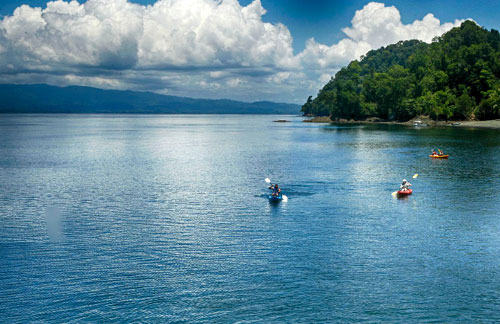
Kayaking on Golfo Dulce by Playa Nicuesa LdogeWhat to do on the Osa Peninsula:
Where to stay by the Osa Peninsula

Playa Nicuesa bungalows in the jungleFor a real jungle experience, you want to stay at Playa Nicuesa Rainforest Lodge, an award-winning sustainable eco-lodge by the Osa Peninsula. Accommodations and facilities are very comfortable, well done, and best of all you don’t miss out on the beach because the Costa Rica lodge is located on the beautiful coast of the Golfo Dulce. Its 165-acre private preserve joins with the Piedras Blancas National Park and Osa Conservation Area.

The area is very remote and well worth it to experience real Costa Rica nature. Go for family vacations, honeymoon trips, nature and adventure vacations, and yoga classes and retreats.

Article by Shannon Farley

jueves, 6 de febrero de 2014

Top Costa Rica eco lodge to host scientific guest lecturers

Two top U.S. biology research scientists are coming to Costa Rica in early March to lead a study trip deep in the Costa Rican rainforest on the south Pacific Coast of the Golfo Dulce.

Dr. Howard Topoff and Dr. Carol SimonThe scientific tour will be held March 1-7, 2014, at Playa Nicuesa Rainforest Lodge, a member of Enchanting Hotels & Resorts Costa Rica. Drs. Howard Topoff and Carol Simon of Arizona – both professors emeriti of The City University of New York and Research Associates at the American Museum of Natural History – will be guest lecturers.

Playa Nicuesa Rainforest Lodge is a unique Costa Rica eco lodge immersed in the dense tropical rainforest bordering the Piedras Blancas National Park in southern Costa Rica. The only way to get to the remote wilderness retreat, set on a 165-acre private preserve, is by boat across the pristine waters of the Golfo Dulce from either the towns of Golfito or Puerto Jimenez

Rainforest at Playa NicuesaThe area joins an immense biological corridor that extends from the world-famous Corcovado National Park on the Osa Peninsula to the Golfo Dulce Forest Reserve and the Piedras Blancas National Park, down into Panama. Known as a tropical fjord, the Golfo Dulce (“Sweet Gulf”) is a critical habitat for migrating Pacific Humpback Whales, and resident and migratory communities of dolphins and sea turtles.

Drs. Topoff and Simon have been scientific study trip leaders for the past 30 years for the Smithsonian Institute, The American Museum of Natural History, Naturalist Journeys, Elderhostel, and several cruise lines. The husband-and-wife team’s specialty is social behavior of animals, tropical ecology and evolutionary biology. Their educational programs and entertaining multimedia presentations are highly popular.

Army ants in Costa RicaAt Playa Nicuesa Rainforest Lodge in March, the scientific researchers will address the natural history of Costa Rica:
  • Introduction to Rainforest Animals & Plants
  • Social Behavior of Monkeys of Central and South America
  • Social Insects of the World
  • The Evolution of Animal Coloration
  • Poisonous Reptiles and Amphibians of the Rainforest
  • The Evolution of Animal Communication
  • Courtship and Mating Strategies of Animals
For more information and reservations, contact Playa Nicuesa Rainforest Lodge. The award-winning eco-lodge offers ecotourism, nature and adventure vacations, family holidays, honeymoon trips, and yoga classes and retreats.
Article by Shannon Farley