Mostrando entradas con la etiqueta places to visit in costa rica. Mostrar todas las entradas

martes, 15 de julio de 2014

Let Vesatours plan your Costa Rica family vacation.

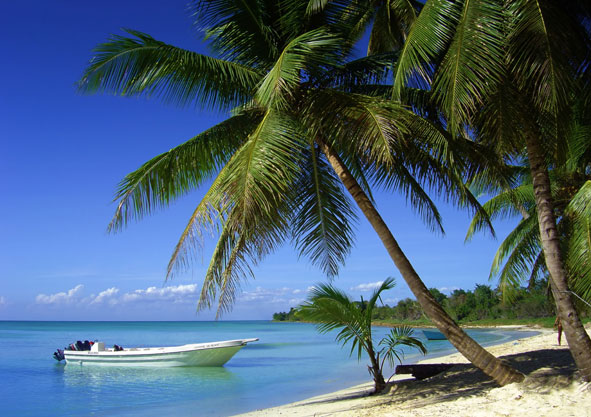
Family beach vacation Costa RicaFamilies who travel to Costa Rica know that Costa Rica is a fun, easy and safe family vacation destination. In fact, Costa Rica is this year’s most recommended travel hotspot in the world!

Positioned between Nicaragua and Panama, Costa Rica is easily accessible from North America and Europe with numerous daily flights. It is one of the safest countries in Central America, is affordable, easy to travel, and English is widely spoken besides the native Spanish language.

Here you have sunny beaches, thrilling rainforest, beautiful lakes and rivers, and breathtaking volcanoes and mountains. Add in exciting Costa Rica adventure tours and nature, and happy, friendly people, and it is easy to understand why Costa Rica is so popular.

Family travel to Pacuare RiverThe best way to plan a Costa Rica family vacation – especially for the first time – is to go with a Costa Rica vacation package from an experienced Costa Rica travel agency.

Vesatours specializes in Costa Rica vacations and custom travel itineraries, for nearly 30 years. Their multilingual travel consultants take care of your hotels, transportation and tours, designing a vacation plan just right for your family. A good recommendation is to use their trained naturalist guides

Costa Rica is filled with wildlife, but families may miss a lot of it without a naturalist guide who knows where to look and what to listen for in the jungle to give you the best experience possible. A guide ensures that all of your family members’ needs are met, and is a wealth of information about the country.

Favorite places to visit in Costa Rica for families:
Article by Shannon Farley

martes, 8 de abril de 2014

A favorite place to visit in Costa Rica: the Osa Peninsula

“In a remote and lush corner of Costa Rica, lies a realm of giant trees, roaring monkeys, jaguars on the prowl, and breaching whales. This is one of the last places on Earth where virgin rainforest grows right to the high tide line, and a visitor might walk for hours – or days – along its isolated coast without meeting a single person. This is the Osa Peninsula and there is no other place in the world like it.” Osa: Where the Rainforest Meets the Sea by ecologist Dr. Trond Larsen and photographer Roy Toft.
Osa Peninsula map, courtesy of Osa ConservationFor me, the Osa Peninsula is one of the most worthwhile places to visit in Costa Rica.
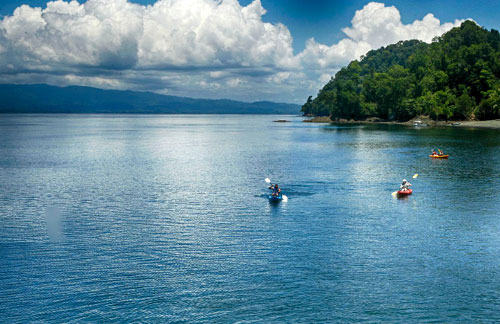
The small stretch of remote rugged jungle in the southwestern corner of the country, bounded by the deep blue Pacific Ocean to the west and the placid Golfo Dulce (Sweet Gulf) to the east, is renowned as an astounding paradise by scientists, explorers and nature lovers.

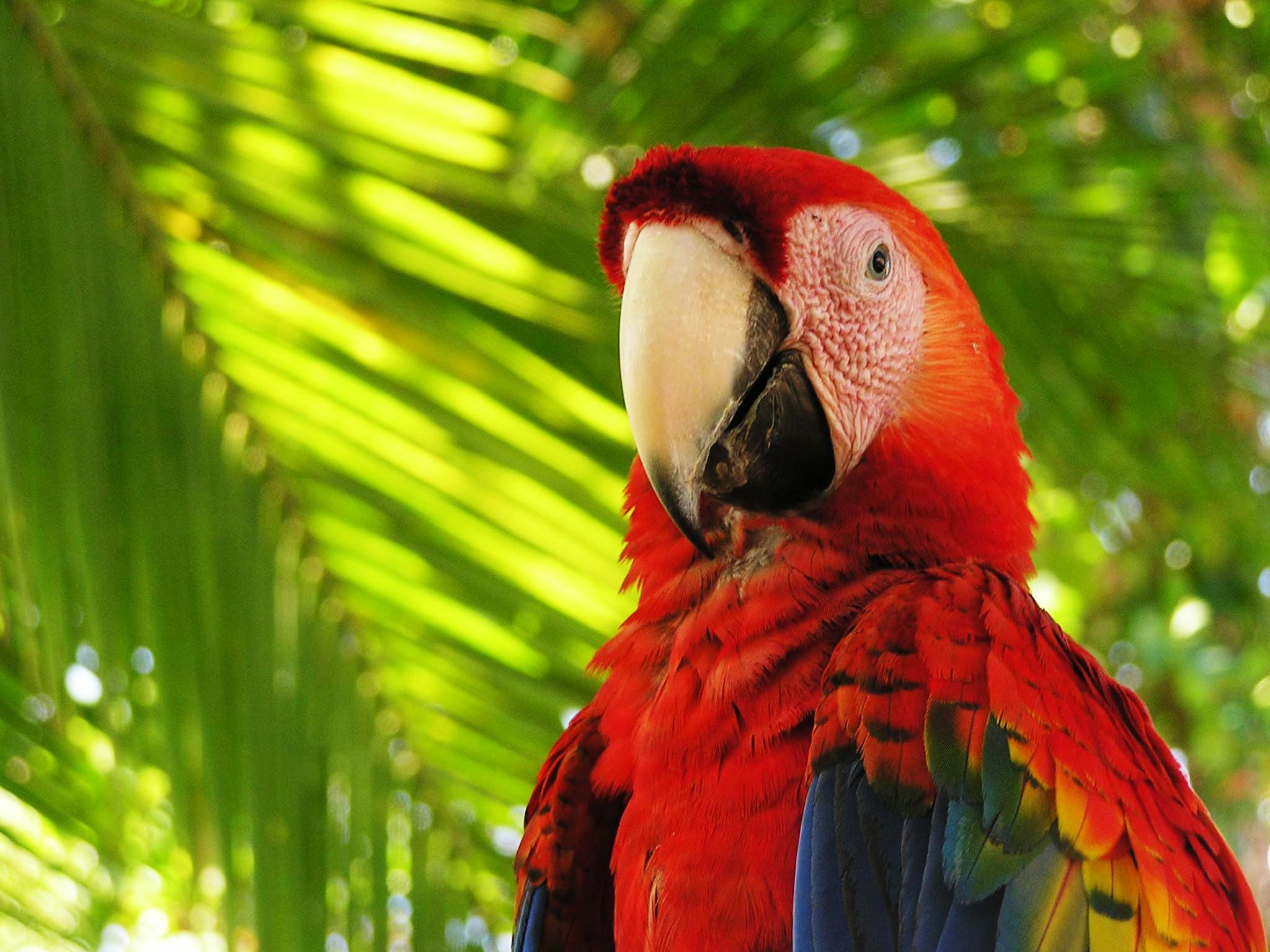
This last remaining stretch of tropical humid lowland rainforest in Costa Rica, covering an area of 700 square miles, is estimated to hold 2.5% of the world’s biodiversity. With more than 700 species of trees, the largest population of wild Scarlet Macaws in the country, exotic tapirs and jaguars, and more than 25 kinds of dolphins and whales, the Osa’s natural report card is impressive.

Scarlet Macaw at Playa Nicuesa Rainforest LodgeThe southern Pacific Ocean and Golfo Dulce are vital breeding and reproducing areas for endangered hammerhead sharks and the world’s migrating Pacific Humpback Whales. Activists have begun a campaign to create a protected area for the waters along the entire coast of the Osa Peninsula, Costa Rica, to safeguard the abundant yet threatened marine life.

The Osa Peninsula protects more than 366,000 acres of land and sea in at least 13 national parks, wildlife refuges and private reserves – including the Golfo Dulce Forest Reserve, Corcovado National Park and Piedras Blancas National Park.
This is the spot that spawned Costa Rica’s eco-lodges and gave rise to the burgeoning industry of sustainable travel in Costa Rica.

Kayaking on Golfo Dulce by Playa Nicuesa LdogeWhat to do on the Osa Peninsula:
Where to stay by the Osa Peninsula

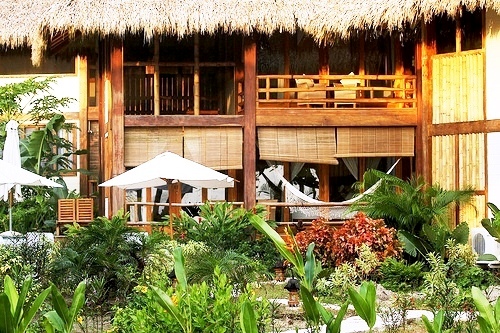
Playa Nicuesa bungalows in the jungleFor a real jungle experience, you want to stay at Playa Nicuesa Rainforest Lodge, an award-winning sustainable eco-lodge by the Osa Peninsula. Accommodations and facilities are very comfortable, well done, and best of all you don’t miss out on the beach because the Costa Rica lodge is located on the beautiful coast of the Golfo Dulce. Its 165-acre private preserve joins with the Piedras Blancas National Park and Osa Conservation Area.

The area is very remote and well worth it to experience real Costa Rica nature. Go for family vacations, honeymoon trips, nature and adventure vacations, and yoga classes and retreats.

Article by Shannon Farley

martes, 19 de noviembre de 2013

How travel keeps you feeling young - free and happy.

We all love things that make us feel young (or remember our youth), feel free and be happy. Traveling is almost always in the top 10 – even if only to an old neighborhood where we once lived. Why?

Reasons to travel the world1. Traveling opens up our world.

In today's world, where emails and smart phones often replace face-to-face interaction, traveling makes us get out and connect with humanity. Traveling changes our scenery. When we travel, we leave our daily routine and see new things which stimulate our mind and encourage creative energy.

2. Traveling teaches us to relax.
Whether we want to or not at first, we have to chill out to really enjoy traveling. Traveling for pleasure rejuvenates us physically and mentally so we can return to our daily routine with more energy and patience. Taking a break from our routine – work, school, daily to-dos of parenthood, household chores, etc. – refreshes our mind and gives us the freedom we need to renew.

Travel does the heart good3. Traveling makes us active both physically and mentally.

Traveling by its very nature makes us move. Whether we're exploring a museum, walking the streets of an ancient capital, shopping in a bazaar, hiking in the woods, or simply lying on a sunny beach in Costa Rica, we are being active. New places may make us want to try new activities … ziplining or waterfall rappelling, anyone? Besides being good for our bodies, physical exercise is also good for our brains. Mental stimulation, especially languages, improves brain function and protects against age-related losses in memory or motor skills. In other words, "use it or lose it."

4. Traveling helps us to discover new things.
Traveling is education through experience. Travel brings to life things books only describe, no matter how well. When we travel, we learn there are many different ways of thinking and that other people have their own customs of living and doing things that work equally just as well. Traveling the globe makes us lifelong learners.

Traveling helps you make friends5. Traveling brings humility and connection.
Travel teaches humility. When we travel, we are often at the mercy of needing help from others. A kind, open, humble attitude gets us much farther than nastiness and arrogance. As we travel more, we learn that language, customs and exterior differences aside, that people share the same basic desires and concerns. We start to see that the world is both a big and small place, and how interconnected we all really are.

6. Traveling teaches appreciation – for home, loved ones, good food, good company, beautiful sights, art, music, freedom, your blessings … and the list is endless.

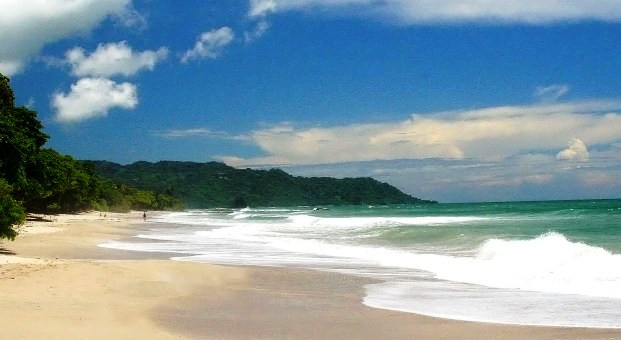
Santa Teresa, Nicoya Peninsula, Costa RicaTravel to Santa Teresa Beach, Costa Rica
The laid-back beach town of Santa Teresa is near the southern tip of the Nicoya Peninsula on Costa Rica's Pacific Coast. Mal Pais, Playa Carmen, Santa Teresa and Playa Hermosa – once secret hideaways for surfers and backpackers are now popular beaches sprinkled with eco-lodges, beach bungalows and upscale luxury boutique hotels. Yet, this multinational paradise with world-class surf breaks remains off-the-beaten path.

Pranamar Oceanfront Villas & Yoga Retreat is a relaxing oasis on the beach at Santa Teresa, with elaborate oceanfront villas and tropical bungalows in lush tropical gardens. Designed in exotic Bali-style, the luxury boutique hotel gives daily in-house yoga classes, and all-inclusive yoga vacations and surfing holidays.

Article by Shannon Farley

lunes, 30 de septiembre de 2013

Development, Dust, and an Iconic Tropical Paradise

Santa Teresa, Costa Rica, is a tropical beach paradiseSanta Teresa is one of those iconic Costa Rica tourism spots. Paradise found for so many international and Costa Rican tourists who "discovered" Santa Teresa's pristine beaches, world-class surf breaks and lushly forested coastline

Yet as more and more travelers flock to experience these beautiful treasures, the isolation bubble stretches to the max, bringing with it the growing pains of any popular tourism destination.

The laid-back beach town sits near the southern tip of the Nicoya Peninsula on Costa Rica's Pacific Coast. The area incorporates the beach communities of Mal Pais, Playa Carmen, Santa Teresa and Playa Hermosa. Once a surfers' and backpackers' secret hideaway, the popular beaches now are filled with eco-lodges, beach bungalows, upscale luxury boutique hotels, yoga retreats, and multi-national restaurants serving healthy cuisine. Actor Mel Gibson and model Gisele Bündchen own homes in the area.

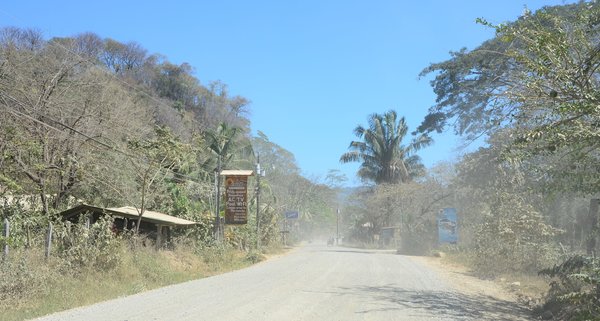
Only one road takes you there, and therein starts the growing pains. Traveling across the bottom of the Nicoya Peninsula from the Nicoya Gulf port of Paquera, when you get to Santa Teresa, there is a crossroads. To the left stretches sleepy Mal Pais. To the right, on a long, narrow ribbon of road is Playa Carmen, Santa Teresa and Playa Santa Teresa's dusty road made famous by the NY Times, photo by Dave SeminaraHermosa. The road ends just past there at Playa Manzanillo. For the last five miles before Santa Teresa, and throughout the entire community, the road is unpaved dirt. With the increase in traffic from new residents and tourism, in the dry season, the dust is unbearable; in the rainy season, it is a muddy pot-holed mess.

Paving or not paving the road – which is a local government responsibility – has been a controversy for years, with sides both for and against. The situation heated up this past June when the local municipality started preparatory work for paving a three-mile section in Santa Teresa, with plans for another four-mile section to be done later.

"Maybe some people want to keep the road unpaved, because they want a really remote area," commented Mario Matarrita, manager at Pranamar Oceanfront Villas & Yoga Retreat in Santa Teresa. "But there is a lot of dust right now, and large potholes. We need the road paved to control that. There are many respiratory infections and health problems here. There is really nothing good about this road."

Matarrita, an avid surfer who moved to Santa Teresa 12 years ago from San Jose, said that part of the road problem comes from lack of governmental support and funding. The issue is the registered voter base. In reality, several thousand people live in the Mal Pais-Santa Teresa area, but on paper, official population figures based on registered voters show a fraction of those residents. The community mixes both foreigners and Costa Ricans, but many national residents come from other areas of the country and never changed their voter registration. Since the provincial government is located in Puntarenas, far away across the Nicoya Gulf, when it comes time to divide up allocated funds, money usually goes to where their records show are the more heavily populated towns.

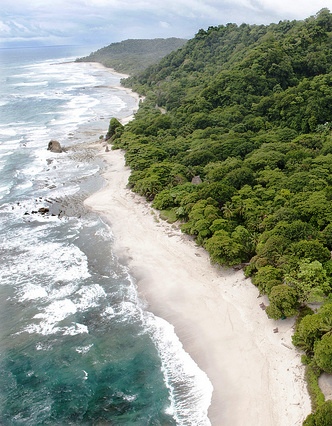
Santa Teresa's pristine beaches along the southern Nicoya Peninsula, Costa RicaThose who are against the road paving fear over-development – a common growth consequence. However, Matarrita says that Santa Teresa's geography and the town's building cap at 10 meters high will prevent the high-rise buildings so popular now at other beach resort locations. "Santa Teresa will never be that big because the mountains and ocean won't allow it," he said. "We're just a narrow strip of land along the beach with large coastal mountains behind us."

Pranamar Villas special events manager, Larissa Chevalier, adds praise to the enforcement of the maritime concession law in Santa Teresa. The nationwide law prohibits permanent structures on any beach within 50 meters of the high tide line. "You can walk down the beach in Santa Teresa and you don't see any hotels or bars or any development right on the beach. You can look through the trees and see buildings, but nothing right on the beach. It leaves the beach pristine," said Chevalier.

Low fresh water supply also has been an issue in the community, but Matarrita said the Costa Rican water company (AYA) should finish within a year a large water spring and reservoir project that will help solve the difficulty.

"We've got issues with the road, water, crime – just like any growing area. At the same time, there are positives with development, like recycling, beach clean ups, etc." said Chevalier, who moved to Santa Teresa years ago from Canada.

The Tourism Board in Santa Teresa and Mal Pais actively promotes many projects, remarked Matarrita. One of their main focuses now is improving public beach access, he said. Many of the hotels contribute to regular beach cleaning, and environmental groups are forming in the area.

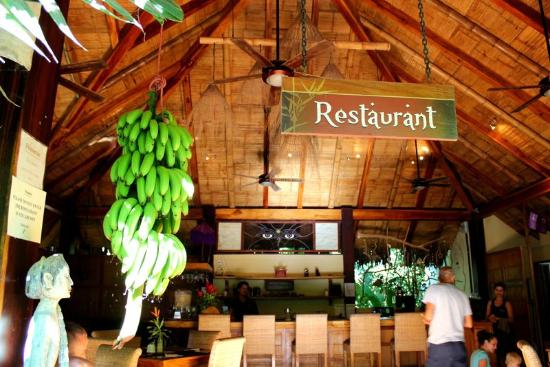
Buddha Eyes Restaurant, Pranamar Villas, Santa Teresa, Costa RicaChevalier touted that tourism and development has created jobs and a thriving economy in the community. At the same time, she says Santa Teresa is still small enough so there is a good sense of community. "We have a really nice small town feel here; people wave to you and smile," Chevalier praised. "We have a multi-cultural community, and that makes for some amazing restaurants and tourism businesses here.
"Santa Teresa still has something special and untouched, and at the end of the day, I'm still happy to live here," she said. "I live in one of the most amazing places on the planet."

Pranamar Oceanfront Villas, Santa Teresa, Costa RicaWhere to stay in Santa Teresa
Pranamar Oceanfront Villas & Yoga Retreat is a lovely boutique luxury hotel on the beach at Santa Teresa. Designed with an Indonesian flair, Pranamar gives daily in-house yoga classes, yoga retreats and all-inclusive yoga vacations, surfing holidays, and has a beachfront spa and gourmet healthy cuisine restaurant.


You can get to Santa Teresa either by ferry from the Pacific port of Puntarenas (90 min.) landing at Paquera; then drive 75-90 minutes, with all but the last 5-mile stretch paved. Or, take a 25-minute domestic flight from San José to Tambor on either Nature Air or Sansa Airlines; Santa Teresa is approximately a 50-minute drive from the Tambor airport. In good weather, taxi boats from the Central Pacific beach town of Jacó travel to Montezuma at the tip of the Nicoya Peninsula; from there it is a 40-minute drive to Santa Teresa.

Article by Shannon Farley

lunes, 16 de septiembre de 2013

5 Reasons to visit Costa Rica now in off-season, and where to go

I love traveling in off-season. High season travelers and summer vacationers are gone. Back to school and back to work, which means better travel opportunities for me and you.
Off-season is when crowds disappear and prices drop, as hotels, tour operators and airlines look to attract travelers with deep discounts.

Granted, it's not the low season for nothing. In Costa Rica, it is rainy season … but, after all, if you are going to visit a rainforest or a cloud forest, you should expect some rain and clouds! The positive side of Costa Rica in "green season" is that the rain creates lush green landscapes, rushing rivers (think: whitewater rafting!), and a cool respite from the blazing hot tropical sun. Mornings during "green season" are almost always sunny, and some days it may not rain at all.

So, if you've been saving up those vacation days, now is the best time to visit Costa Rica.
Top 5 Advantages to Visiting Costa Rica in Low Season:

Camino Travel, Hotel Grano de Oro restaurant, Costa Rica
  • Avoid the crowds.
  • Lower prices and special offers.
  • Nature tours with just you and nature … rather than hordes of tourists roaming the same trails. (Possible rate discounts, too.)
  • More relax time. Enjoy Costa Rica at a local's pace. Use that afternoon rain for a hammock snooze!
  • Lower airline fares; or use your frequent-flier miles for greater savings than in high season.
#1: Grano de Oro Hotel, San Jose
If you're flying into Costa Rica'smain international airport, Juan Santamaria, in the San Jose metropolitan area, you'll probably need a place to stay for your first and last nights. Be downtown close to the city's museums and cultural attractions.

#2: Royal Corin Hotel, Arenal Volcano
Biggest news is the Arenal Volcano is puffing out clouds of water vapor, showing renewed signs of life. Stay front and center at the live volcano in luxury with on-site hot springs.
Camino Travel, Hotel Royal Corin hot springs, Costa Rica  

#3: Arenas del Mar Beach & Nature Resort, Manuel Antonio
You'll want to get lost forever in this paradise of rainforest and secluded beaches by the renowned Manuel Antonio National Park.
Camino Travel, Arenas del Mar Resort, Costa Rica

#4: Cuna del Angel Hotel, Dominical
Dominical, on the Southern Pacific Coast,is a natural beauty – an oasis of tropical black sand beaches and world-class surfing. It's Humpback Whale-watching season through October!

Camino Travel, Harmony Hotel, Costa Rica#5: Lapa Rios Eco Lodge, Osa Peninsula
Home to the world-famous Corcovado National Park, the Osa Peninsula is one of the most impressive regions of Costa Rica for its vast protected wilderness areas. Lapa Rios pioneered sustainable tourism in Costa Rica.

#6: Harmony Hotel, Nosara, Guanacaste
Long sandy beaches, pristine surf breaks, forest, wildlife, sun, and peace are your companions at Nosara on the Nicoya Peninsula of Guanacaste.

Camino Travel is a fully-licensed incoming tour operator in Costa Rica, with more than 22 years of experience.