Mostrando entradas con la etiqueta golfo dulce costa rica. Mostrar todas las entradas

lunes, 7 de diciembre de 2015

Your Christmas Vacation In Costa Rica At Playa Nicuesa Rainforest Lodge

Untitled Document

Beach at Playa Nicuesa Rainforest Lodge in Costa Rica

If you are lucky, you will be spending your Christmas vacation in Costa Rica on an amazing tropical beach alongside the incredible Costa Rica rainforest at Playa Nicuesa Rainforest Lodge. To help get you in the holiday spirit, here are some of the fun activities the Nicuesa Lodge staff has planned for you. Dinner - Fresh fish at Playa Nicuesa Rainforest LodgeThere will be special dinners on Dec. 24 for Christmas Eve and Dec. 31 for New Year’s Eve. The gala feasts will include roast pork, grilled whole fresh fish caught by Nicuesa staff, and other traditional Costa Rican foods including fresh vegetables, rice, beans, plantains, salads and fresh fruit. Kids’ menu items include fresh fish fingers, fresh cassava chips, veggies and ice cream. Nicuesa Lodge meals are served family-style all together in the magnificent two-story tree house-style main lodge building. The open-air dining area allows unobstructed views of the tree canopy (great for wildlife spotting), the forest, beach and ocean, and at night, a huge star-filled sky. Relax after dinner in hammocks and lounge chairs and enjoy conversing with your fellow guests from all over the world.

  Dining in the tree canopy at Nicuesa Lodge

Tamales in Costa Rica are an essential Christmas food, made from corn meal and filled with rice, potatoes, vegetables, garlic and onions, and usually shredded pork; then they are wrapped in banana or plantain leaves and boiled. Guests can join in the cultural tradition to learn how to make their own tamales.   Kids of all ages will have fun painting coconuts and decorating Christmas boxes to be hopefully filled by Santa on Christmas Eve.

Painted coconuts with tropical themesNatural adventures are an essential part of the Playa Nicuesa Rainforest Lodge experience, so there will be a kayaking competition for children and adults on Dec. 24 in the calm bay in front of Nicuesa’s beach. Playa Nicuesa Sustainability Coordinator, Natalia Solis, will lead an end-of-year tribute to the Earth on Dec. 30 with a tree planting ceremony, where guests can give the sustainable gift of a new tree to the world. The trees, all native to Costa Rica, were donated by the Costa Rican Tourism Board (ICT). On Dec. 31, Nicuesa staff will engage in the last beach cleanup of the year, and invite guests to join in their eco-conscious effort. Playa Nicuesa Rainforest Lodge in Costa Rica is known for its pristine tropical beach and beautiful rainforest.

Efforts to keep the beach unspoiled were recognized earlier this year when Playa Nicuesa received the important Ecological Blue Flag Award for having one of Costa Rica’s cleanest beaches.  

Beach at Playa Nicuesa Rainforest Lodge

Visit Playa Nicuesa Rainforest Lodge in Costa Rica Can’t come at Christmas? Visit Playa Nicuesa Rainforest Lodge in 2016! The Costa Rica eco-hotel is your dream destination for a rainforest and beach holiday in Costa Rica.

White-faced monkey at Playa Nicuesa

Located in the rainforest on a remote beach of the warm water gulf of Golfo Dulce in southern Costa Rica, Nicuesa Lodge is one of the first sustainable tourism eco-hotels in Costa Rica and holds the highest level of the Certification for Sustainable Tourism (CST) program. It is an oasis of comfortable, rustic luxury in the jungle on a 165-acre private rainforest preserve that borders the wild Piedras Blancas National Park.

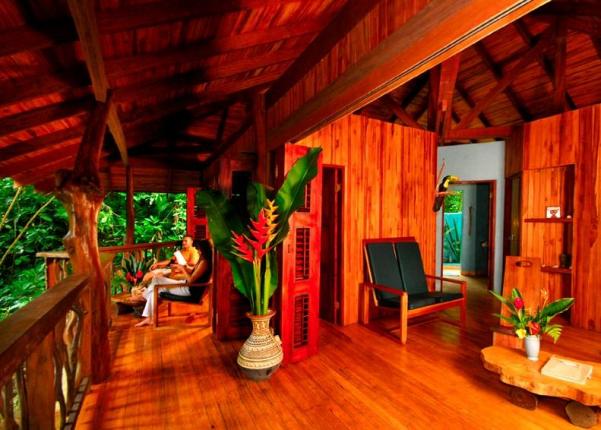
Playa Nicuesa 2-bedroom bungalow

The unique adventure travel destination includes in your stay all meals, boat transfers from Puerto Jimenez or Golfito, unlimited self-guided hikes in the private reserve, use of kayaks, snorkeling and fishing equipment, and a beachfront yoga deck. Contact Playa Nicuesa Rainforest Lodge today to book your 2016 Costa Rica family vacation, honeymoon, nature and adventure vacation, or yoga retreat.

Article by Shannon Farley

jueves, 19 de noviembre de 2015

8 Tips To Spot Rainforest Wildlife In Costa Rica

Untitled Document

Costa Rica wildlife, coati

The thrill of seeing a wild animal in its natural habitat, even if only for a moment, is unparalleled. Some animals are very nice and often stick around for a while – like monkeys. Others are so fast – wild cats, for example – that many times you’re not sure if you saw it or not. The Costa Rica rainforest is full of wonders and wildlife – you just need to know how to look. Costa Rica hosts more than 5% of the world’s biodiversity: 208 species of mammals, 870 kinds of birds, 1,250 kinds of butterflies and 8,000 different moths, 160 species of amphibians, 220 species of reptiles, and 34,000 types of insects. You’re certain to see something! Follow these tips to increase your chances of seeing wildlife in Costa Rica.

Spider monkey at Playa Nicuesa Rainforest Lodge in Costa Rica

Wildlife spotting tips: 1. Be aware. When venturing into the wild, you are in Mother Nature’s territory. Pay attention to where you walk, stand, sit and touch. In the rainforest, when you stop to see that toucan in the tree, you also could be standing on an anthill – not good. Go to grab a vine and it may end up being a snake. Keep an eye out for animals so you can see them, but also so your encounter is positive.

Costa Rica rainforest

2. Get up early. The early bird gets the worm, or in this case, the wildlife sighting and photograph. Most activity in nature peaks at dawn and dusk, and this definitely applies in Costa Rica which swelters under a hot tropical sun in the middle of the day. For the best chance of seeing wildlife, get outside at dawn and again around sunset, lingering a bit as night falls. These also are great times for taking pictures in soft light.

3. Be quiet. If you spend the whole time on the trail chatting with your friend or family member – or worse, talking on your cell phone – you’ll never see anything. Humans are large and loud. You want to see as many animals as possible, without scaring them away.

4. Blend into your surroundings. Animals sense your presence long before you see them, but it helps if you don’t stand out completely. Blend into the rainforest with muted green, brown, khaki and gray clothing; avoid clothing that rustles and makes noise. Having your camera and binoculars out and ready means you’re not opening zippers or Velcro at a crucial moment.

5. Know what you are looking for. If you think you are going to see lions, tigers and bears in the Costa Rica rainforest, you definitely will be disappointed. Before you travel, read up on what wildlife lives in the area you are visiting, and ask a naturalist guide and the locals when you get there. If you know that Scarlet Macaws like to hang out in coastal almond trees, or that toucans make a funny croaking sound, it could make the difference between seeing them or not.

Birds at Nicuesa Lodge - Scarlet Macaw

6. Patience is king. Pause and wait a while on a trail – still and quiet. You never know what may come wandering by, or what you notice up in a tree. That sly sloth certainly doesn’t call attention to itself. When you see an animal, if you need to move to get a better view, do so slowly, steadily and stealthily to avoid spooking it. Again, pay attention to where you walk and stand, so you’re not on that anthill.

7. Invest in a good pair of binoculars. Having good binoculars is vital to seeing wildlife in the rainforest, especially birds. A spotting scope is a step up in gear, but is bigger and heavier. However, you can attach your digital camera with an adapter to the scope to capture otherwise impossible images.

Costa Rica wildlife, sloth

8. Respect wildlife and their environment. This is the most important rule of all. It’s easy to have a negative impact on animals and the environment if you don’t pay attention to what you are doing. Or worse, get yourself hurt. The essential rules are:

  • Keep your distance. You wouldn’t want a stranger invading your space; neither do animals. Cute and cuddly wild animals are more likely to appear in Disney movies than in real life.
  • Never feed wild animals. They have their own food.
  • Don’t interfere with their natural behavior at any time. Don’t be surprised if an animal gets aggressive if you try to provoke it – especially true with snakes.
  • Follow the principles ofLeave no traceto make your experience beneficial for all.

Playa Nicuesa Rainforest Lodge in Costa Rica

Playa Nicuesa luxury bungalow in rainforest

Down in the southern Pacific region of Costa Rica, there is amazing rainforest to see by the Osa Peninsula, Golfo Dulce and Piedras Blancas National Park. This is the wilder side of Costa Rica – where jaguars, monkeys, sloths and Scarlet Macaws roam freely, and humpback whales and dolphins swim in calm blue waters. The place to stay is Playa Nicuesa Rainforest Lodge, a leading sustainable tourism eco-hotel in Costa Rica that borders the Piedras Blancas National Park with a 165-acre private rainforest preserve. Natural luxury is how best to describe this Costa Rica eco-hotel that fronts a pristine beach and tranquil little bay of the Pacific gulf of Golfo Dulce. When you visit, you can explore thriving rainforest, beautiful tropical coastline, powerful waterfalls and a fascinating river mangrove estuary.

Beach at Playa Nicuesa Rainforest Lodge in Costa Rica

Article by Shannon Farley

viernes, 7 de agosto de 2015

Whale watching in Costa Rica: Humpback Whales in Golfo Dulce

Humpback whale breaching in Golfo Dulce, photo by Lenin Oviedo

In Costa Rica, there are as many wildlife tours as probably there are kinds of animals in the small Central American country. All of them are very worthwhile, but nearly nothing beats the thrill of whale watching!

There must be something about being in close proximity to a giant intelligent being that is fascinating, especially when we are in such a vulnerable position in a (by comparison) tiny little boat observing these gentle giants on their “turf” … or, rather, ocean.

Humpback Whale in Golfo Dulce, photo by Lenin Oviedo of CEIC

A real-life encounter with whales is an unforgettable experience for anyone. Starting this month in August, it is time to see humpback whales in Golfo Dulce, Costa Rica.


The tranquil blue waters of this Pacific gulf, between the Piedras Blancas National Park and the Osa Peninsula in southern Costa Rica, will receive the astounding phenomenon of the thousands-of-miles-long migration of Pacific humpback whales. As southern winter turns the seas to ice in Antarctica, southern humpback whales swim north to the Great Barrier Reef of Australia and as far as Costa Rica to its warm tropical waters to breed and give birth.

Golfo Dulce
is an important habitat for the endangered whales
and is vital to the species’ survival, according to the Center for Cetacean Research of Costa Rica (CEIC). You can see the whales on whale watching tours in Golfo Dulce from August to October.

Humpback Whale breaching in Golfo Dulce

Whale watching in Golfo Dulce, Costa Rica


Don’t miss the 2015 season for whale watching in Costa Rica. Stay in a real Costa Rica eco-lodge and enjoy daily whale watching tours at Playa Nicuesa Rainforest Lodge. Located in the pristine rainforest on a remote beach of the warm water gulf, the award-winning sustainable tourism hotel in Costa Rica offers boat tours to see the whales, dolphins and other marine life. Rainforest tours in their 165-acre private preserve bordering the Piedras Blancas National Park let you explore the jungle and see amazing wildlife.


Facts about humpback whales


  • Humpback Whales are an endangered species with international government-protected status.
  • Humpback whales are named for the prominent hump on their backs.
  • The baleen whales can growHumpback whale and baby to be 56 feet long and weigh up to 40 tons
  • They live a long life to about 45-50 years old.
  • Babies (or “calves”) are born after an 11-12 month gestation period.
  • Humpback whales are easy to spot since they live at the ocean’s surface.
  • Humpbacks swim slowly and are known as the “acrobats of the sea” for their great displays of jumps and splashes (breaching).
  • Male humpbacks are famous for singing long, complex mating “songs”.
Article by Shannon Farley

viernes, 5 de junio de 2015

Protecting Golfo Dulce in Costa Rica on World Oceans Day 2015

Golfo Dulce Costa Rica

Out on the calm, clear, jade green-blue water of the Golfo Dulce (“Sweet Gulf”) in southern Costa Rica, it is easy to think this must be one of the most pristine, beautiful places on Earth. And it is. This inner sea is a critical habitat for endangered migrating southern Pacific humpback whales, dolphins and sharks, among other marine life.

Then our boat passes a small patch of floating plastic bottles, chips bags and other random flotsam. Trash. Human trash. And we are reminded that if anything were to ruin this amazing creation, it would be humans.

Dolphins in Golfo Dulce Costa Rica

World Oceans Day on June 8
reminds us to honor and protect the beauty and life of the world’s oceans. The annual event by the United Nations focuses this year on the theme “Healthy oceans, healthy planet” and especially on eradicating plastic pollution.

“The ocean and its wildlife are choking on plastic, and we need to both stop this pollution at the source, and clean it up from the coasts,” states the World Oceans Day information. “The ocean is the heart of our planet. Like your heart pumping blood to every part of your body, the ocean connects people across the Earth, no matter where we live. The ocean regulates the climate, feeds millions of people every year, produces oxygen, is the home to an incredible array of wildlife, provides us with important medicines, and so much more! In order to ensure the health and safety of our communities and future generations, it’s imperative that we take the responsibility to care for the ocean as it cares for us.”

Golfo Dulce map

On the inside of Costa Rica’s Osa Peninsula, Golfo Dulce is approximately 50 km (31 miles) long and 10-15 km (6 -9 miles) wide with a steeply sloped deep inner basin. It is this depth, bottoming out around 215 m (705 ft.), and low human impact of the remote, sheltered gulf that attracts large marine life.

Humpback Whale in Golfo Dulce, photo by Lenin Oviedo of CEIC

Endangered Pacific humpback whales
from the southern hemisphere migrate here every August to October to breed and give birth. The gulf is vital to the species’ survival, according to the Center for Cetacean Research of Costa Rica (CEIC), which is lobbying with other environmental organizations to create a Marine Protected Area within Golfo Dulce.

Dolphins in Golfo Dulce

Dolphins
– Bottlenose Dolphins, Spotted Dolphins, Spinner Dolphins, and occasionally-seen False Killer Whales – and also sharks live in these waters. You can find tiger sharks and different species of hammerhead sharks in Golfo Dulce. The area is particularly key for hammerhead sharks, which also come to the gulf to breed and give birth – usually beginning in May. Juvenile sharks then grow for four years in unprotected areas in the Golfo Dulce, according to Andrés López, investigator for the organization Misión Tiburón (Shark Mission) in Costa Rica.

“Every day we are convinced more about the importance of Golfo Dulce for sharks. Today at dawn we marked 13 hammerhead sharks and two tiger sharks,” reported Misión Tiburón on their Facebook page.

Beach at Playa Nicuesa Rainforest Lodge, Golfo Dulce

Visit Golfo Dulce in Costa Rica

See amazing marine life in the Golfo Dulce when you stay at Playa Nicuesa Rainforest Lodge in Costa Rica. Set in the rainforest on a remote beach of the Golfo Dulce, the Costa Rica eco-lodge offers boat tours in Golfo Dulce to see marine life and during whale-watching season. You also frequently can see beautiful bioluminescence in the gulf on clear nights.

Playa Nicuesa Rainforest Lodge holds the highest Certification for Sustainable Tourism (CST) in Costa Rica, and recently received the Ecological Blue Flag Award for the fifth time for keeping one of the cleanest beaches in Costa Rica free of trash and pollution.
Contact Playa Nicuesa Rainforest Lodge to visit the unique nature and adventure travel destination.

Article by Shannon Farley
 

lunes, 11 de mayo de 2015

A liquid sky of blue stars – bioluminescence in Costa Rica

Bioluminescence-in-Life-of-Pi-movie

One of my absolute favorite scenes in the 2012 movie “Life of Pi is when a huge glittering whale jumps out of a sparkling night sea behind Pi’s raft, everything around them glowing from amazing bioluminescence. Another favorite is the illuminated neon forest in the movie “Avatar.”

Bioluminescence in Avatar movie

Bioluminescence is most common in the tropics
. Walking along a tropical beach at night or sea kayaking after dark, especially the closer you get to the equator, you often can see sparkling lights in the water. It seems as if the ocean is a liquid sky of blue stars.

“Bioluminescence is the production and emission of light by a living organism as the result of a chemical reaction during which chemical energy is converted to light energy,” according to Science Daily.

Bioluminescent jellyfish Bioluminescence occurs in many marine animal species – bacteria, plankton, fish, jellyfish, squid and crustaceans. It also exists in some fungi, microorganisms and terrestrial invertebrates – think of fireflies and glow worms. Marine life depends on their bioluminescence for finding food, attracting mates and evading predators, according to Science Journal. Sometimes thousands of square miles of ocean shine with the light of bioluminescent bacteria or plankton. For instance, Puerto Rico is famous for its three bioluminescent bays.
In Costa Rica, bioluminescence is a frequent occurrence in the Golfo Dulce. This southern Pacific region of Costa Rica by the Osa Peninsula is full of amazing biodiversity. Golfo Dulce is a critical habitat for migrating Pacific Humpback Whales, dolphins and sea turtles.

Bioluminescence in the ocean

A good place to see bioluminescence in Golfo Dulce
is at Playa Nicuesa Rainforest Lodge. On a non-rainy night when the sky is really dark with no moon, or enough clouds to hide any moon, walk down to Nicuesa Lodge’s boat dock to see if you can observe any bioluminescence in the sea. The water glows more when the microorganisms in it are agitated, so if it is a bioluminescent night, ask the guides to take you out in the kayaks for a paddle close to shore.

Playa Nicuesa Lodge in Costa RicaWhen you sea kayak in the illuminated water, every paddle stroke is like fireworks. Why the lights appear blue and green is because those are the light wavelengths that can transmit most easily through seawater, reports Science Daily. Sometimes you might even see dolphins eerily glowing in the bioluminescent water.

About Playa Nicuesa Rainforest Lodge

Playa Nicuesa Rainforest Lodge recently received the Ecological Blue Flag Award for the fifth time for having one of Costa Rica’s cleanest beaches. Bordering the Piedras Blancas National Park, the Costa Rica rainforest lodge holds the highest Sustainable Tourism Program rating, and offers nature tours in the rainforest and ocean adventure tours around Golfo Dulce.

Article by Shannon Farley

jueves, 30 de abril de 2015

5 Tropical beaches you want to visit in southern Costa Rica

Dolphin mother and baby playing in Golfo DulceTucked between the Osa Peninsula and the southern Pacific region of Costa Rica, the “Sweet Gulf” of Golfo Dulce is the perfect destination for nature lovers and adventure-seekers.
Circling the warm blue waters of Golfo Dulce is a tropical rainforest with secluded beaches and an amazing biodiversity. Here you can encounter all four species of monkeyswhite-faced Capuchin, spider, howler and the endangered squirrel monkey, Scarlet Macaws, toucans, coatis, wild pigs, exotic snakes, ocelots and jaguars, to name a few. Golfo Dulce is a critical habitat for migrating Pacific Humpback Whales, dolphins and sea turtles.
Beaches in southern Costa Rica are pretty and pristine. Here are 5 tropical beaches called “playas” in Costa Rica – that you don’t want to miss when visiting the Osa Peninsula and Golfo Dulce, Costa Rica.

Beach at Playa Nicuesa Rainforest Lodge

Playa Nicuesa
Home of the award-winning eco-hotel Playa Nicuesa Rainforest Lodge, Playa Nicuesa recently received the Ecological Blue Flag Award for the fifth time for having one of Costa Rica’s cleanest beaches. Playa Nicuesa is located in the lower middle of Golfo Dulce on the mainland side; its 165-acre private rainforest preserve borders the Piedras Blancas National Park. Golfito is a 25-minute boat ride away, and across the Gulf, Puerto Jimenez is 30 minutes away. The Costa Rica rainforest lodge holds the highest Sustainable Tourism Program rating, and offers adventure and nature tours in the rainforest and around Golfo Dulce. The beach is mostly small pebbles with dark sand, fringed by palm and coastal almond trees -- usually full of wild Scarlet Macaws. Best features: crystal clear water that changes color from bright blue to jade green; jumping off the Nicuesa Lodge dock into cool water; and watching dolphins swim past shore.


Playa San Josecito, Golfo Dulce, Costa Rica

Playa San Josecito

Just around a small rocky point from Playa Nicuesa, to the south, is Playa San Josecito – a long crescent-shaped dark sand beach that steeply drops into the water. At the west end of the beach is Casa Orquideas Botanical Garden, a beautifully landscaped private tropical garden with hundreds of species of ornamental and edible plants that have been collected and cared for by Ron and Trudy MacAllister, who have lived in this remote region since the 1970s. Best features: taking a guided tour of Casa Orquideas Botanical Garden; fishing by kayak just offshore.

Playa Cativo, Golfo Dulce, Costa Rica

Playa Cativo

This pretty little beach is within the Piedras Blancas National Park up in the inner gulf. Playa Cativo also won the Costa Rica Ecological Blue Flag Award for 2014. When the tide is low, there is dark sand beach; when the water is high, you only have the manicured green lawns of Playa Cativo Lodge. Best features: snorkeling at coral reefs nearby; spotting Humpback Whales during whale-watching season.

Playa Cana Blanca, Osa Wildlife Sanctuary, Costa Rica
 

Playa Cana Blanca

Home to the Osa Wildlife Sanctuary, which rescues and rehabilitates orphaned and injured wild animals, Playa Cana Blanca is also contiguous with Piedras Blancas National Park. This is one of the few completely sandy beaches in Golfo Dulce, and it is gorgeous. Take a tour of the sanctuary and you’ll meet a wide variety of animals, from spider monkeys and white-faced monkeys to sloths, kinkajous, tayras, ocelots, anteaters and Scarlet Macaws. Best features: meeting the animals at Osa Wildlife Sanctuary and learning about their work; relaxing on the beautiful beach.

Snorkeling Golfo Dulce Costa Rica

Playa Balina

This little-known dark sand beach is located in the inner Golfo Dulce, and is best known for its snorkeling.

Article by Shannon Farley

lunes, 30 de marzo de 2015

What’s cooking at Playa Nicuesa Rainforest Lodge in Costa Rica?

Let’s face it; we all care about what we eat. So if visiting a remote jungle eco-lodge is in your plans, you might be wondering if mealtime will resemble a Mission Survive episode with creepy-crawlies and vermin.

In fact, remote Costa Rica eco lodge Playa Nicuesa Rainforest Lodge gets regular rave reviews from guests about its exceptional, fresh, gourmet cuisine. The abundance of fresh, healthy and wholesome ingredients is inspiring, and head chef Edixon Lezcano adds a huge helping of creativity to Nicuesa’s menus. There are Asian influences – soy, ginger, citrus and tamarind sauces and dressings. There are Latino influences – quinoa, rice, beans, sauces and cooking methods. And then there are “Edixon influences” like homemade rich dark chocolate cake served with a sweet citrus sauce made from cas fruit (a kind of guava).

“I try to serve healthy cuisine that is low in fat, using natural products that are not artificial,” noted Lezcano, who has delighted guests with his fantastic meals for the past eight years at Nicuesa Lodge.


Dine gourmet and healthy at Playa Nicuesa Rainforest Lodge

One of the great aspects about Playa Nicuesa Rainforest Lodge is that you don’t have to worry about where you are going to eat or what you will eat. All meals are included with your stay at the premier Costa Rica rainforest lodge, due to its remote wilderness location. Playa Nicuesa sits on the Golfo Dulce (“Sweet Gulf”) in southern Costa Rica, next to the Piedras Blancas National Park and across from the Osa Peninsula. It is an area of pristine tropical wilderness – a unique adventure travel destination.
Playa Nicuesa Rainforest Lodge Costa Rica

Meals are served with flair in Nicuesa Lodge’s magnificent two-story tree house-style main lodge building. The open-air dining area lets you look out at the tree canopy (great for wildlife spotting), the forest, beach and ocean; an open side deck is perfect for gazing at the night sky packed with stars. Seating is family-style with everyone at the lodge, which leads to wonderful engaging conversations about that day’s adventures, other travels and the beauty of life.

Dining in the tree canopy at Nicuesa Lodge

On Nicuesa’s 165-acre private reserve they grow tropical fruit trees like mangoes, star fruit, cas guava, oranges, lemons, papayas, water apples, bananas, plantains and coconuts. The edible garden supplies pineapples, sugar cane, basil, spinach, and other vegetables and herbs. They even grow cacao trees and offer a chocolate tour to show you the delicious process of making organic chocolate.

All breads, tortillas, desserts, juices and sauces are made fresh on-site
.
Fishing is a popular pastime at the Costa Rica eco-lodge, which is a bonus for the kitchen. “If someone goes fishing and catches fish, we serve it the same day along with dinner to treat everyone,” said Lezcano.

Dock fishing at Playa Nicuesa Lodge

There are always vegetarian and kids’ options at all meals. Happy hour is one of the best times of the day, when guests gather for exotic tropical drink specials and tempting appetizers every night before dinner in the candlelit bar.

Contact Playa Nicuesa Rainforest Lodge to book your Costa Rica family vacation, honeymoon, nature and adventure vacation, or yoga retreat.

Playa Nicuesa luxury eco lodge

Article by Shannon Farley

sábado, 28 de febrero de 2015

A dolphin tale: See wild dolphins in Golfo Dulce, Costa Rica

Bottlenose Dolphin, Golfo Dulce, photo by Earthwatch

The last time I was at Playa Nicuesa Rainforest Lodge, I was down at the beach cooling off from the hot sun in waist-deep tranquil waters of the Golfo Dulce, when suddenly there was a splash very close behind me. I turned quickly to look out toward the Gulf and was greeted by three Bottlenose Dolphins calmly gliding about 15 feet past me parallel to the beach.

This is how it is on Golfo Dulce in southern Costa Rica. Humpback Whale mother & baby in Golfo DulceDuring whale-watching season, you might see a Humpback Whale mother and her calf just offshore. Almost always will you see dolphins when you go on a boat tour of the Golfo Dulce or kayaking in the mangroves of the Esquinas River.

This area of pristine tropical wilderness by the Osa Peninsula is home to resident and migratory communities of Bottlenose Dolphins (Tursiops truncatus), Spotted Dolphins (Stenella attenuata), Spinner Dolphins (Stenella longirostris), and occasionally-seen False Killer Whales (Pseudorca crassidens). Every August when whale-watching season begins in Golfo Dulce, endangered Pacific Humpback Whales migrate to Costa Rica’s warm waters to breed and give birth. Golfo Dulce is a critical habitat for marine life, states the Center for Cetacean Research of Costa Rica (CEIC).
Dolphins in Golfo Dulce Costa Rica

The Gulf’s calm and very clear jade green-blue water makes it easy to see abundant marine life. Spotted Dolphins are some of the most common dolphins to see, whether in small pods in shallow inshore waters or huge groups of up to 500 dolphins offshore in deep ocean.
Bottlenose Dolphins in Costa Rica, photo by CEIC

Bottlenose Dolphins
stay close to river mouths, using the tidal cycles to catch fish. Golfo Dulce Bottlenose Dolphins are very social and are frequently seen in pods of two to 15 dolphins. Spinner Dolphins, as is obvious from the name, are known for spinning vertically out of the water on their tails.


When you stay at Costa Rica eco-lodge Playa Nicuesa you can see dolphins, whales and other marine life in Golfo Dulce. The luxury Costa Rica rainforest lodge has its own 165-acre private rainforest preserve bordering the Piedras Blancas National Park. It is a unique Costa Rica adventure travel destination for its remote, pristine wilderness location.

Article by Shannon Farley Sunset at Playa Nicuesa