Mostrando entradas con la etiqueta osa peninsula costa rica. Mostrar todas las entradas

lunes, 7 de diciembre de 2015

Your Christmas Vacation In Costa Rica At Playa Nicuesa Rainforest Lodge

Untitled Document

Beach at Playa Nicuesa Rainforest Lodge in Costa Rica

If you are lucky, you will be spending your Christmas vacation in Costa Rica on an amazing tropical beach alongside the incredible Costa Rica rainforest at Playa Nicuesa Rainforest Lodge. To help get you in the holiday spirit, here are some of the fun activities the Nicuesa Lodge staff has planned for you. Dinner - Fresh fish at Playa Nicuesa Rainforest LodgeThere will be special dinners on Dec. 24 for Christmas Eve and Dec. 31 for New Year’s Eve. The gala feasts will include roast pork, grilled whole fresh fish caught by Nicuesa staff, and other traditional Costa Rican foods including fresh vegetables, rice, beans, plantains, salads and fresh fruit. Kids’ menu items include fresh fish fingers, fresh cassava chips, veggies and ice cream. Nicuesa Lodge meals are served family-style all together in the magnificent two-story tree house-style main lodge building. The open-air dining area allows unobstructed views of the tree canopy (great for wildlife spotting), the forest, beach and ocean, and at night, a huge star-filled sky. Relax after dinner in hammocks and lounge chairs and enjoy conversing with your fellow guests from all over the world.

  Dining in the tree canopy at Nicuesa Lodge

Tamales in Costa Rica are an essential Christmas food, made from corn meal and filled with rice, potatoes, vegetables, garlic and onions, and usually shredded pork; then they are wrapped in banana or plantain leaves and boiled. Guests can join in the cultural tradition to learn how to make their own tamales.   Kids of all ages will have fun painting coconuts and decorating Christmas boxes to be hopefully filled by Santa on Christmas Eve.

Painted coconuts with tropical themesNatural adventures are an essential part of the Playa Nicuesa Rainforest Lodge experience, so there will be a kayaking competition for children and adults on Dec. 24 in the calm bay in front of Nicuesa’s beach. Playa Nicuesa Sustainability Coordinator, Natalia Solis, will lead an end-of-year tribute to the Earth on Dec. 30 with a tree planting ceremony, where guests can give the sustainable gift of a new tree to the world. The trees, all native to Costa Rica, were donated by the Costa Rican Tourism Board (ICT). On Dec. 31, Nicuesa staff will engage in the last beach cleanup of the year, and invite guests to join in their eco-conscious effort. Playa Nicuesa Rainforest Lodge in Costa Rica is known for its pristine tropical beach and beautiful rainforest.

Efforts to keep the beach unspoiled were recognized earlier this year when Playa Nicuesa received the important Ecological Blue Flag Award for having one of Costa Rica’s cleanest beaches.  

Beach at Playa Nicuesa Rainforest Lodge

Visit Playa Nicuesa Rainforest Lodge in Costa Rica Can’t come at Christmas? Visit Playa Nicuesa Rainforest Lodge in 2016! The Costa Rica eco-hotel is your dream destination for a rainforest and beach holiday in Costa Rica.

White-faced monkey at Playa Nicuesa

Located in the rainforest on a remote beach of the warm water gulf of Golfo Dulce in southern Costa Rica, Nicuesa Lodge is one of the first sustainable tourism eco-hotels in Costa Rica and holds the highest level of the Certification for Sustainable Tourism (CST) program. It is an oasis of comfortable, rustic luxury in the jungle on a 165-acre private rainforest preserve that borders the wild Piedras Blancas National Park.
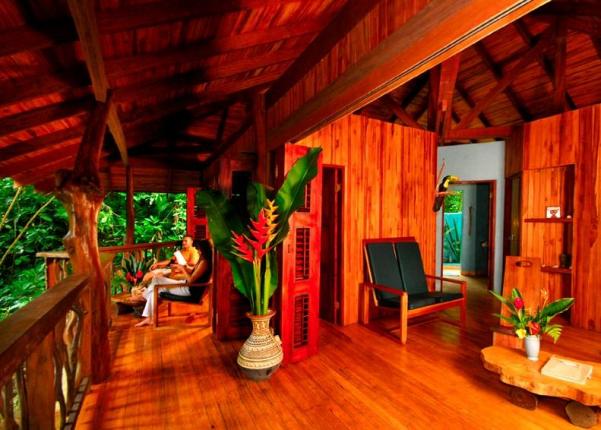
Playa Nicuesa 2-bedroom bungalow

The unique adventure travel destination includes in your stay all meals, boat transfers from Puerto Jimenez or Golfito, unlimited self-guided hikes in the private reserve, use of kayaks, snorkeling and fishing equipment, and a beachfront yoga deck. Contact Playa Nicuesa Rainforest Lodge today to book your 2016 Costa Rica family vacation, honeymoon, nature and adventure vacation, or yoga retreat.

Article by Shannon Farley

viernes, 7 de agosto de 2015

Whale watching in Costa Rica: Humpback Whales in Golfo Dulce

Humpback whale breaching in Golfo Dulce, photo by Lenin Oviedo

In Costa Rica, there are as many wildlife tours as probably there are kinds of animals in the small Central American country. All of them are very worthwhile, but nearly nothing beats the thrill of whale watching!

There must be something about being in close proximity to a giant intelligent being that is fascinating, especially when we are in such a vulnerable position in a (by comparison) tiny little boat observing these gentle giants on their “turf” … or, rather, ocean.

Humpback Whale in Golfo Dulce, photo by Lenin Oviedo of CEIC

A real-life encounter with whales is an unforgettable experience for anyone. Starting this month in August, it is time to see humpback whales in Golfo Dulce, Costa Rica.


The tranquil blue waters of this Pacific gulf, between the Piedras Blancas National Park and the Osa Peninsula in southern Costa Rica, will receive the astounding phenomenon of the thousands-of-miles-long migration of Pacific humpback whales. As southern winter turns the seas to ice in Antarctica, southern humpback whales swim north to the Great Barrier Reef of Australia and as far as Costa Rica to its warm tropical waters to breed and give birth.

Golfo Dulce
is an important habitat for the endangered whales
and is vital to the species’ survival, according to the Center for Cetacean Research of Costa Rica (CEIC). You can see the whales on whale watching tours in Golfo Dulce from August to October.

Humpback Whale breaching in Golfo Dulce

Whale watching in Golfo Dulce, Costa Rica


Don’t miss the 2015 season for whale watching in Costa Rica. Stay in a real Costa Rica eco-lodge and enjoy daily whale watching tours at Playa Nicuesa Rainforest Lodge. Located in the pristine rainforest on a remote beach of the warm water gulf, the award-winning sustainable tourism hotel in Costa Rica offers boat tours to see the whales, dolphins and other marine life. Rainforest tours in their 165-acre private preserve bordering the Piedras Blancas National Park let you explore the jungle and see amazing wildlife.


Facts about humpback whales


  • Humpback Whales are an endangered species with international government-protected status.
  • Humpback whales are named for the prominent hump on their backs.
  • The baleen whales can growHumpback whale and baby to be 56 feet long and weigh up to 40 tons
  • They live a long life to about 45-50 years old.
  • Babies (or “calves”) are born after an 11-12 month gestation period.
  • Humpback whales are easy to spot since they live at the ocean’s surface.
  • Humpbacks swim slowly and are known as the “acrobats of the sea” for their great displays of jumps and splashes (breaching).
  • Male humpbacks are famous for singing long, complex mating “songs”.
Article by Shannon Farley

lunes, 25 de mayo de 2015

A tale of dreams and adventure: Beginning Playa Nicuesa Rainforest Lodge

Playa Nicuesa Rainforest Lodge in Costa Rica

Guests staying at Playa Nicuesa Rainforest Lodge always ask: how did the Costa Rica eco-lodge get started?

The question is a reasonable one given Nicuesa Lodge’s isolated location in southern Costa Rica. It is a wild place of dense steamy rainforest and tranquil ocean, intensely populated by thousands of species of tropical wildlife. Playa Nicuesa is a little crescent-shaped beach and small bay on the pristine Golfo Dulce – “Sweet Gulf” – a critical habitat for migrating Pacific Humpback Whales, dolphins and hammerhead sharks. The region is a giant conservation area including the world-famous Corcovado National Park on the Osa Peninsula, the Piedras Blancas National Park and three other private reserves.

Playa Nicuesa on Golfo Dulce from the air

What keeps Playa Nicuesa Rainforest Lodge so unique and private is that the lodge is accessible only by boat. Almost directly across the gulf from the town of Puerto Jimenez, Nicuesa Lodge’s 165-acre private preserve is backed by rugged mountains and wild jungle of the Piedras Blancas National Park. There are no roads, and there is no development.

Dolphins in Golfo Dulce
So, how did a high-end eco-lodge come to be in this pure, remote place?

lunes, 11 de mayo de 2015

A liquid sky of blue stars – bioluminescence in Costa Rica

Bioluminescence-in-Life-of-Pi-movie

One of my absolute favorite scenes in the 2012 movie “Life of Pi is when a huge glittering whale jumps out of a sparkling night sea behind Pi’s raft, everything around them glowing from amazing bioluminescence. Another favorite is the illuminated neon forest in the movie “Avatar.”

Bioluminescence in Avatar movie

Bioluminescence is most common in the tropics
. Walking along a tropical beach at night or sea kayaking after dark, especially the closer you get to the equator, you often can see sparkling lights in the water. It seems as if the ocean is a liquid sky of blue stars.

“Bioluminescence is the production and emission of light by a living organism as the result of a chemical reaction during which chemical energy is converted to light energy,” according to Science Daily.

Bioluminescent jellyfish Bioluminescence occurs in many marine animal species – bacteria, plankton, fish, jellyfish, squid and crustaceans. It also exists in some fungi, microorganisms and terrestrial invertebrates – think of fireflies and glow worms. Marine life depends on their bioluminescence for finding food, attracting mates and evading predators, according to Science Journal. Sometimes thousands of square miles of ocean shine with the light of bioluminescent bacteria or plankton. For instance, Puerto Rico is famous for its three bioluminescent bays.
In Costa Rica, bioluminescence is a frequent occurrence in the Golfo Dulce. This southern Pacific region of Costa Rica by the Osa Peninsula is full of amazing biodiversity. Golfo Dulce is a critical habitat for migrating Pacific Humpback Whales, dolphins and sea turtles.

Bioluminescence in the ocean

A good place to see bioluminescence in Golfo Dulce
is at Playa Nicuesa Rainforest Lodge. On a non-rainy night when the sky is really dark with no moon, or enough clouds to hide any moon, walk down to Nicuesa Lodge’s boat dock to see if you can observe any bioluminescence in the sea. The water glows more when the microorganisms in it are agitated, so if it is a bioluminescent night, ask the guides to take you out in the kayaks for a paddle close to shore.

Playa Nicuesa Lodge in Costa RicaWhen you sea kayak in the illuminated water, every paddle stroke is like fireworks. Why the lights appear blue and green is because those are the light wavelengths that can transmit most easily through seawater, reports Science Daily. Sometimes you might even see dolphins eerily glowing in the bioluminescent water.

About Playa Nicuesa Rainforest Lodge

Playa Nicuesa Rainforest Lodge recently received the Ecological Blue Flag Award for the fifth time for having one of Costa Rica’s cleanest beaches. Bordering the Piedras Blancas National Park, the Costa Rica rainforest lodge holds the highest Sustainable Tourism Program rating, and offers nature tours in the rainforest and ocean adventure tours around Golfo Dulce.

Article by Shannon Farley

jueves, 30 de abril de 2015

5 Tropical beaches you want to visit in southern Costa Rica

Dolphin mother and baby playing in Golfo DulceTucked between the Osa Peninsula and the southern Pacific region of Costa Rica, the “Sweet Gulf” of Golfo Dulce is the perfect destination for nature lovers and adventure-seekers.
Circling the warm blue waters of Golfo Dulce is a tropical rainforest with secluded beaches and an amazing biodiversity. Here you can encounter all four species of monkeyswhite-faced Capuchin, spider, howler and the endangered squirrel monkey, Scarlet Macaws, toucans, coatis, wild pigs, exotic snakes, ocelots and jaguars, to name a few. Golfo Dulce is a critical habitat for migrating Pacific Humpback Whales, dolphins and sea turtles.
Beaches in southern Costa Rica are pretty and pristine. Here are 5 tropical beaches called “playas” in Costa Rica – that you don’t want to miss when visiting the Osa Peninsula and Golfo Dulce, Costa Rica.

Beach at Playa Nicuesa Rainforest Lodge

Playa Nicuesa
Home of the award-winning eco-hotel Playa Nicuesa Rainforest Lodge, Playa Nicuesa recently received the Ecological Blue Flag Award for the fifth time for having one of Costa Rica’s cleanest beaches. Playa Nicuesa is located in the lower middle of Golfo Dulce on the mainland side; its 165-acre private rainforest preserve borders the Piedras Blancas National Park. Golfito is a 25-minute boat ride away, and across the Gulf, Puerto Jimenez is 30 minutes away. The Costa Rica rainforest lodge holds the highest Sustainable Tourism Program rating, and offers adventure and nature tours in the rainforest and around Golfo Dulce. The beach is mostly small pebbles with dark sand, fringed by palm and coastal almond trees -- usually full of wild Scarlet Macaws. Best features: crystal clear water that changes color from bright blue to jade green; jumping off the Nicuesa Lodge dock into cool water; and watching dolphins swim past shore.


Playa San Josecito, Golfo Dulce, Costa Rica

Playa San Josecito

Just around a small rocky point from Playa Nicuesa, to the south, is Playa San Josecito – a long crescent-shaped dark sand beach that steeply drops into the water. At the west end of the beach is Casa Orquideas Botanical Garden, a beautifully landscaped private tropical garden with hundreds of species of ornamental and edible plants that have been collected and cared for by Ron and Trudy MacAllister, who have lived in this remote region since the 1970s. Best features: taking a guided tour of Casa Orquideas Botanical Garden; fishing by kayak just offshore.

Playa Cativo, Golfo Dulce, Costa Rica

Playa Cativo

This pretty little beach is within the Piedras Blancas National Park up in the inner gulf. Playa Cativo also won the Costa Rica Ecological Blue Flag Award for 2014. When the tide is low, there is dark sand beach; when the water is high, you only have the manicured green lawns of Playa Cativo Lodge. Best features: snorkeling at coral reefs nearby; spotting Humpback Whales during whale-watching season.

Playa Cana Blanca, Osa Wildlife Sanctuary, Costa Rica
 

Playa Cana Blanca

Home to the Osa Wildlife Sanctuary, which rescues and rehabilitates orphaned and injured wild animals, Playa Cana Blanca is also contiguous with Piedras Blancas National Park. This is one of the few completely sandy beaches in Golfo Dulce, and it is gorgeous. Take a tour of the sanctuary and you’ll meet a wide variety of animals, from spider monkeys and white-faced monkeys to sloths, kinkajous, tayras, ocelots, anteaters and Scarlet Macaws. Best features: meeting the animals at Osa Wildlife Sanctuary and learning about their work; relaxing on the beautiful beach.

Snorkeling Golfo Dulce Costa Rica

Playa Balina

This little-known dark sand beach is located in the inner Golfo Dulce, and is best known for its snorkeling.

Article by Shannon Farley

viernes, 16 de mayo de 2014

Jaguars and monkeys and whales on Osa Peninsula Costa Rica! Oh my!

Piedras Blancas National ParkDown in the very south of Costa Rica there is a rainforest you dream to see. Thankfully off the tourism “superhighway” and explored only by adventurous intrepid travelers, it is a place of rugged mountains, plunging waterfalls, free-flowing rivers, striking beaches and magnificent towering trees in dense rainforest.

Jaguars roam freely, scarlet macaws soar overhead, and humpback whales and dolphins splash in the calm blue waters of the Golfo Dulce in this wilder side of Costa Rica. There aren’t many roads, and there are far more trees than people.

Piedras Blancas National Park treesIn the southwestern corner of this peaceful Central American nation, renowned for eco-tourism, the Piedras Blancas National Park is much less visited than its famous neighbor, the Corcovado National Park. One third smaller, the Piedras Blancas National Park spans 34,642 acres that tie into the more than 366,000 acres of land and sea protected in national parks, wildlife refuges and private reserves on the Osa Peninsula Costa Rica.

Sandwiched between the Golfito National Wildlife Refuge to the east and the Golfo Dulce Forest Reserve to the west, Piedras Blancas was heavily logged and hunted until land was donated or slowly bought by charitable groups and turned over for public use. The national park was created in 1993.

Jaguar on the Osa PeninsulaToday, the park protects the remaining lowland tropical rainforest near the Golfo Dulce, and provides a habitat for all five species of Costa Rica wild cats – jaguars, ocelots, margays, jaguarundis and pumas – and all four kinds of monkeys – spider, howler, white-faced capuchin and endangered squirrel monkeys. The park is considered to be one of the top bird-watching locations in Costa Rica, with more than 330 species recorded.

Playa Nicuesa treehouse main lodgeThe best way to visit Piedras Blancas National Park is to stay in the area. Playa Nicuesa Rainforest Lodge is the top Costa Rica eco-lodge on the Golfo Dulce. Its 165-acre private preserve backs into the Piedras Blancas National Park. While visiting, you can explore thriving rainforests and immaculate beaches, powerful waterfalls and the fascinating Esquinas River and mangrove estuary. Just off the coast are many intact coral reefs, providing excellent places to snorkel and swim.

Article by Shannon Farley


martes, 17 de diciembre de 2013

Activists seek to protect Costa Rica’s rich marine life.

Humpback Whale breaching in Golfo DulceThe southern Pacific Ocean off the Osa Peninsula in Costa Rica is an amazing natural wonder of marine biodiversity, home to more than 25 species of dolphins and whales, four of the world’s eight different sea turtles, along with manta rays, sailfish, marlin, tuna and sharks. The southern Pacific, and especially Golfo Dulce (Sweet Gulf) on the eastern side of the Osa Peninsula, are vital breeding and reproducing areas for endangered hammerhead sharks and migrating endangered Humpback Whales.
All of this extraordinary marine life, however, is almost entirely unprotected, except for small areas around a few national parks – the Ballena Marine National Park off the coast of Uvita, the Caño Island Biological Reserve, and off the coast of the Corcovado National Park.

Map of proposed no fishing area off Osa Peninsula, Costa RicaActivists say the waters along the entire coast of the Osa Peninsula, Costa Rica, need to be protected, and have begun a campaign to create aMultiple Use Marine Protected Area.” The MPA for OSA group (Marine Protected Area for Osa Peninsula) states that Costa Rica’s marine life is threatened by commercial shrimp trawlers, long line fishing, over fishing, tuna nets, and ocean pollution.

“Commercial fishing techniques such as long lining, shrimping, gill netting and tuna fishing are wreaking havoc on this delicate and biologically diverse area and its marine inhabitants, and if urgent and drastic actions are not taken immediately, the world will lose this treasure forever. Costa Rica's dolphins, whales, sea turtles and other marine flora and fauna are being decimated at alarming rates,” declares the MPA for OSA website.
By declaring the southern Pacific Coastal waters, from the Ballena Marine National Park out to Caño Island and down the Osa Peninsula, a “Multiple Use Marine Protected Area,” the MPA for OSA group hopes that that private, commercial and sport fishing, as well as scientific research, tourism and marine transportation can all work together sustainably.

Sea turtle off Costa Rica's southern Pacific CoastThe MPA for OSA has created a petition on Avaaz to ask the Costa Rican government to fast track the establishment of the marine protected area. The group is calling for an immediate moratorium on commercial fishing in the area while details are worked out. The group also has a crowd funding campaign to source funds to continue their research and get local communities and the government to work together.

Costa Rica’s South Pacific is one of the “most biologically diverse ocean ecosystems in the world,” according to the MPA for OSA. Off the coast of Costa Rica is an immense habitat called the Costa Rican Thermal Convection Dome, where shallow warm waters lie on top of low-oxygen cold water creating a perfect ecosystem for diverse marine life. This dome is the only one in the world that is constant year-round, producing extraordinary ecologically-rich waters.

Sunset boat tour on Golfo Dulce, Costa RicaAt Playa Nicuesa Rainforest Lodge, an environmentally sustainable eco-lodge on the inner coast of the Golfo Dulce, you can see and experience Costa Rica’s amazing marine life. The award-winning eco-lodge offers boat tours of the Gulf to see marine life such as dolphins, sea turtles and whales.

Located on a 165-acre private preserve backing up to the Piedras Blancas National Park, Playa Nicuesa Rainforest Lodge is a unique adventure travel destination for its remote, pristine wilderness location. They offer family vacations, honeymoon trips, nature and adventure vacations, and yoga classes and retreats.
Article by Shannon Farley