Mostrando entradas con la etiqueta costa rica adventure vacations. Mostrar todas las entradas

viernes, 21 de marzo de 2014

15 years of Costa Rica adventures has been dream come true

pacuare rainforestWhen Massi Devoto used to guide small groups around Costa Rica, he noticed that out of all of the experiences the tourists shared, the ones they enjoyed and talked about the most were the simplest. Buying tropical fruits at a roadside stand. Watching a monkey in a tree. Meeting friendly folk in a rural town. Walking through the rainforest.
The realization led him to start his own tour company in 1999 with his associate, Ronald Bottger, with the goal to combine adventure and the natural attractions of Costa Rica with the cultural experience of meeting the friendly, happy people for which the country is well-known. It was a dream come true.
Fifteen years later, Explornatura is one of the top adventure and nature tour companies in Costa Rica.
“We always try to combine adventure with nature and culture,” said Devoto. “We don’t do any adventure that involves motors – no ATVs, etc. We want people to enjoy nature and have contact with the communities where we do our adventures – whether indigenous communities or local Costa Rican populations.”
Biking in Turrialba ValleyBased in the rural town of Turrialba, two hours east of San Jose that is named for the Turrialba Volcano, Explornatura focuses mainly on rafting, canyoning, hiking and biking. They also offer horseback riding, a coffee tour and a cultural visit to the Guayabo National Monument archeological site. Their motto is “real adventure accessible to everybody.”
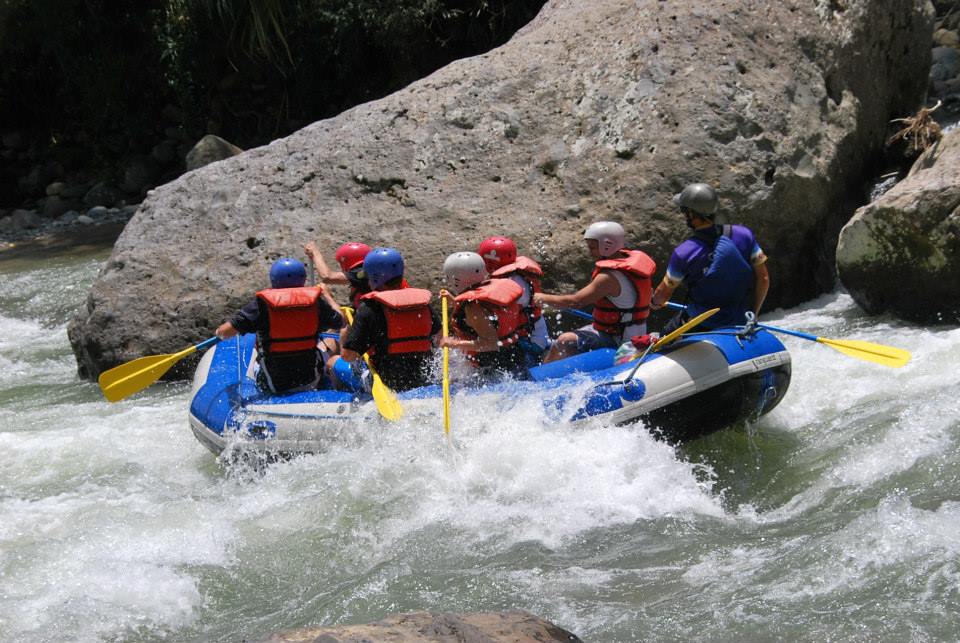
Rafting Pacuare River Costa RicaTurrialba is the “whitewater rafting capital” of Costa Rica and some of the country’s best rivers are right in Explornatura’s backyard. The company rafts the traditional 16-mile lower section of the famous Pacuare River – one of the world’s best – but also the lesser-known top section. Additionally, they guide hiking tours to the indigenous communities by the Pacuare River, and can combine rafting and hiking for those interested. Easy family rafting trips are conducted on the Pejibaye River.
Canyoning in Turrialba with ExplornaturaExplornatura’s canyoning tour on a private reserve in the Puente Vigas Canyon by Turrialba takes you on an unforgettable adventure. You start by rappelling down the first waterfall, then cross two zip-lines, rappel down a second waterfall, cross two more zip-lines, traverse a 132-foot hanging bridge, rappel a third waterfall, climb up a rock wall, and finish with a rappel down a fourth waterfall.

Explornatura is located in Turrialba, Costa Rica. You can make reservations online, by emailing to puravida@explornatura.com or by calling 1-866-571-2443 (from the U.S. & Canada) or +(506) 2556-0111.
Article by Shannon Farley

martes, 17 de diciembre de 2013

Activists seek to protect Costa Rica’s rich marine life.

Humpback Whale breaching in Golfo DulceThe southern Pacific Ocean off the Osa Peninsula in Costa Rica is an amazing natural wonder of marine biodiversity, home to more than 25 species of dolphins and whales, four of the world’s eight different sea turtles, along with manta rays, sailfish, marlin, tuna and sharks. The southern Pacific, and especially Golfo Dulce (Sweet Gulf) on the eastern side of the Osa Peninsula, are vital breeding and reproducing areas for endangered hammerhead sharks and migrating endangered Humpback Whales.
All of this extraordinary marine life, however, is almost entirely unprotected, except for small areas around a few national parks – the Ballena Marine National Park off the coast of Uvita, the Caño Island Biological Reserve, and off the coast of the Corcovado National Park.

Map of proposed no fishing area off Osa Peninsula, Costa RicaActivists say the waters along the entire coast of the Osa Peninsula, Costa Rica, need to be protected, and have begun a campaign to create aMultiple Use Marine Protected Area.” The MPA for OSA group (Marine Protected Area for Osa Peninsula) states that Costa Rica’s marine life is threatened by commercial shrimp trawlers, long line fishing, over fishing, tuna nets, and ocean pollution.

“Commercial fishing techniques such as long lining, shrimping, gill netting and tuna fishing are wreaking havoc on this delicate and biologically diverse area and its marine inhabitants, and if urgent and drastic actions are not taken immediately, the world will lose this treasure forever. Costa Rica's dolphins, whales, sea turtles and other marine flora and fauna are being decimated at alarming rates,” declares the MPA for OSA website.
By declaring the southern Pacific Coastal waters, from the Ballena Marine National Park out to Caño Island and down the Osa Peninsula, a “Multiple Use Marine Protected Area,” the MPA for OSA group hopes that that private, commercial and sport fishing, as well as scientific research, tourism and marine transportation can all work together sustainably.

Sea turtle off Costa Rica's southern Pacific CoastThe MPA for OSA has created a petition on Avaaz to ask the Costa Rican government to fast track the establishment of the marine protected area. The group is calling for an immediate moratorium on commercial fishing in the area while details are worked out. The group also has a crowd funding campaign to source funds to continue their research and get local communities and the government to work together.

Costa Rica’s South Pacific is one of the “most biologically diverse ocean ecosystems in the world,” according to the MPA for OSA. Off the coast of Costa Rica is an immense habitat called the Costa Rican Thermal Convection Dome, where shallow warm waters lie on top of low-oxygen cold water creating a perfect ecosystem for diverse marine life. This dome is the only one in the world that is constant year-round, producing extraordinary ecologically-rich waters.

Sunset boat tour on Golfo Dulce, Costa RicaAt Playa Nicuesa Rainforest Lodge, an environmentally sustainable eco-lodge on the inner coast of the Golfo Dulce, you can see and experience Costa Rica’s amazing marine life. The award-winning eco-lodge offers boat tours of the Gulf to see marine life such as dolphins, sea turtles and whales.

Located on a 165-acre private preserve backing up to the Piedras Blancas National Park, Playa Nicuesa Rainforest Lodge is a unique adventure travel destination for its remote, pristine wilderness location. They offer family vacations, honeymoon trips, nature and adventure vacations, and yoga classes and retreats.
Article by Shannon Farley
martes, 12 de noviembre de 2013

What to do for nature and adventure vacations in Costa Rica.

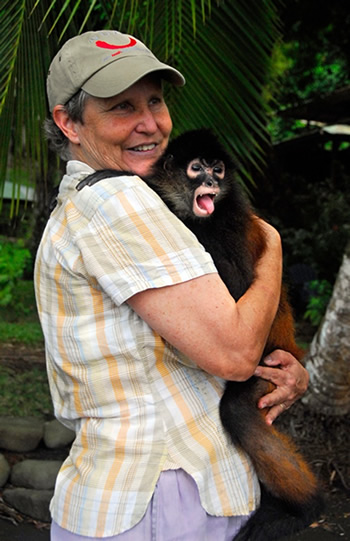
Osa Wildlife Sanctuary founder Carol Patrick and Winkie the spider monkeyMeet sloths, kinkajous, tayras, ocelots, peccaries and anteaters. Stand next to Scarlet Macaws feeding on almond trees. Watch white-faced monkeys swing and play next to you, and have your heart melt when a spider monkey comes to hold your hand.

This isn't some exotic zoo, but rather the Osa Wildlife Sanctuary on Golfo Dulce in the South Pacific of Costa Rica. The Costa Rica wildlife refuge helps orphaned and injured animals that are indigenous to this southern Pacific rainforest. Sadly, many of the animals are victims of illegal pet trade

Monkeys, wild cats, kinkajous, Scarlet Macaws and other prized creatures are captured as babies, and then abused or abandoned when their owners find they don't know how to deal with a wild animal. The Osa Wildlife Sanctuary works closely with the Costa Rica Ministry of Environment and Energy (MINAE) to rescue illegally-held animals.

The sanctuary on the beautiful Golfo Dulce coast by the Piedras Blancas National Park was originally an eco-lodge started by owners Carol Patrick and Earl Crews. Carol got a reputation for tending to injured animals, and soon locals began dropping off orphaned and injured wildlife until there was no time for guests. The Osa Wildlife Sanctuary was then established in 1996.

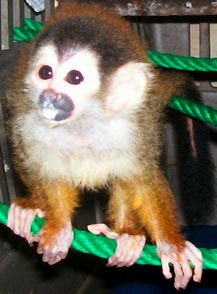
Osa Wildlife Sanctuary, baby squirrel monkeyAt first primarily an avian sanctuary, after Poppy the spider monkey arrived in 2003, all sorts of wonderful critters started showing up. Carol and her staff try their best to rehabilitate animals to release back into the wild. For each animal that enters the refuge, a complex and often unconventional playground, specifically designed to mimic its natural habitat, is created for housing. Environmental enrichment features – like species-appropriate toys, imitation streams with cascading water, and tree branches –encourage natural behaviors and prevent boredom.

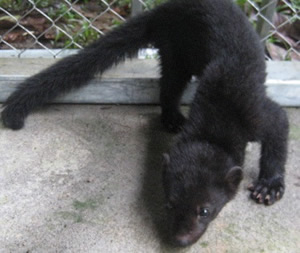
Osa Wildlife Sanctuary, Boogie the Tayra
The Osa Wildlife Sanctuary is a non-profit organization and relies on donations and tour fees to help with expenses like food, staffing, veterinary medical care, and supplies. Guided tours for visitors cost $25 per person and reservations must be made in advance.

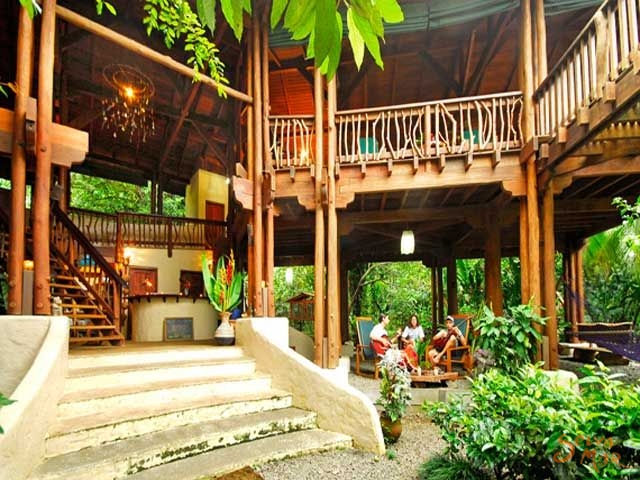
Playa Nicuesa Lodge reception main buildingThe animal refuge is a popular eco-tour for guests at Playa Nicuesa Rainforest Lodge, just 10 minutes away by boat down the Golfo Dulce coast. Playa Nicuesa Rainforest Lodge is an environmentally sensitive eco-lodge set on a 165-acre private preserve

The award-winning eco-lodge caters to travelers interested in ecotourism, nature and adventure. They offer family vacations, honeymoon trips, nature and adventure vacations, and yoga classes and retreats.

Article by Shannon Farley

miércoles, 16 de octubre de 2013

Costa Rica teams go to World Rafting Championships in New Zealand

New Zealand is about as far from Costa Rica as you can get. That's where 21 Costa Rican men and women are headed at the beginning of November to compete in the World Rafting Championships.
Set for November 13-24 in Rotorua, New Zealand, the biennial World Rafting Championships (WRC) will draw 69 teams from 27 countries to compete in four divisions with men's and women's categories – Open, Masters, Junior (under 23) and Youth (under 19).

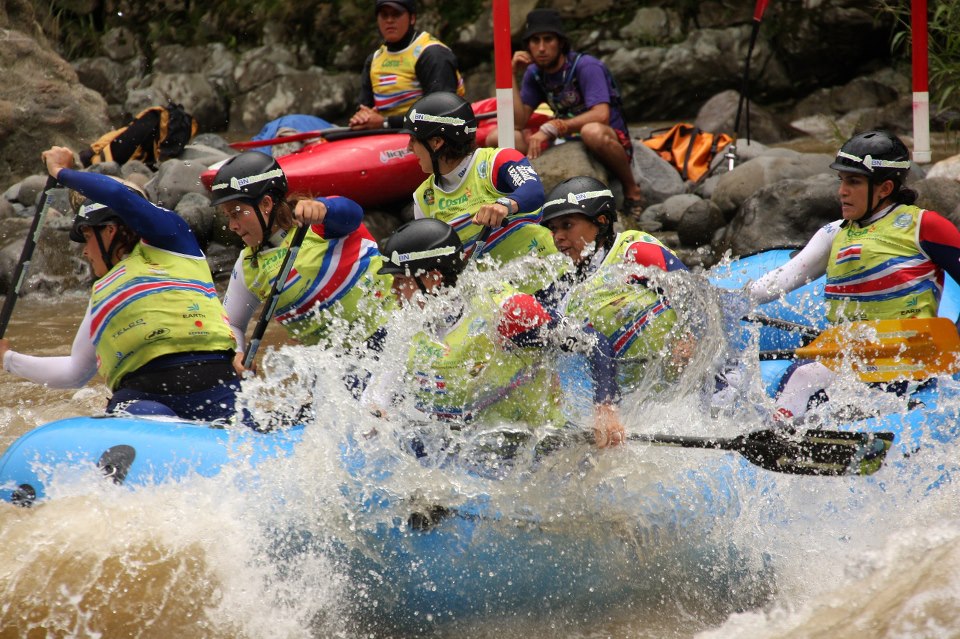
Rafting Women's Team Costa Rica compete in slalom competitionThe WRC is the pinnacle event in the highly-competitive whitewater rafting world, governed by the International Rafting Federation. The first IRF World Rafting Championships were held in Costa Rica in 1998, and most recently again in 2011. Top international teams match their whitewater skills in four events – a short sprint, head-to-head between two teams, slalom and a downriver endurance race. 

Raft teams are composed of six members with a 7th alternate.

Each of Costa Rica's teams has its own story. The women's team won a silver medal in slalom at the 2011 WRC; they are going for gold in November. The men's team is the current Costa Rica National Champion and is hoping to place in the top three at the WRC. The star-studded master's team is packed with rafting veterans who have 25 years of competition experience, including Rafael Gallo, who is owner of Rios Tropicales rafting company in Costa Rica and President and founding member of the IRF.

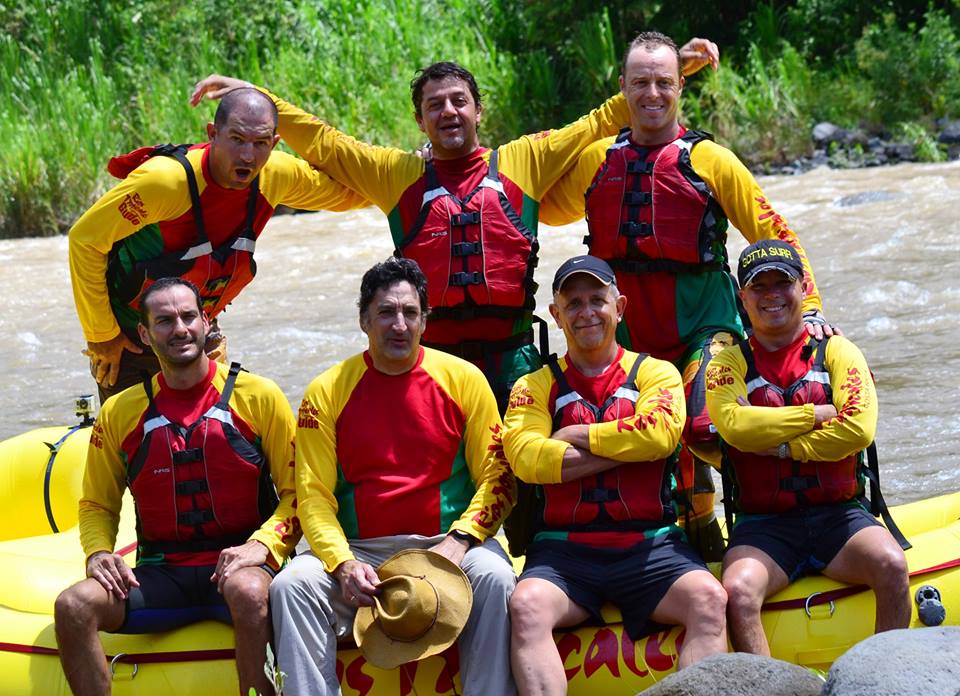
Rafting Masters Team from Costa RicaNew Zealand will be the first WRC with a Master's competition for team members over age 40. "We have the longest history of any team in the world competing internationally," said Rafael Gallo. He and team captain, Victorino Urzola, participated in the first international rafting event with Project RAFT in Siberia in 1989, and team members have taken part in many subsequent world competitions.

 "It has been my dream to go to New Zealand," Gallo remarked. "We hope to get some medals. We're very good in slalom."

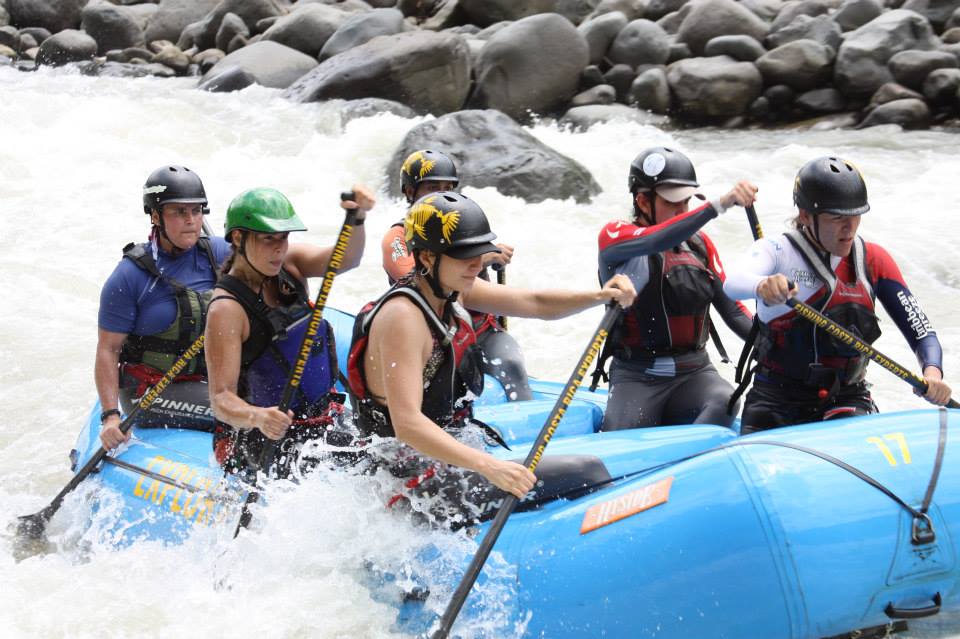
Rafting Women's Team Costa Rica training on the Pacuare RiverSlalom is the forte of the women's Costa Rica X-Pinner Team (sponsored by the X-Pinner sports clothing company). "The slalom is our event. Our trainer (Alejandro Contreras) competed in kayak in slalom and it is his specialty," explained team captain Lil Castro.

 "The slalom is a really technical competition, and maybe because we were river guides, we're good at slalom." Besides the silver medal at the 2011 WRC, the team has placed well in slalom at Pan-American Competitions, earning a gold medal in 2010 in Brazil.

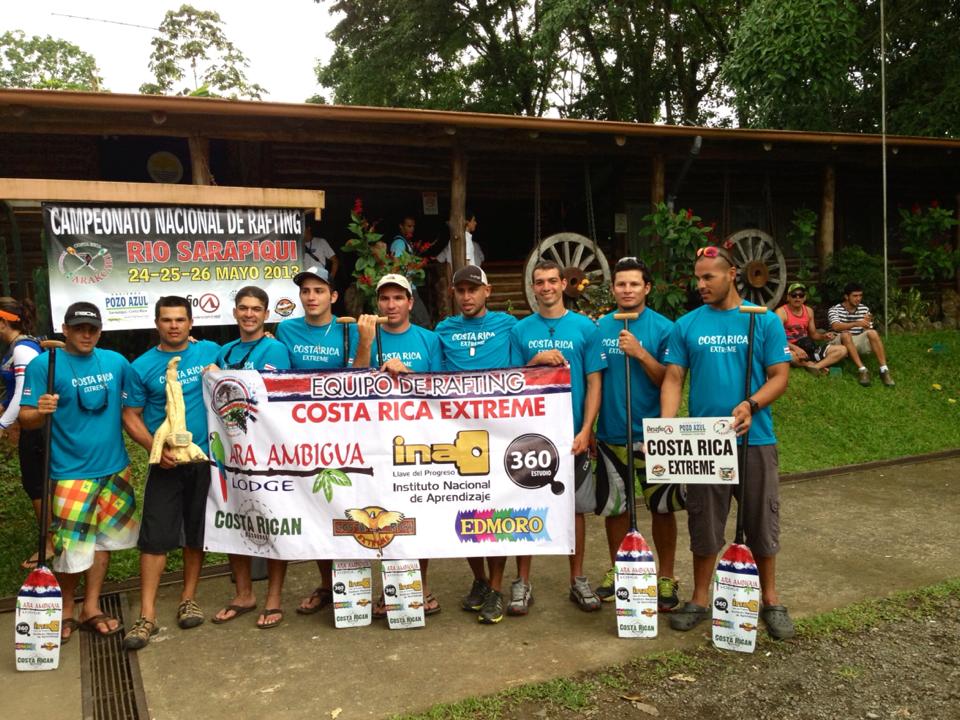
Rafting Men's Team Costa Rica at the Costa Rican National Championships 2013For the men's Costa Rica Xtreme Team, the downriver is the event they hope to win. "We are river guides and know how to go down a river; we are experienced kayakers and that helps us," explained team member Walter Centeno.

 "There is much more competition in the men's events, and we train a lot in teamwork to perfect our coordination." Team members have competed in five World Rafting Championships and are six-time Costa Rica National Champions.

Costa Rica is one of the world's top destinations for whitewater rafting, and Turrialba – home of adventure tour operator Explornatura – is the "whitewater rafting capital" of Costa Rica. Explornatura specializes in Costa Rica rafting and adventure tours near Turrialba.

Article by Shannon Farley

lunes, 14 de octubre de 2013

Costa Rica accents sustainable businesses at PPP conference.

What makes a sustainable business "sustainable" and why should we care?

Here's a news flash for you – we all live on the same planet Earth. In many ways we humans, and all of the living and non-living things and elements that exist on our planet, are connected. The dust storms in Africa that cause cloudy, windy, dry weather in Central America; the earthquake in Asia that causes a nuclear reactor to leak radioactive material into the world's largest ocean, affecting the fish we're eating for dinner in America; the business decisions made in a powerful country's boardroom that affect working conditions in a poorer nation; slashing and burning rainforests so we can have more timber, or drill for oil, or simply farm for food, and unexpectedly the world's weather goes haywire … and on and on. These are just a few examples of our interconnectedness.

Sustainable business, image by everblue.eduOperating a sustainable business means not only sustaining our own existence, but also ensuring that everything we involve and affect succeeds as well. This means not destroying the planet, or damaging people or society, in the pursuit of profit.

The United Nations defines sustainable development as "meeting the needs of the present without compromising the ability of future generations to meet their own needs." At the UN Global Compact Leaders Summit in New York in September, UN Secretary General Ban Ki-moon warned that "we cannot accept a rising tide that floats only some boats and leaves many to drown." Ban Ki-moon called on world business leaders to do even more along with the United Nations to promote sustainable development worldwide.

 "Nobody can benefit from catastrophic climate change or rampant unemployment and the social unrest that comes with it," Ban Ki-moon said. "Prosperous, stable societies and a healthy planet are the bedrock of political stability, economic growth and flourishing new markets."

Sustainable business solutions, image by sustainablebiz.netIn today's increasingly competitive landscape, more and more companies are realizing that being sustainable is more than an environmental gesture – it makes long-term economic sense for cost savings, consumer demand, resource limitations, and brand reputation and publicity, to name a few.

Sustainable businesses in Costa Rica and internationally will take center stage at the upcoming Planet, People & Peace Ecotourism Conference in San Jose, Costa Rica. Organized by the Costa Rica National Chamber of Ecotourism and Sustainable Tourism (CANAECO), the conference will convene national and international leaders to share strategies, practices and experiences to help make tourism and businesses sustainable.

The 4th Planet, People & Peace (PPP or "P3") Ecotourism Conference will be held November 3-6 in San Jose at the National Auditorium at the Children's Museum, part of the Costa Rican Center of Science and Culture. Speakers and guests from 14 countries will meet to exchange ideas on the future of sustainable tourism and how to operate businesses in an environmentally responsible way.

Costa Rica has played an important role globally over the past decade in ecotourism and sustainable business. Many businesses in Costa Rica are already successfully incorporating sustainable practices, and will be on display during the PPP Conference.

Sustainable Tourism in Costa Rica

Playa Nicuesa, Golfo Dulce
One of Costa Rica's outstanding examples of sustainable tourism is Playa Nicuesa Rainforest Lodge, an environmentally sensitive eco-lodge set on a 165-acre private preserve in the undeveloped Osa Peninsula/Golfo Dulce region of the country's South Pacific. The Playa Nicuesa Reserve borders the lush rainforest of the Piedras Blancas National Park, and fronts the pristine Pacific coastline of the Golfo Dulce.

Nicuesa Lodge bungalow porchPlaya Nicuesa Rainforest Lodge has received the highest rating for sustainability (Five Leaves) by the Costa Rican Tourism Board (ICT). The lodge embraces conservation and harmony with the natural environment and caters to travelers interested in ecotourism, nature, adventure and sports. A member of the prestigious Enchanting Hotels of Costa Rica, Playa Nicuesa Rainforest Lodge is affiliated with the Rainforest Alliance, the International Ecotourism Society, the Costa Rican National Chamber of Ecotourism, and Sustainable Travel International, among others.

Article by Shannon Farley
miércoles, 28 de agosto de 2013

Southern Costa Rica offers world-class Pacific fishing.

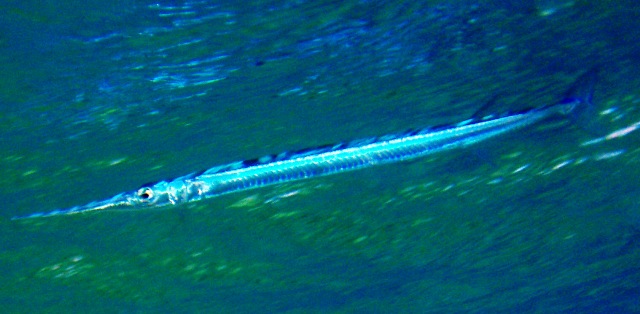
NeedlefishI remember the first time I caught a needlefish. Its electric blue teeth and skeleton (seen upon filleting) were a shocking surprise. The needlefish is tricky to catch given its long, narrow jaws filled with needle-sharp teeth (hence, its name) that usually cut fishing line like dental floss. Once you have one, though, they are really tasty – especially fried in olive oil and garlic for a finger snack!
I caught my first needlefish, my first blackfin tuna, and my first red snapper all in the placid blue waters of Costa Rica's Golfo Dulce (Sweet Gulf) while staying at the Playa Nicuesa Rainforest Lodge. I must confess, I am not a fishing expert, but in these waters I think anyone can catch a fish.

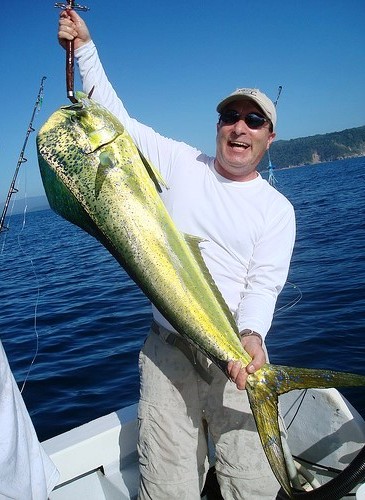
Playa Nicuesa guest catches a large Mahi Mahi (Dorado)The Pacific Ocean in Southern Costa Rica is one of the best fishing spots in the world. Offshore in the deep water, people come from all over the world to catch Yellowfin Tuna, Mahi Mahi (Dorado in Spanish), Marlin and Sailfish. Inside the calm, pristine Golfo Dulce, inshore fishing is spectacular with snapper, snook, jack, roosterfish, bonito, barracuda, needlefish, blackfin tuna and mackerel ready for the catch.

The Golfo Dulce is one of only three tropical fjords in the world; with depths exceeding 200 meters in the inner basin, it is one of the deepest. It lies between the Osa Peninsula to the west and the southern Pacific region of Costa Rica to the east. The Gulf's waters are sheltered from the open ocean by a shallow 60-meter shelf at its southern end. It is an area of tremendous biodiversity, and home to the virgin rainforest of the Piedras Blancas National Park.

Resident and migratory communities of Bottlenose Dolphins, Spotted Dolphins and Spinner Dolphins live here. Sea turtles swim in these blue-green waters, and migrating humpback whales visit from the Southern Hemisphere in August and September.

Playa Nicuesa Rainforest Lodge is perfectly positioned on the inner Gulf, backing right up to the National Park's dense forests and coastal mountains. Fresh fish is caught daily and served at lunch and dinner. Catch a fish as a guest and you'll probably be snacking on the tasty morsels during happy hour or feasting at dinner. The award-winning ecolodge offers a variety of fishing opportunities – ranging from dropping a line right off Playa Nicuesa's pier to kayak fishing to deep sea sportfishing.

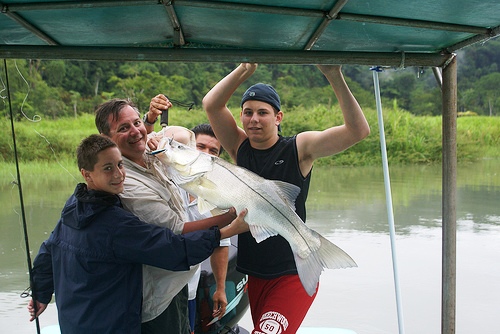
Catching a big snook in the Esquinas RiverPlaya Nicuesa's skilled boat captains and fishing guides know all of the Gulf's secret spots. If you go out trolling along the Gulf's shores, or in the brackish mangrove-filled waters of the Esquinas River, it will be by 24-foot "panga" boat with a 115-horsepower four-stroke engine. You also can paddle along the Gulf's rocky shoreline in kayaks equipped with fishing rod holders and see if you can snag a snapper or barracuda. Or stay right on the beach or pier at the lodge and learn from the local experts how to fish with a hand line. Best times to fish are early morning (6:00-8:00 a.m.) and just before sunset (4:00-6:00 p.m.), giving you calm waters, beautiful scenery and prime catching opportunities when fish are active and feeding.

Offshore sportfishing tours usually last a full day. It takes about 50 minutes to get to the mouth of the Pacific, and then you will go from five to 20 miles offshore.

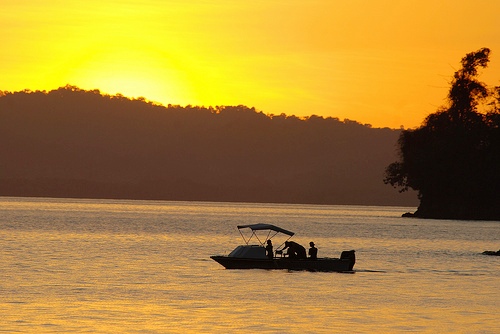
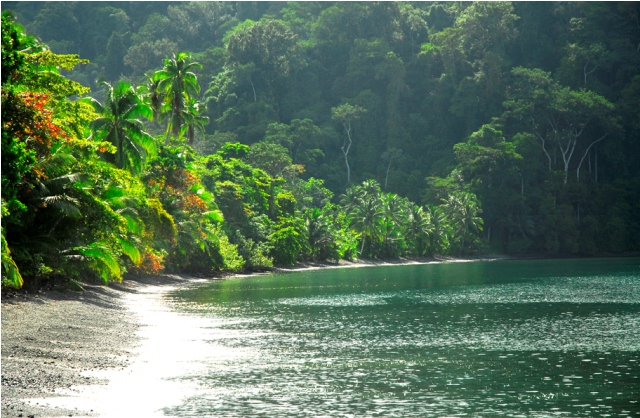
Sunset on Golfo Dulce, Costa RicaPlaya Nicuesa Rainforest Lodge provides customized offshore and inshore fishing vacation packages. The lodge holds the highest "5-Leaf level" of Costa Rica's Certificate of Sustainable Tourism program, and is a TripAdvisor Certificate of Excellence winner. They feature nature and adventure tours, yoga classes and retreats, family vacations, and honeymoon trips.

martes, 13 de agosto de 2013

Family vacation adventure:Pejibaye River

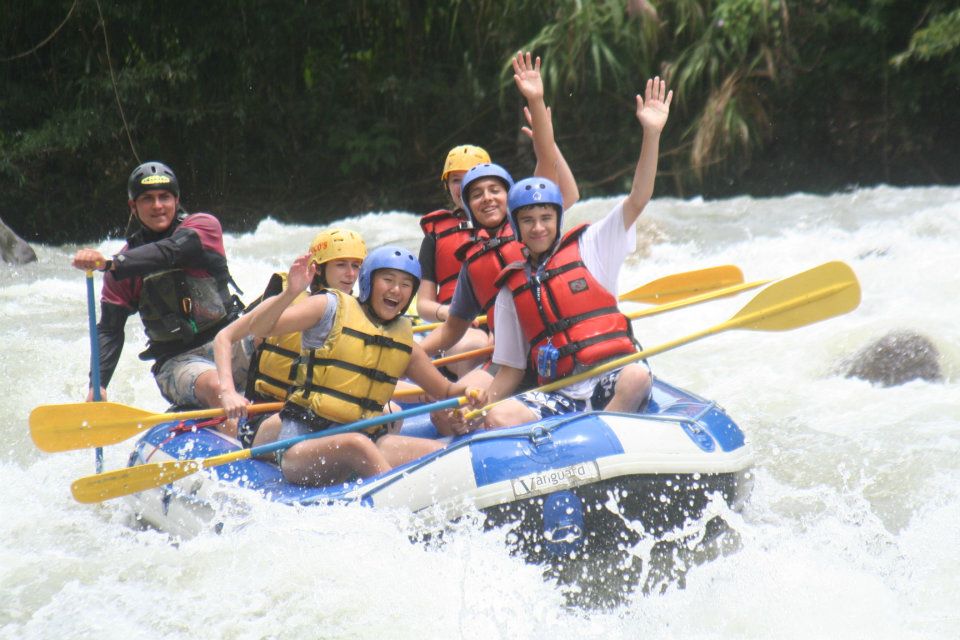
Rafting the Pejibaye River, Turrialba, Costa RicaLooking for a Costa Rica family adventure out in nature? Spend a fun-filled day splashing in the mild rollercoaster rapids of the Pejibaye River.
The beautiful, tropical Pejibaye River is a tributary of the mighty Reventazon River in the Turrialba Valley, just two hours from San Jose. Its low-key Class 2-3 rapids (in the lower section) make it a great introductory whitewater rafting trip for beginners and children (ages 8 and up). The three-hour river trip gives you spectacular scenery of coffee and sugarcane plantations, chances for wildlife viewing, and small rollicking rapids for a good time. It is one of the safest rivers for whitewater rafting in Costa Rica since the access road runs right along shore.

Hands up for who loves the Pejibaye River, Costa Rica rafting trip!At the trip's start, you will have some practice time paddling through the first small rapids. It just takes one or two rapids for you to get the hang of rafting, and then you can enjoy the adventure! For a little extra fun, part way down the river you can jump off a giant rock into a deep pool of water.

Turrialba-based adventure tour operator Explornatura operates the Family Rafting Pejibaye River trip every day that weather and river conditions permit.
Add more tours for a full day of adventure
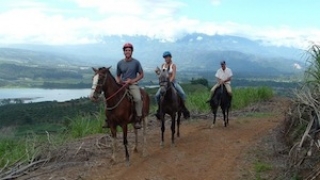
Combine whitewater rafting on the Pejibaye River with a hiking tour of the Pre-Columbian archaeological site of the Guayabo National Monument, a botanical plantation tour of the Tropical Agricultural Research and Higher Education Center (CATIE), or a biking or horseback riding tour of the Turrialba Valley. Explornatura offers these family tours and more adventures in Turrialba, Costa Rica.
Horseback riding in the Turrialba Valley, Costa RicaTurrialba

The tranquil town of Turrialba is located in the Central Highlands of Costa Rica, east of San Jose, next to the volcano that gives the town its name. Beautiful rural landscapes lead up to Volcano Turrialba's giant crater, which has roared into life in recent years. The area is rich in ecosystems, full of plants and animals and rivers. Turrialba's economy focuses on agriculture (coffee, sugarcane, peaches and macadamia nuts), dairy cattle (Costa Rica's famous "Turrialba" cheese comes from here) and adventure tourism.
It is the town's love of adventure combined with its natural resource of gushing tropical rivers that makes Turrialba the "whitewater rafting capital" of Costa Rica. The Central American nation is one of the world's top destinations for whitewater rafting. The World Rafting Championships were held on the Pacuare River in 2011.
Family Rafting Pejibaye River trip
  • What to bring? Quick-dry T-shirt and shorts, swimsuit, tennis shoes or strap-on sandals, and sun block. Extra clothes and towel will be needed at the end of the tour.
  • What's included? Transportation, fruit snack, specialized equipment, and bilingual tour guide.
  • Suitable for anyone 8 years and older; no previous experience required.
By Shannon Farley