Mostrando entradas con la etiqueta ecological research costa rica. Mostrar todas las entradas

lunes, 27 de enero de 2014

Costa Rica is important bat conservation refuge

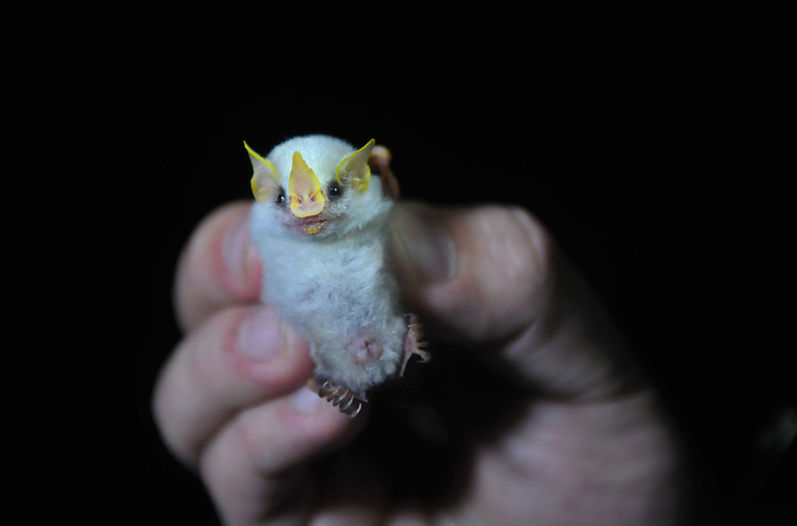
Ectophylla alba bat, photo by Luis NavarroBats are mammals with a bad reputation – their good name stained with images of blood and vampires by Hollywood. The truth is that bats are an important part of the environment, helping with pest control, spreading seeds and pollinating plants.

Of the approximate 1,100 bat species on Earth, 112 of them are found in Costa Rica. Four of Costa Rica’s national parks have been declared as important areas for the conservation of bats: La Amistad International Park, Braulio Carrillo National Park, Santa Rosa National Park and Tortuguero National Park.

Last August, more than 650 specialists from 55 countries attended the 16th International Bat Research Conference (IBRC) and the 43rd North American Symposium on Bat Research (NASBR) in San Jose, Costa Rica. The experts shared their findings on bat research, techniques and latest methods of study of these animals.

Tent-making bats under a palm leafMembers of the Conference concluded that the loss and fragmentation of forests, which is the main habitat of bats, along with direct persecution by humans, and the inappropriate use of pesticides are the main dangers posed to the existence of bats.

“The quality of human life depends on biodiversity and bats are an important part of this. We must not exterminate them. If we understand bats, learn about them and assess our coexistence, it will help prevent us from losing these species,” said Bernal Rodríguez, professor at the school of biology of the University of Costa Rica, and researcher and coordinator for the Latin American Network for the Conservation of Bats (Relcom).

Bats are the only mammals naturally capable of flight, and they have important ecosystem functions. They control pests on crops and may be more effective than birds in mitigating insect infestation, say the experts. For instance, they help eat pesky mosquitoes, which can carry diseases to humans. Nectar-feeding bats help pollinate flowers; and bats that eat fruit help disperse seeds through their feces.
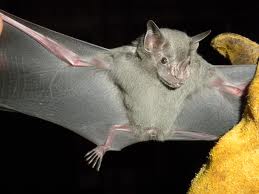
Jamaican fruit batThe Jamaican Fruit Bat is commonly found in Costa Rica. Native to Central and South America, it loves to dine on bananas, guavas, papayas, pollen and nectar, and it is essential for seed distribution. The rare Honduran White Bat, found along Costa Rica’s Caribbean Coast, is one of only 15 such bat species in Latin America.

You can learn about the bats, birds, frogs, reptiles, insects and butterflies of Costa Rica at Veragua Rainforest Eco-Adventure, located in the Talamanca Mountain Range about an hour inland from Costa Rica’s Caribbean port of Limón. The 1,300-hectare (3,212-acre) biology research and adventure center borders the La Amistad International Park, noted for being an area for bat conservation. Veragua Rainforest is an excellent one-day tour to learn about the Costa Rica rainforest and its wildlife.

Article by Shannon Farley

lunes, 28 de octubre de 2013

Can agriculture co-exist with rainforest in Costa Rica's Caribbean lowlands?

Evidence shows that Costa Rica's 17-year-old deforestation ban on cutting "mature" forests may actually be working, according to a study published recently in the journal Environmental Research Letters.

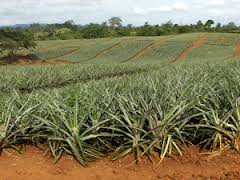
Pineapple plantation in Costa Rica's Caribbean lowlandsIn Costa Rica's northern Caribbean lowlands, in an area where pineapple production tripled over the past decade, a study led by Matthew Fagan of Columbia University found that the annual loss rate of old-growth forest dropped 40 percent despite the region's agricultural boom. Researchers used satellite imagery to determine whether deforestation has been happening to make way for pasture and cropland in the area since the 1996 law was enacted.

"We observed that following the ban, mature forest loss decreased from 2.2% to 1.2% per year, and the proportion of pineapple and other export-oriented cropland derived from mature forest declined from 16.4% to 1.9%," the researchers wrote. "The post-ban expansion of pineapples and other crops largely replaced pasture, exotic and native tree plantations, and secondary forests."

What appears to be happening is that the primary industrial agricultural crops in the region – pineapples and bananas – have shifted to taking over pastureland and non-protected green areas. Mature forests are being protected for the most part; however, there is still not an ecological solution to the agriculture vs. rainforest issue.

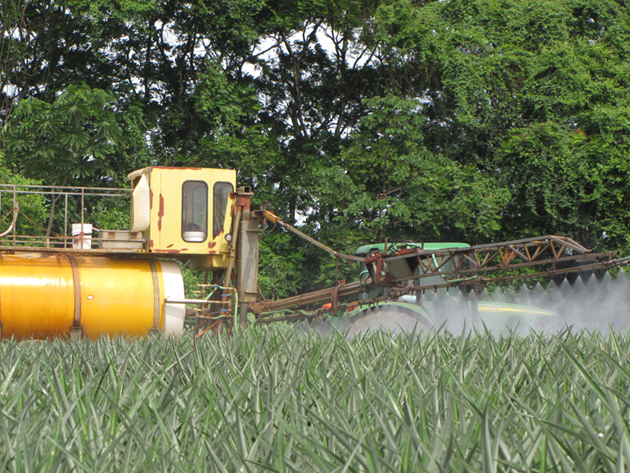
Spraying pineapple fields by forest in Costa RicaThe researchers note that intensive agriculture has taken over important non-protected forests, including wetlands and secondary forests, and that their use of agricultural chemicals puts animals and aquatic habitats at risk. Additionally, they observe that these monocultures offer fewer habitats for wildlife than, for instance, a typical cattle pasture, which usually includes scattered tree cover that can be used by many species. A pineapple farm, on the other hand, is usually devoid of trees and in effect is a biological desert.

"Pineapple and banana production in Costa Rica depends on extremely high applications of fertilizer and toxic pesticides," the study's authors write. "In Costa Rica these agro-chemicals have degraded water quality and disrupted downstream ecosystems, and contaminated forests with pesticides."

Forests and coffee production

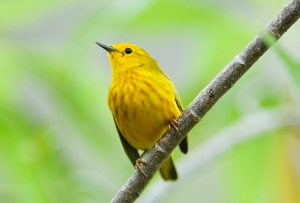
Protecting coffee farms from pests is the yellow warbler, image by Nature JournalPineapple-producing companies could perhaps learn a lesson from Costa Rica's coffee farmers, who have found that the more trees their farms have, the more birds live in the area and help reduce pest infestations.

 According to a study reported in the Nature Journal, insect-eating birds reduced damage from a devastating coffee pest, the coffee berry borer beetle (Hypothenemus hampei), by about half. The African borer beetle is invulnerable to most pesticides, and can cost farmers up to 75% of their crop.

"Based on this study, we know that native wildlife can provide you with a pretty significant benefit," states Daniel Karp, a conservation biologist at Stanford University in California, who led the study. "Incorporating their conservation into your management of pests is absolutely something you should do."
Costa Rica's success with reforestation

Costa Rica is the first tropical country in the world that has reversed a decades-long process of deforestation – dropping from 85% forest in 1940 to 35% forest by 1980. According to a 2012 World Bank report, Costa Rica was back up to 51.02% forest in January 2010.

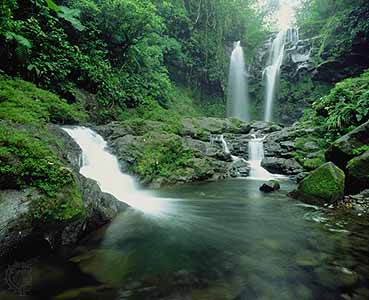
Costa Rica lush rainforestDeforestation and forest degradation, through agricultural expansion, conversion to pastureland, development, destructive logging, fires, etc., account for nearly 20% of global greenhouse gas emissions.

 That is more than all of the transportation on the planet, and second only to the energy sector, according to the United Nations Collaborative Program on Reducing Emissions from Deforestation and Forest Degradation in Developing Countries (UN-REDD).
Luckily for Costa Rica, the big business of ecotourism has become an important revenue source and is pushing reforestation and greater environmental protection measures.

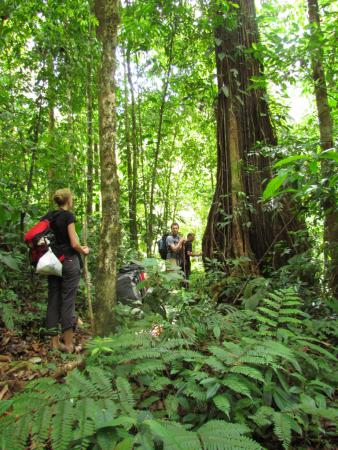
Hiking in the rainforest at VeraguaAn exemplary conservation project in Costa Rica's Caribbean mountains is Veragua Rainforest Research & Adventure Park. "We're a perfect example of an ecotourism project," says Veragua owner Marti Jimenez. "We're located in a poor area that traditionally was involved in logging, mono-agriculture and hunting. We're turning the region into a conservation-focused area, giving locals jobs and teaching them to protect their resources."

Veragua Rainforest is a 1,300-hectare (3,212-acre) biology research center and adventure park, located about an hour inland from the historic Caribbean port town of Limon. It is an area of breathtaking tropical rainforest next to the Talamanca Mountain Range and the La Amistad ("Friendship") International Park.

 Visitors have a complete Costa Rica rainforest experience in a one-day tour at Veragua. The park is a principal day tour for cruise line passengers docking in Limón. Attractions include wildlife exhibits and science labs, an aerial tram, canopy zipline tour, hiking trails, a river with waterfalls, and of course, the rainforest.

Article by Shannon Farley