Sometimes it’s monkeys, or a sloth. Or maybe Scarlet Macaws or toucans. Or possibly even dolphins or a humpback whale.
When travelers come to Costa Rica – the eco-capital of Latin America with nearly 6 percent of the world’s biodiversity – they often want to see certain animals. Maybe it is a favorite animal they have been dreaming their whole life to see in person. Or they recently read up on the cool wildlife in Costa Rica.
In April, guests and staff at Playa Nicuesa Rainforest Lodge in southern Costa Rica had an incredible experience with a surprise visit by a whale shark swimming in front of Nicuesa Beach in the Golfo Dulce.
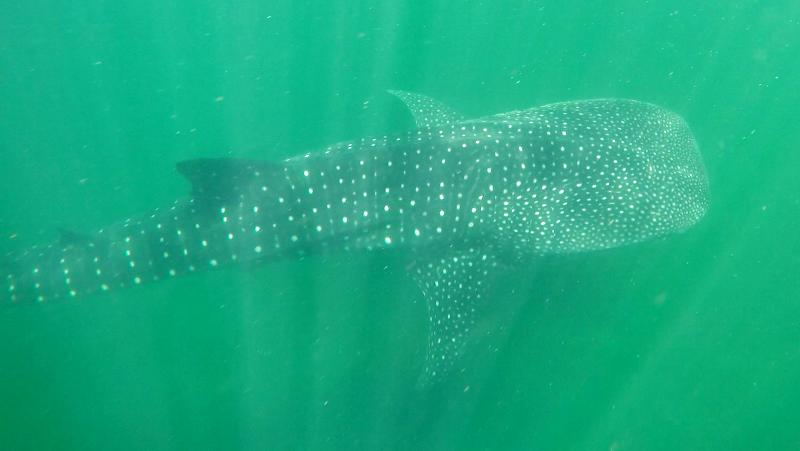
Boat captain Alejandro was readying a boat for a guest trip that morning, when he saw a huge school of sardines swimming nearby, followed by a whale shark. The small bay in front of Nicuesa Beach is very calm and the water is crystal clear, making it easy to see marine life. As usual, when a Nicuesa staff member sees interesting wildlife, Alejandro called all staff and guests by walkie-talkie to come to the beach immediately.
For one of the hotel’s guests, seeing whale sharks in Costa Rica was a moment he’d waited his whole life for.
“It was an unforgettable experience for everyone,” said Natalia Solis, Sustainability Coordinator at Playa Nicuesa Rainforest Lodge. “Our guest was super grateful because whale sharks are his favorite animal, and by surprise this was his first time to ever see one … when he was at Nicuesa.”
“Without a doubt, this was the ‘Holy Grail’ of marine observation,” enthusiastically added Marcelo Lopez, resident manager at Nicuesa Lodge.
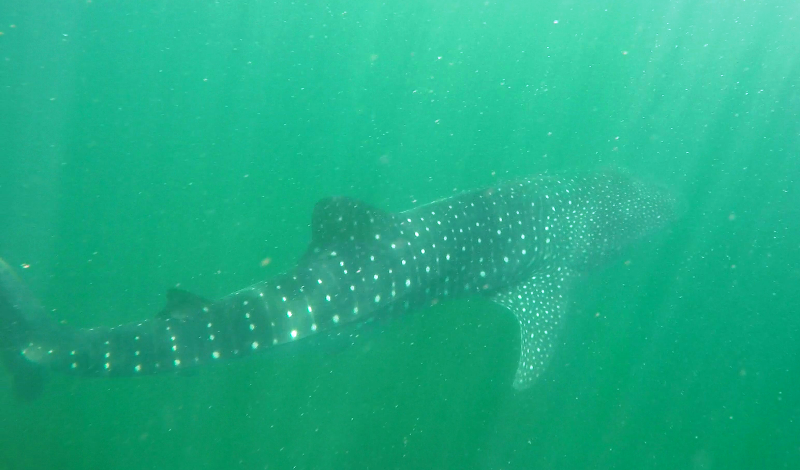
Whale sharks live in warm and tropical waters, and are considered to be the largest fish in the world – growing up to 40 feet (12m) long. Despite their name, whale sharks are not related to whales and are not mammals. And though they are in the shark family, whale sharks feed mainly on plankton and small fish.
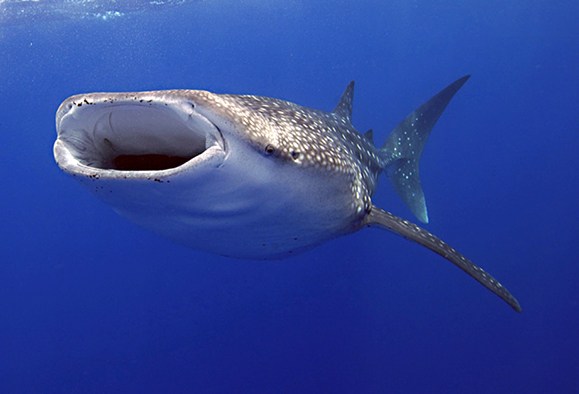
Whale sharks usually swim with their huge gaping mouths wide open, making it easier to scoop up food along their way. After getting its fill, the whale shark will close its mouth and filter out the water through its gills, leaving only its meal trapped.
Despite being big and looking intimidating, whale sharks are surprisingly gentle, curious and non-aggressive. They tend to swim near the ocean’s surface, and snorkelers and scuba divers frequently report that they enjoy close encounters with whale sharks.
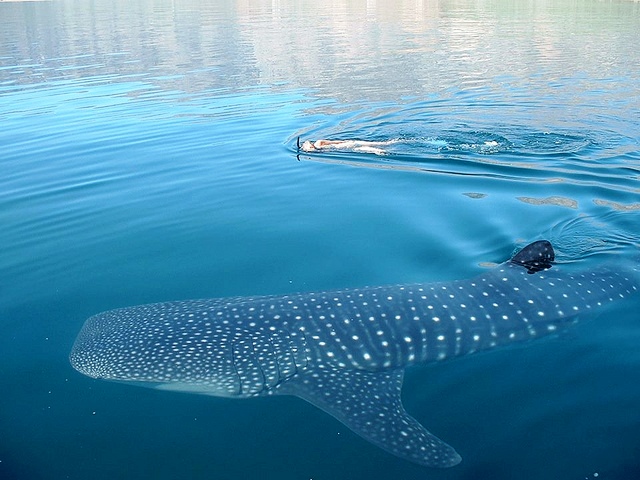
Whale sharks, which live to be 70 to 100 years old, at one time populated most of the Earth’s tropical waters, but their numbers are dwindling fast. These docile sharks are being hunted in the waters around Asia and are now endangered worldwide.
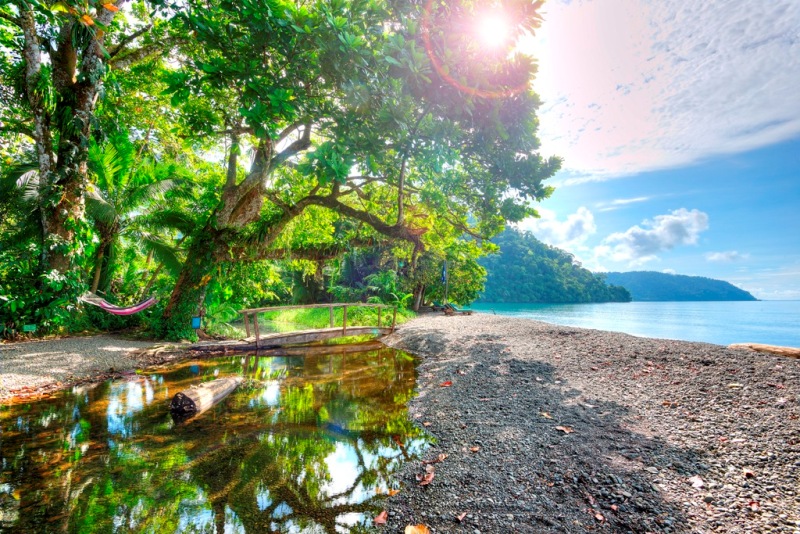
Playa Nicuesa Lodge’s 165-acre private Costa Rica rainforest reserve is located in the extraordinary Golfo Dulce/Osa Peninsula region in southern Costa Rica. Accessible only by boat on the Pacific gulf of Golfo Dulce, the lodge fronts this important life zone for Pacific Humpback Whales, dolphins, hammerhead sharks, whale sharks and sea turtles. It is a unique Costa Rica adventure travel destination for its remote, pristine wilderness location.
Enjoy one free night in paradise when you stay a minimum of three or more nights at Nicuesa Lodge; valid through Sept. 30, 2016.
 Article by Shannon Farley