Mostrando entradas con la etiqueta eco-friendly travel. Mostrar todas las entradas

viernes, 26 de junio de 2015

Reforestation & carbon neutrality at Costa Rica eco lodge Playa Nicuesa

Costa Rica rainforest at Nicuesa LodgeCosta Rica is a small country with a big success story in reforestation.
The Central American nation was nearly devastated by deforestation by the early 1980s. Now more than 30 years later, over 52 percent of Costa Rica’s land is covered with forest between national parks, private reserves and wildlife refuges.

Costa Rica’s progressive reforestation and environmental protection earned the country the accolade of being named the third best Green Country in the World in the 2014 Global Green Economy Index™ (GGEI).

In southern Costa Rica on the Golfo Dulce (“Sweet Gulf”), eco-friendly Playa Nicuesa Rainforest Lodge is doing its part to help reforest Costa Rica. The Costa Rica eco-lodge protects 95% of their 165-acre rainforest property in an undeveloped and natural state. They began a reforestation program in 2010 to slowly remove the cacao trees – from the former cacao plantation where the lodge is built – that were infected by the fungus Moniliophthora roreri, or “frosty pod rot”. Instead, they are planting trees native to Costa Rica and the local area.

Planting native trees helps re-establish the biological corridor for animals between the Piedras Trees - Espavel in Costa RicaBlancas National Park and the Golfito Wildlife Refuge that border either side of Playa Nicuesa Rainforest Lodge.
Nicuesa Lodge guests can take part in the reforestation program by planting a tree when visiting. Guests who plant a tree during their stay at the lodge receive a thank you certificate that includes a photo of the person planting the tree, their name, and the description of the tree planted with the scientific and common names.

So far, approximately 150 trees have been planted by hotel guests and staff: species like Cortez Amarillo (Tabebuia ochracea, Gold Trumpet tree), Roble de Sabana (Tabebuia rosea, Pink Trumpet tree), Cenizaro (Samanea saman, Rain Tree), Espavel (Anacardium excelsum, Wild Cashew tree), and Gallinazo (Schizolobium parahyba, Brazilian Fire tree), among others. Trees are obtained by donations and seeds harvested naturally from the forest.

“Last year, we accepted a donation of 50 Cenizaro starter trees from the Costa Rica Tourism Board (ICT). We also collect seeds from the forest on our property, germinate them and grow seedlings, which we then plant in an area we set aside for reforestation,” explained Natalia Solis, Sustainability Coordinator at Playa Nicuesa Rainforest Lodge. “This project invites and involves our guests to be part of a change that helps our environment and also helps offset the carbon emissions generated during their journey and visit to the lodge.”

Besides planting trees when you stay at Playa Nicuesa Rainforest Lodge, you can reduce the ecological impact on the planet generated by your trip by purchasing carbon credits that will be used to reforest land elsewhere in Costa Rica. The program supported by Nicuesa Lodge is with the Costa Rica National Forest Financing Fund (FONAFIFO).

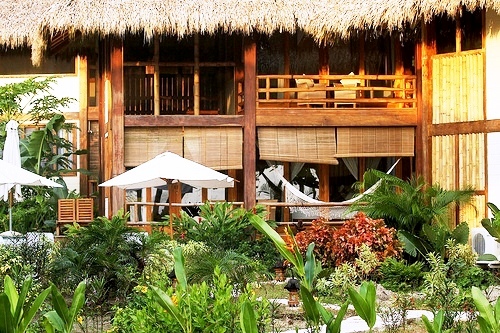
Playa Nicuesa treehouse main lodge
Stay at a real Costa Rica Eco Lodge Playa Nicuesa Rainforest Lodge gardens

Playa Nicuesa Rainforest Lodge opened in April 2003
as one of the first true eco-lodges in Costa Rica. Operating now 12 years, Playa Nicuesa Rainforest Lodge holds the highest rating in the Certification for Sustainable Tourism Program (CST) by the Costa Rica Tourism Board (ICT). Playa Nicuesa recently received the important Ecological Blue Flag Award for the fifth time for having one of Costa Rica’s cleanest beaches. Additionally, Nicuesa Lodge is working to be certified a Carbon Neutral Business, and the lodge supports the Osa Campaign and the Nature Conservancy that protects the Golfo Dulce and Osa Peninsula region.

Contact Playa Nicuesa Rainforest Lodge to visit the unique nature and adventure travel destination.

Article by Shannon Farley

miércoles, 14 de noviembre de 2012

Do you think Eco-friendly Hospitality is Really Green in Costa Rica?

Generate electricity while riding a stationary bike at Denmark's Crowne PlazaDo you like to work out in your hotel’s gym when you’re away? If you happen to be staying in Denmark’s Crowne Plaza Copenhagen Towers, keeping fit while traveling will help generate the hotel’s electricity and earn you meal vouchers in their restaurant. The flagship eco-hotel is the first hotel in Denmark to generate all of its power from renewable sources – solar panels, geothermal heating and cooling pumps, and stationary bicycles connected to generators which provide the hotel’s electricity. Guests can pedal for only 15 minutes or so and “earn” enough electricity wattage to score a free meal voucher, plus personally contribute to the planet. This novel idea is the latest twist in the eco-friendly hospitality movement that not only benefits the hotel, but gets guests involved in a real-time personal way. Eco-consciousness as a buzzword has turned into a billion-dollar business ranging from everything from the hospitality and tourism industries to clothing, cosmetics, cars, cleaning products, and corporate philosophies. In technology, you’ve got solar-powered laptops, bamboo iPhone cases, and now a new eco-friendly light bulb called LIFX LED that you can manipulate its color and brightness from your smartphone via WIFi. You can even match the light’s settings to the songs on your playlist. How geeky is that? Eco-friendly travel is one of the fastest growing sectors in the tourism industry worldwide, growing 10-15% annually. “Go Green” is the slogan you hear most often nowadays. Green efforts can be everything from simple water conservation measures (guests re-using linens and towels in hotels), using biodegradable cleaning products and recycling, to all-out 100% environmental construction. In the U.S., that would mean being certified by the Leadership in Energy and Environmental Design (LEED) program of the U.S. Green Building Council. Earth-conscientious travelers are more frequently seeking out eco-friendly lodging. Boutique hotels are at the forefront of this trend. The most common environmental practices include:
  • Guest towel & linen re-use
  • LED and compact fluorescent lighting to save energy
  • Water-efficient toilets and showerheads
  • Reduce waste output
  • Reduce energy & water use
  • Reduce carbon footprint
  • Eliminate pollution
  • No pesticides in the gardens
  • Window films (like Huper Optik films) that reduce energy usage and protect furniture, carpets, paint, etc. against fading
Pranamar's organic restaurant uses fruits, vegetables and herbs grown at the hotelSustainable and recycled woods used in Pranamar's ecological bungalows & villasIn ecotourism hotspot Costa Rica, Pranamar Villas is a leading boutique hotel for planet-conscious places to stay. The oceanfront holistic yoga-surf hotel on the Nicoya Peninsula's top-rated Santa Teresa Beach isn’t just “greenwashed” (eco-friendly in advertising only). Owners and staff are committed to following a long list of environmental practices every day. The luxury hotel cleans and reclaims its water used at the property to irrigate their organic gardens. A completely independent septic system recycles treated water that passes through a three-tank aerobic system using natural bacteria to clean the water, and then enters a drip irrigation system in the gardens which maximizes water usage. Sustainably farmed and recycled woods were used to create the hotel’s natural earth-friendly interiors for ecologically-constructed bungalows and villas. The elegantly designed accommodations offer tropical simplicity with plenty of windows and doors to open to sea breezes and enjoy nature. Granite stone tubs ringed by tropical gardens give an exotic touch to open-air bathrooms in the villas. Pranamar’s lush tropical gardens are completely organic; they use no herbicides or pesticides on the property. Much of the vegetation is “edible” – fruits, vegetables and herbs that supply the open-air restaurant with fresh, healthy cuisine. They grow mango, papaya, banana, starfruit, guanabana, passion fruit and Suriname cherries. During the dry season, melons and squashes underneath ornamental and fruit trees provide ground cover to help hold moisture. The herb and vegetable garden flourishes with mint, basil, oregano, rosemary, thyme, tarragon, turmeric, arugula, mustard greens, tomatoes, chili peppers, okra, cucumber and eggplant. The hotel’s composting system completes the food cycle by turning the restaurant’s organic waste into natural fertilizer. All soaps, laundry detergent, cleaning supplies, and even guests’ amenity shampoos, conditioners and bath soaps are biodegradable. Energy-saving light bulbs and appliances reduce electricity usage. Even the free-form swimming pool is eco-conscious: it’s filled with salt-water, meaning less chlorine and other chemicals. The difference is that Pranamar Villas’ owners, Susan Money, Greg Mullins and Stefano Allegri, created their hotel following a natural “Earth first” vision. They believe it is “important to consider the imprint we leave and the effects we have on our environment and planet.” The business of ecotourism aside, here’s some food for thought for all of us: “Our most basic common link is that we all inhabit this planet. We all breathe the same air. We all cherish our children’s future. And we are all mortal” – John F. Kennedy By Shannon Farley