martes, 24 de diciembre de 2013

Fiesta de los Diablitos celebrates Boruca indigenous history in Costa Rica

The end of the year in southern Costa Rica is time for one of the country’s biggest indigenous cultural events. This is when the native Boruca community celebrates their traditional “Fiesta de los Diablitos”, or the Festival of Little Devils. The four-day annual event happens from Dec. 30 to Jan. 2 in the village of Boruca on the tribe’s indigenous reservation in the Talamanca Mountains, 25 km inland from Palmar Norte near the town of Buenos Aires.

Boruca Fiesta de los DiablitosThe people of Boruca keep their rich ancestral traditions alive, expressed through their language, legends, dance and crafts. The Borucas are particularly famous for their colorful, hand-carved masks made from lightweight balsa wood. These masks play an important part in the Fiesta de los Diablitos, which celebrates the Borucas’ victory over the Spanish conquistadors.

Using the traditional balsa wood masks of devil faces, and elaborate costumes made from cloth sacks and banana leaves, the village men dress up as ancestral spirits. One man takes the role of a mock bull, representing the evil Spanish intruders. Only Boruca men who have carved their own mask may participate. Women have an important yet less visible part in the festival's organization making food and drink to sustain the male participants.

Boruca diablitos fight with Spanish bull in Fiesta de los DiablitosDuring the four-day festival, the bull and the diablitos perform a long, ritual dance with pretend fighting around a bonfire, known as the Dance of the Diablitos. The participants drink lots of home-made “chicha”, an alcoholic beverage made from fermented corn that is drunk from a hollowed-out gourd. On the last day, the diablitos triumph over the Spanish – just as they did historically. The bull is “killed” – the costume is burned on the large bonfire in the middle of the village and much celebration follows.

A fantastic collection of images from the Fiesta de los Diablitos can be found on this Facebook page by travel writer and photographer, James Kaiser.
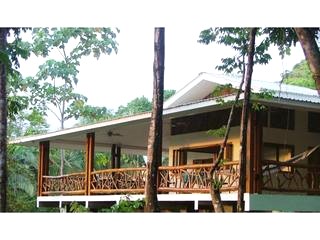
Portasol Toucan vacation house in the tropicsAttending the Fiesta de los Diablitos in Boruca is an easy day trip from Portasol Rainforest & Oceanview Living. The sustainable residential and vacation lodging community is located between Manuel Antonio and Dominical on the Central Pacific Coast. The indigenous village of Boruca is a little over 90 minutes away.

Rent a luxury vacation home or tropical bungalow at Portasol Rainforest and Oceanview Living. The sustainable residential community has vacation rentals and properties for sale. Its 1,300 acres offer private trails in the jungle, rivers and waterfalls with natural pools, comfortable lodging, and spa services.
Article by Shannon Farley

Costa Rica is pure mountain paradise

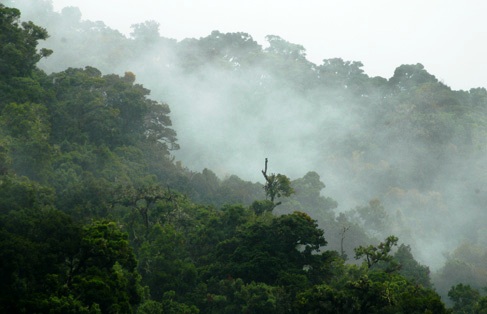
Cloud forest in San Gerardo de DotaAs we drove up into the clouds, it began to look not like Costa Rica anymore. Mist swirled around us. Large-leafed Prehistoric-looking vegetation lurked in the gloom. All windows were up; I was wearing a big fleece jacket, and I was contemplating turning on my car’s heater for the first time ever.

When I told friends and family we were going to the “Cerro de la Muerte” (Mountain of Death) for Thanksgiving at the end of November, the overwhelming response was: “Sounds like fun. Not.” The Mountain of Death doesn’t exactly sound like a place for fun and relaxation … unless we’re talking eternal sleep. Maybe that’s why places like San Gerardo de Dota and Santa Maria de Dota (the Los Santos region of Costa Rica), the Tapantí National Park and the newly formed Los Quetzales National Park are some of the least visited destinations in Costa Rica.

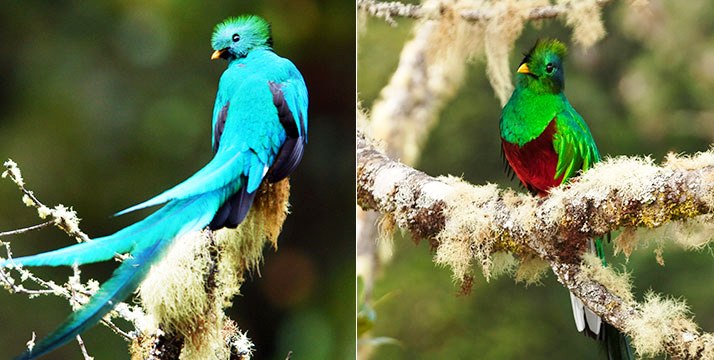
Resplendent QuetzalThese high mountain valleys in the Talamanca Mountain Range are most popular with die-hard eco-tourists – especially from Europe. Just 55 miles (89km) south of San José, the region is renowned for its bird watching. Visitors enjoy early morning nature walks searching for the magnificently-plumed Resplendent Quetzal and the other 200 or so bird species identified in these misty tropical cloud forests.

From the chilling damp of Cerro de la Muerte, we twisted down a narrow mountain road into the sun-kissed hidden valley of San Gerardo. Cerro de la Muerte is Costa Rica’s fourth highest mountain at 11,322 feet (3,451m); blessedly, we had dropped to a more pleasant 7,200 feet (2,200m) in San Gerardo.

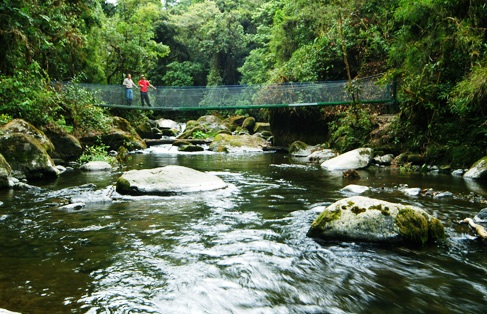
Savegre River in San Gerardo de DotaPure mountain air filled our lungs. The scent of cypress trees carried on crisp breezes, and the warm sunshine seemed to intensify all colors. San Gerardo is both charming and gorgeous. Little houses dot the countryside and numerous mountain lodges supply appealing accommodations. Apple, plum and peach orchards line the steep green hillsides. Rushing down the valley center is the wild Savegre River, tumbling headlong toward the Pacific Ocean just south of the Manuel Antonio National Park. On the Central Pacific Coast, the Savegre is known for its excellent whitewater rafting. Here, high in the mountains, its crystal clear spring waters provide sustenance to some of Costa Rica’s best trout fishing and trout farms.

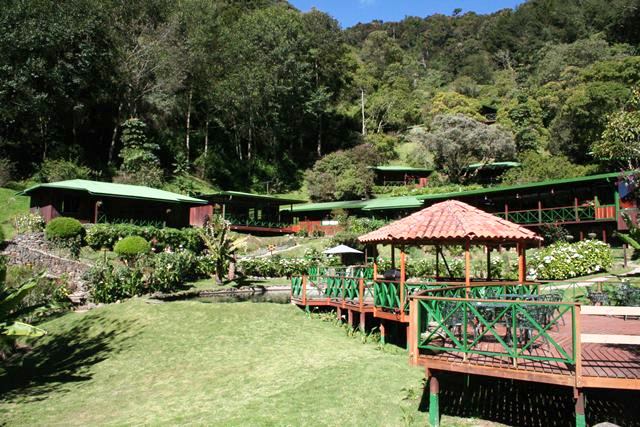
We stayed at the Savegre Hotel, near the bottom of the valley settlement. The owners, the Chacón family, were the first pioneers to settle in the San Gerardo de Dota region, starting the community nearly 60 years ago. The family-operated lodge sits on a private reserve of 988 acres (400 hectares) with an extensive network of trails through the forest and to impressive waterfalls. Hiking and birding is fantastic, and it is also lovely to sit on the lodge’s sun deck watching countless jewel-toned hummingbirds zip around flowers, feeders and tree branches. Travel tip: Definitely go for the Junior Suite cabin with a wood-burning fireplace, and the all-inclusive meal plan. Constantly changing weather means bring warm clothes and rain gear.

Trogon Lodge, San Gerardo de DotaThe Trogón Lodge is another lovely mountain hotel in San Gerardo. Located a little higher up in the valley, it lines a bend in the river and offers comfortable cabins, hiking trails and a canopy zipline tour.

Make your travel arrangements for San Gerardo de Dota with Best of Costa Rica Destination Management Company, a Costa Rica travel agency with extensive experience. Best of Costa Rica arranges hotels, tours, transportation, custom travel packages, and travel for meetings and special events in Costa Rica, Panama and Nicaragua. The expert travel company provides a bilingual staff and a 24-hour assistance center.

Article by Shannon Farley

jueves, 19 de diciembre de 2013

Birders in the Americas join in 114th Christmas Bird Count.

For more than 100 years, every year at Christmastime, rather than searching for the perfect present, tens of thousands of active passionate folks explore the great outdoors looking for the most splendid birds.
Outfitted with binoculars, bird guides and checklists, birding devotees throughout the Americas brave snow, wind, rain, or maybe even tropical sun, to take part in the Christmas Bird Count. The National Audubon Society of the USA and other organizations use data collected in the annual Christmas Bird Count to assess the health of bird populations, and to help guide conservation action.

This year, the 114th annual Christmas Bird Count in the United States is from Dec. 14 through Jan. 5. Down in the tropics, Costa Rica also participates in the Christmas Bird Count. This year, the count began Dec. 1 at Selva Verde Lodge in Sarapiqui, and ends Jan. 5 near San Carlos, with nine other counts in between at locations around the country.

Last year, the highest number of birds counted in Central America was in Costa Rica. A record number of 417 different bird species, and 12,665 individual birds, were identified in a 24-hour period on Dec. 5 in the Central Caribbean by Veragua Rainforest.
Male Shining Honeycreeper at Veragua, photo by Patrick O'DonnellAccording to avid Costa Rica birder and blogger, Patrick O’Donnell, local birders rave about the excellent birding at Veragua Rainforest. O’Donnell’s Costa Rica Living and Birding blog provides a wealth of information about bird watching in Costa Rica.

Veragua Rainforest Eco-Adventure is a 1,300 hectare (3,212 acre) biology research and rainforest adventure park located in the Talamanca Mountain Range about an hour inland from Costa Rica’s Caribbean port of Limón. It is an area of breathtaking tropical rainforest bordering the La Amistad (“Friendship”) International Park, the largest nature reserve in Central America. Veragua Rainforest is an excellent one-day tour in the Costa Rica rainforest to enjoy wildlife exhibits, science labs, and adventure tours.

Travel Tip: Download the Costa Rica Birds Field Guide, a full-featured birding field guide for Costa Rica, available on iTunes.
Article by Shannon Farley

Visit the sunny side of Costa Rica in Guanacaste.

Nosara, Costa Rica is an artsy, eclectic community

Nosara, Costa RicaNosara, Costa Rica, is a fascinating, eclectic beach community. Remotely located on the Pacific Coast of the Nicoya Peninsula, Nosara has become a haven for local and international residents who sought to “get away from it all.”
Many came to surf the wild side-by-side beaches of Playa Pelada and Playa Guiones, two of Costa Rica’s top surfing beaches. Others came seeking a healthier lifestyle of yoga, sunshine, clean air and organic markets.

Nosara Artisans dog artArt groups in Nosara are now promoting the Costa Rica beach community as a cultural center. The Nosara Artisans group, which was founded by resident ceramic artists Kristen Brousseau and Emma Kinsey, hold Saturday afternoon art fairs once a month. Upcoming 2014 art fairs will be held on Jan. 25, Feb. 22 and Mar. 29 at the Gilded Iguana Hotel and Restaurant in Guiones. The group recently held their second annual Holiday Art Fair that benefited the Nosara Animal Care shelter.

A new art group, called Arte Nosara, is currently being organized by Nosara resident Paul Da Costa, to host art and photography exhibitions, musical concerts and dances. The first expo is planned for January 2014.

L'acqua Viva Resort and Spa in Nosara, Guanacaste, Costa RicaVisit Nosara, Costa Rica
One of the finest Nosara hotels is L’acqua Viva Resort & Spa, a luxury boutique hotel by Playa Guiones. The hotel’s name means “live water,” which is a key element in the hotel’s exotic Bali-style architecture. Art is a central theme at L’acqua Viva Resort & Spa; all around the hotel are art masterpieces from around the world that belong to a private collection. The best way to reach Nosara and Playa Guiones is to take a domestic flight from San Jose or Liberia to the Nosara domestic airport.
Article by Shannon Farley

Nosara, Costa Rica is an artsy, eclectic community