lunes, 27 de enero de 2014

Costa Rica is popular endurance race capital in Latin America

Xterra Costa Rica 2014Costa Rica over the past decade has become a magnet for high-endurance extreme sports, adventure racing and triathlons. Elite international athletes travel to the small Central American nation several times a year for sport competitions.

One of the most popular zones for extreme endurance events is the north Pacific Guanacaste region. In early March 2014, the International Triathlon Union (ITU) will hold the 2014 Pan American Cup at Playa Hermosa in Guanacaste. Also in March, the XTERRA off-road triathlon race comes to Costa Rica, staging their major international competition March 29 and 30 at Playa Conchal in Guanacaste. Costa Rica’s top triathlete Leonardo Chacon took first place at the XTERRA USA competition last year in Hawaii.

Last year was a big year for endurance adventure races in Costa Rica – among them the 2013 Rincon de la Vieja Challenge logoAdventure Racing World Championships, the North Face Endurance Challenge at Rincón de la Vieja Volcano in Guanacaste, and the Rincón de la Vieja Challenge mountain biking endurance race.

Rincon de la Vieja Challenge adventure raceThe second annual Rincón de la Vieja Challenge will happen on Aug. 23. Held last year for the first time, the 100-mile (160 km) adventure race was the first of its kind in Costa Rica and Latin America to circumnavigate an active volcano.

The North Face Endurance Challenge and the Rincón de la Vieja Challenge were both staged out of leading Rincón de la Vieja eco-lodge, Hacienda Guachipelin. Owner Jose TomasBatalla says it is the region’s diverse terrain and microclimates that attract such high-profile sports competitions.

“There is savannah, tropical forest, desert, and cloud forest, and the weather changes as you go up in elevation,” commented Batalla.
Have your own adventure at Rincón de la Vieja at Hacienda Guachipelin eco-lodge. 

The first-class lodge, right next to the Rincón de la Vieja Volcano National Park, offers guests and visitors a complete adventure center with canopy ziplines, canyoning, waterfall rappelling, river tubing, horseback riding, mountain biking, nature trails, and natural volcanic hot springs. Hotel Hacienda Guachipelín is located 15.5 miles (25 km) northeast of Guanacaste’s principal city of Liberia.
Article by Shannon Farley

    Bird watching in Costa Rica

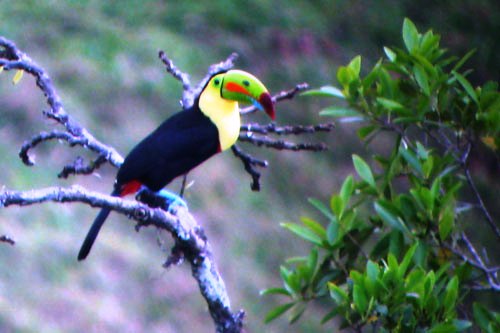
    Birds Costa Rica - ToucanIf bird-watching is your passion, then you definitely want to add Costa Rica to your “Top 10 list of places to go birding.” The small Central American country is home to more than 870 bird species – more than in all of the United States, Canada and Mexico combined – and is a bird-watching hotspot. A single day of bird-watching in this enchanted corner of the globe can earn sightings of up to 85 to 150 different species.

    Costa Rica’s strategic location in the tropics bridging North and South America, and rugged topography with numerous mountains, valleys and microclimates, offer optimum conditions for high biodiversity. The country protects more than 25% of its territory in national parks and private reserves, allowing access to intensely diverse habitats for widely varied bird-watching.

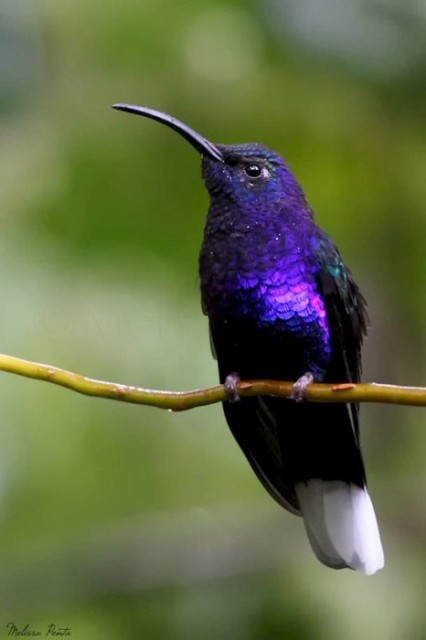
    Violet Sabrewing Hummingbird Costa RicaScarlet and Green Macaws, Toucans, Oropéndolas, Resplendent Quetzals, Crimson-Collared Tanagers, Harpy Eagles, and Violet Sabrewing Hummingbirds are just some of the species you may see in this birding paradise.

    The best way to go birding in Costa Rica is on a bird-watching tour. For instance, the eight-day Bird Watching in Costa Rica by Valle Dorado Tours takes you to Sarapiqui, the Arenal Volcano, and the cloud forest of the Central Highlands by the Juan Castro Blanco National Park.

    Valle Dorado’s 11-day Costa Rica Nature Adventure that explores the Tortuguero National Park, the Arenal Volcano, Monteverde cloud forest, and beaches of the Manuel Antonio National Park, also would be a good choice for birding
    .
    Valle Dorado Tours offers customized Costa Rica vacations using their 20+ years of local experience in Costa Rica travel to ensure you receive only the best in accommodations, transportation, tours and activities. They design their travel packages as a suggestion, and their travel experts are happy to make any changes to custom fit the perfect Costa Rica Bird-watching Tour package for you.

    Travel Tip: Download the Costa Rica Birds Field Guide, a full-featured birding field guide for Costa Rica, available on iTunes.

    Article by Shannon Farley

    Costa Rica is important bat conservation refuge

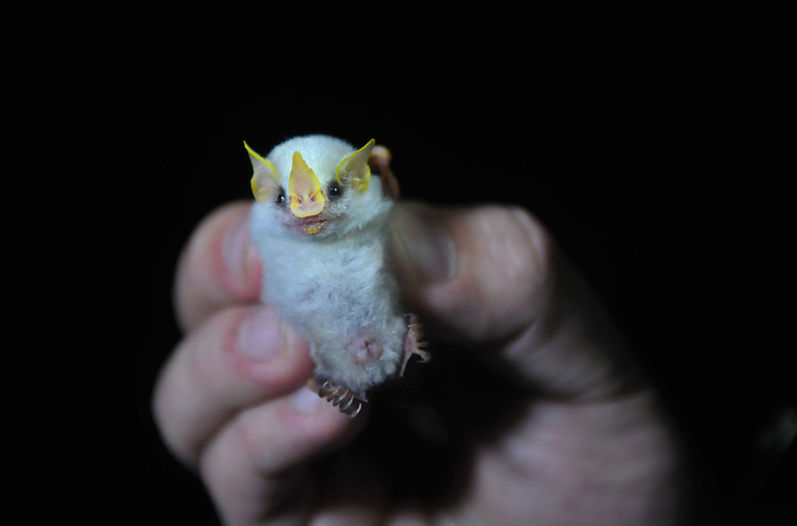
    Ectophylla alba bat, photo by Luis NavarroBats are mammals with a bad reputation – their good name stained with images of blood and vampires by Hollywood. The truth is that bats are an important part of the environment, helping with pest control, spreading seeds and pollinating plants.

    Of the approximate 1,100 bat species on Earth, 112 of them are found in Costa Rica. Four of Costa Rica’s national parks have been declared as important areas for the conservation of bats: La Amistad International Park, Braulio Carrillo National Park, Santa Rosa National Park and Tortuguero National Park.

    Last August, more than 650 specialists from 55 countries attended the 16th International Bat Research Conference (IBRC) and the 43rd North American Symposium on Bat Research (NASBR) in San Jose, Costa Rica. The experts shared their findings on bat research, techniques and latest methods of study of these animals.

    Tent-making bats under a palm leafMembers of the Conference concluded that the loss and fragmentation of forests, which is the main habitat of bats, along with direct persecution by humans, and the inappropriate use of pesticides are the main dangers posed to the existence of bats.

    “The quality of human life depends on biodiversity and bats are an important part of this. We must not exterminate them. If we understand bats, learn about them and assess our coexistence, it will help prevent us from losing these species,” said Bernal Rodríguez, professor at the school of biology of the University of Costa Rica, and researcher and coordinator for the Latin American Network for the Conservation of Bats (Relcom).

    Bats are the only mammals naturally capable of flight, and they have important ecosystem functions. They control pests on crops and may be more effective than birds in mitigating insect infestation, say the experts. For instance, they help eat pesky mosquitoes, which can carry diseases to humans. Nectar-feeding bats help pollinate flowers; and bats that eat fruit help disperse seeds through their feces.

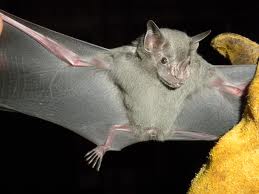
    Jamaican fruit batThe Jamaican Fruit Bat is commonly found in Costa Rica. Native to Central and South America, it loves to dine on bananas, guavas, papayas, pollen and nectar, and it is essential for seed distribution. The rare Honduran White Bat, found along Costa Rica’s Caribbean Coast, is one of only 15 such bat species in Latin America.

    You can learn about the bats, birds, frogs, reptiles, insects and butterflies of Costa Rica at Veragua Rainforest Eco-Adventure, located in the Talamanca Mountain Range about an hour inland from Costa Rica’s Caribbean port of Limón. The 1,300-hectare (3,212-acre) biology research and adventure center borders the La Amistad International Park, noted for being an area for bat conservation. Veragua Rainforest is an excellent one-day tour to learn about the Costa Rica rainforest and its wildlife.

    Article by Shannon Farley

    jueves, 23 de enero de 2014

    10 yoga stretches to improve your surfing

    As a surfer, wouldn’t you like to be able to surf for longer without getting tired, have more strength and flexibility and better balance, get a quicker pop-up, relax your breathing and sharpen your mental focus?

    Yoga can help you do this. Pro surfers know that yoga keeps their performance constantly improving and aids in preventing injuries.

    Here are 10 yoga poses for surfers that will improve your strength and flexibility, give you better balance, and help you avoid the all-too-common lower back pain. Remember to warm-up before heading out to the water, and stretch for 5-10 minutes after surfing. Your body will thank you.

    1. Downward-facing dog: Benefits: Strengthens and tones the arms and legs, stretches shoulders and calf muscles, lengthens and straightens the spine helping to relieve all over back pain.

    Yoga pose downward dog for surfers

    2. Locust Pose: Benefits: Stretches the chest, shoulders and abdominals, and strengthens the upper and lower back, arms and legs. This is a non-aggressive backbend that helps build the spinal support for all of the back-arching you do when paddling for waves.

    Yoga pose Locust
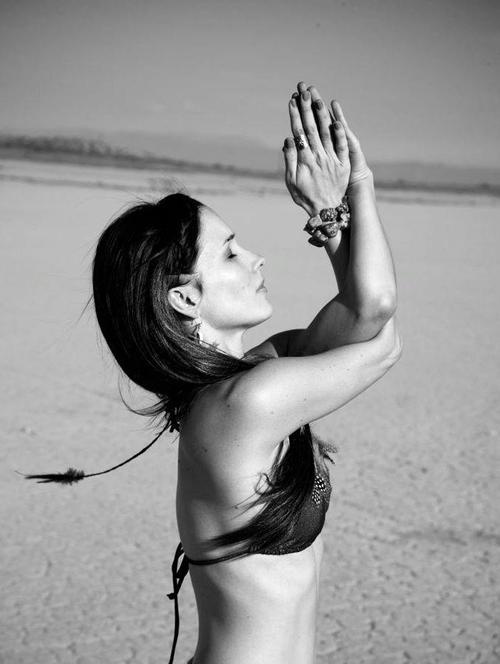
    3. Eagle Pose (arms only): Benefits: Stretches upper back and shoulders for long paddling sessions.
    Yoga pose Eagle arms
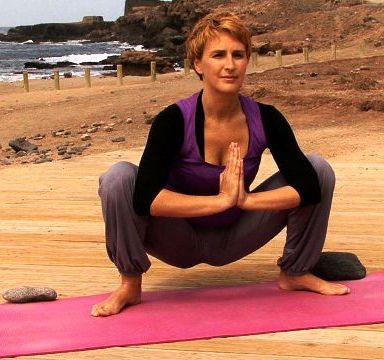
    4. Squat / Garland Pose: Benefits: Opens up the hip flexors and strengthens the back; ideal to prevent hip cramping when sitting on your board for a while.

    Yoga pose squat

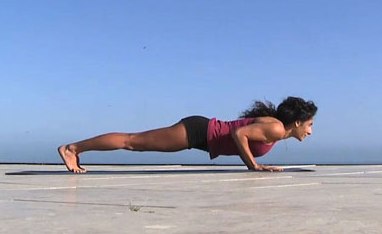
    5. Plank Pose & Chaturanga Dandasana: Benefits: Core, triceps, back. This pose will help you pop up faster and stronger.

    Yoga pose Chaturanga Dandasana

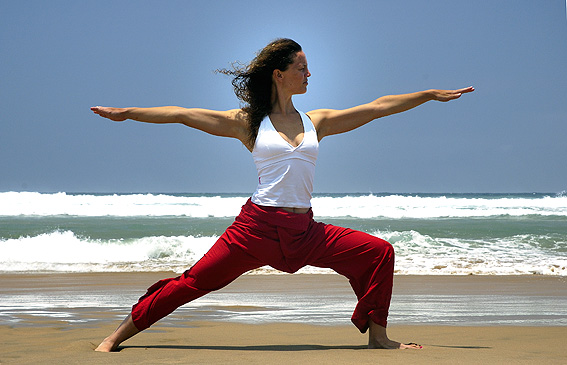
    6. Warrior Pose: Benefits: Stretches your hips, groin and shoulders, strengthens and stretches your legs, ankles and feet, and builds stamina, balance and concentration.

    Yoga pose Warrior

    7. Upward Facing Dog: Benefits: Elongates and increases flexibility in your spine, opens your chest, throat, shoulders, and the front of your thighs.

    Yoga pose upward facing dog

    8. Boat Pose: Benefits: Strengthens your core, and helps with deep breathing, focus and balance.

    Yoga pose Boat

    9. High Lunge: Benefits: Stretches and strengthens your legs, especially thighs, knees, ankles and psoas muscle; opens the groins and hips, and lengthens the spine.

    Yoga pose High lunge

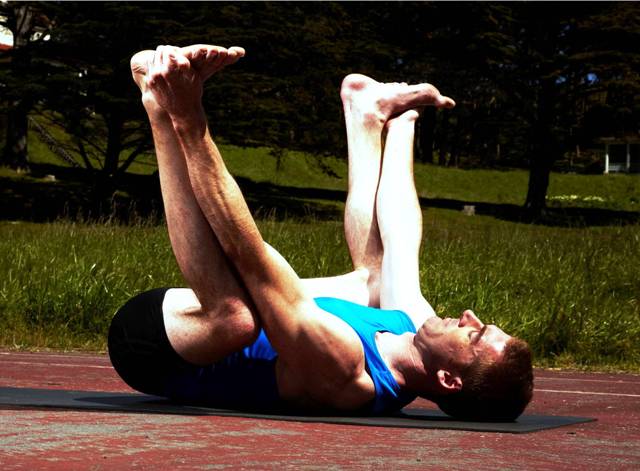
    10. Happy Baby Pose: Benefits: Releases tight hips, hamstrings and back muscles.

    Yoga pose Happy Baby

    Surfing and yoga in Costa Rica
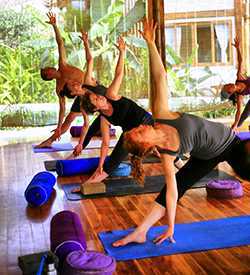
    Surfing Santa Teresa, Costa RicaGet the best of both surfing in Costa Rica and yoga at Hotel Tropico Latino on beautiful Santa Teresa Beach in Costa Rica. The charming, intimate beachfront hotel specializes in Costa Rica surfing and yoga vacations and retreats. The hotel offers daily Hatha and other yoga classes on their shaded wooden yoga deck right on the beach. Santa Teresa is famous for year-round warm-water surf, pristine beaches and picture-perfect sunsets.


    Article by Shannon Farley

    miércoles, 22 de enero de 2014

    Best Business Hotels in San Jose, Costa Rica

    Real InterContinental Hotel Costa RicaAs Costa Rica’s multinational business community grows, so too does the number of business travelers visiting the country. Costa Rica also has become a highly popular destination for international meetings, incentive trips, conferences and events (MICE tourism).

    Most business and conferences still take place in the capital city of San Jose. As a business traveler to Costa Rica, you will want to stay in one of the best business hotels that San Jose has to offer.

    10 Best Business Hotels in San Jose, Costa Rica

    Reserve your San Jose business hotel with Costa Rica Special Deals, a professional online travel service. Costa Rica Special Deals will help you with where to go, reservations, transportation, and tips on what to do.

    Article by Shannon Farley
    lunes, 20 de enero de 2014

    Costa Rica yoga retreats 2014 in Santa Teresa

    Yoga-surf retreat Women's Quest at PranamarCosta Rica summer is yoga season at Pranamar Oceanfront Villas & Yoga Retreat on Santa Teresa Beach. Pranamar is offering 14 exceptional yoga retreats between February and June 2014.

    Whether you are looking to deepen your yoga practice, or try yoga for the first time, a yoga retreat is an excellent opportunity for both. Retreats also add in fun activities like surfing or stand-up paddling.

    Playa Santa TeresaSanta Teresa has been named one of the top 10 beaches in Central America and is an idyllic yoga setting at the southern tip of Costa Rica’s Nicoya Peninsula. Host Pranamar Villas welcomes retreat-goers with elaborate oceanfront villas and bungalows in lush tropical gardens, a gorgeous river-theme swimming pool, and gourmet organic cuisine in the Buddha Eyes Restaurant.

    See the selection of yoga retreats listed below, and visit Pranamar’s website for more information.
    Costa Rica Yoga Retreats at Pranamar

    Yoga Retreat at Pranamar Villas, Santa TeresaWomen’s Quest Adventures: Feb. 2-8 and May 4-10, 2014: Surf and yoga adventure retreat; yoga classes taught by Pranamar Villas yoga instructor, Nancy Goodfellow.
    Vajra Sol Yoga Adventures: Feb. 16-22, Mar. 16-22, Mar. 30 – Apr. 5, Apr. 6-12, Jun. 22-28, 2014: Yoga retreat with surfing or stand-up paddling (SUP).
    Yoga and Visioning Retreat: Feb. 22 to Mar. 1, 2014: Yoga, meditation and visioning retreat led by Chantal Russell.
    TrueFlow Yoga Vacation in Costa Rica: Mar. 3-8, 2014: Yoga retreat led by Brynn Rybacek.
    Soul Arch Yoga Retreat: Mar. 9-15, 2014: Yoga retreat and community philanthropic project.
    Yoga Toes Retreat: Mar. 23-30, 2014: Yoga retreat led by MC Yogi and Amanda Giacomini with meditation, dharma talks, restorative yoga, storytelling and music.
    Costa Rica Yoga Retreat with Colleen O’Brien-McFall & Kate Mak: Apr. 12-19, 2014: Yoga retreat in nature’s beauty at Pranamar Villas.
    Yoga Retreat in Costa Rica with Cathy Daley: Apr. 29 to May 4, 2014: Retreat with daily yoga and meditation sessions.

    Article by Shannon Farley
    Nosara, Costa Rica is a world’s best travel destination 2014

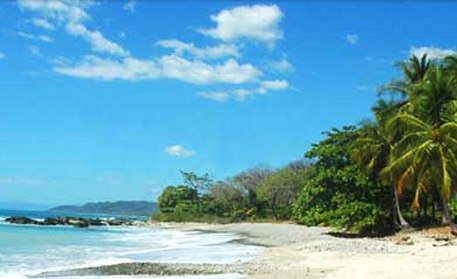
    Costa Rica - NosaraThe pristine beaches of Nosara, Costa Rica have caught people’s attention a lot lately.

    In December, National Geographic Magazine chose Nosara as one of the best winter trips for 2014. Then, Cable News Network (CNN) selected Nosara as one of its 11 Places to Go Worldwide for 2014. Nosara also was listed as one of the top 45 places in the world to visit in 2012 by the New York Times.

    On the North Pacific Coast of the Nicoya Peninsula in Costa Rica, Nosara has caught the spotlight as a top travel destination for its “eco-friendliness” and wholesome beauty.

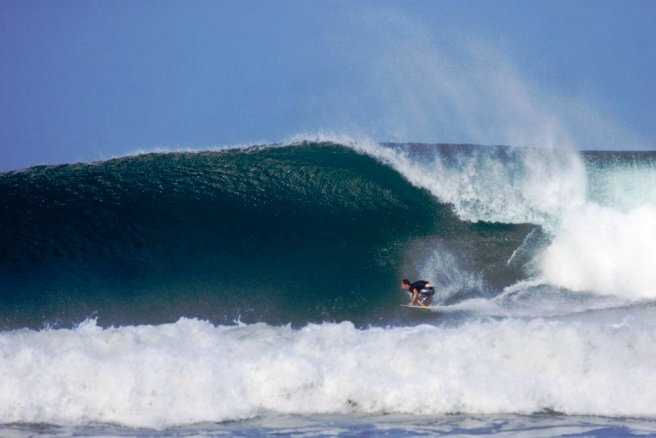
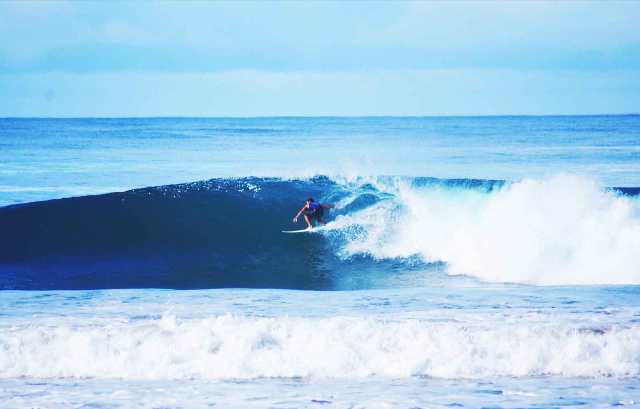
    Big surf at Playa Guiones, image by VisitNosara.comNosara is renowned for some of the best surfing in Costa Rica and uncrowded beautiful beaches. The region also features the famous Nosara Yoga Institute and the acclaimed Ostional National Wildlife Refuge – the second largest nesting site in the world for Olive Ridley turtles, and the only Costa Rica beach where you can observe sea turtles nesting year-round. Surf schools, boutique hotels, artist communities, and a progressive recycling center add to Nosara’s attraction. The beaches of Guiones, Pelada, Garza and Nosara have been awarded the Ecological Blue Flag for environmental cleanliness.

    Check out the hot 2014 destination of Nosara, Costa Rica for your next holiday.

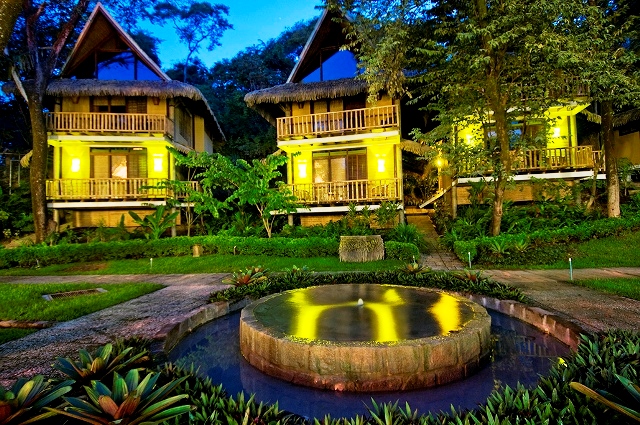
    Guest rooms at L'acqua Viva Resort and Spa, Costa RicaWhere to Stay: L'acqua Viva Resort & Spa is one of the best eco-friendly luxury hotels in Nosara and is an Enchanting Costa Rica Hotel. Located one kilometer from the fine white sand beach and top surf spot of Playa Guiones, L’acqua Viva Resort & Spa is founded on water and art. The hotel’s exotic Bali-style architecture surrounds abundant water and swimming pools and art masterpieces from around the world. Accommodations range from Deluxe Rooms to Suites to Villas.

    Upcoming Events: Traditional Costa Rican summer “fiestas” will come to Nosara from Jan. 22 to 27, featuring parades, concerts, dances, bull riding, horses, and football matches. The Triple Crown of Surf, hosted by the Nosara Surf School, will continue with its second competition on Feb. 1 at Garza Beach; the grand finale will be at Guiones Beach on March 1 and 2.

    Getting to Nosara: Nosara is a 4.5-hour drive from San Jose’s international airport, and a 2.5-hour drive from the Liberia International Airport. Short-hop domestic flights arrive in Nosara from both the San Jose and Liberia airports; from there it is a 10-minute drive to Playa Guiones and Playa Pelada.

    Article by Shannon Farley