Mostrando entradas con la etiqueta hotels guanacaste costa rica. Mostrar todas las entradas

miércoles, 1 de julio de 2015

Costa Rica celebrates Guanacaste Day 2015

Guanacaste Costa Rica
Guanacaste
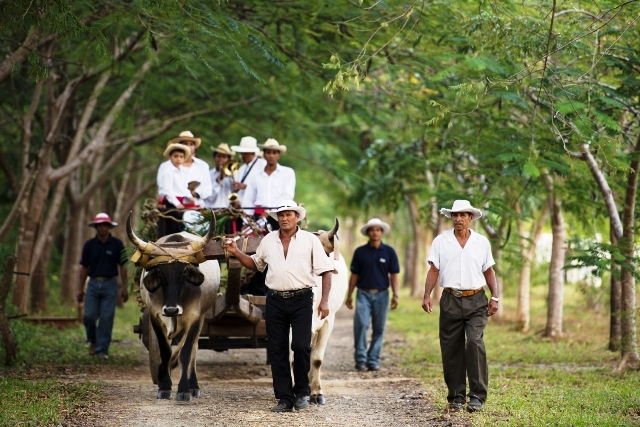
the northwest province of Costa Rica – is known for its rolling grassy plains, “Gold Coast” beaches, towering mountains and volcanoes, sunny dry climate and unique dry tropical forest. For generations “Guanacastecos,” as the residents here are called, have been dedicated to farming, cattle and horse ranching. The “sabanero” (cowboy) traditions, folklore, music and dance are deeply rooted in the country’s culture.

But Guanacaste wasn’t always a part of Costa Rica. Once belonging to Nicaragua, the province joined Costa Rica in 1824, celebrated as the Annexation of Guanacaste Day on July 25. The region’s residents are proud to be Costa Rican. Their motto is “de la patria por nuestra voluntad”, which means “part of this country by our own choice”.
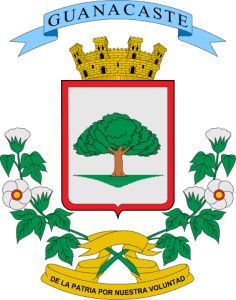
Guanacaste official seal, image by Shadowxfox via Wikimedia CommonsA brief history of Guanacaste, Costa Rica

Most of Central America, once called the Kingdom of Guatemala, belonged to Spain. In 1821, when Central America declared its independence from Spain, the area was divided into five provinces which later became republics: Guatemala, Honduras, El Salvador, Nicaragua and Costa Rica. The region of Nicoya, now called Guanacaste, was considered part of Nicaragua.

However, Nicaragua was involved in many civil wars at the time and was somewhat hostile to the Nicoyans. Costa Rica was stable politically and had a trading relationship with Nicoya. So when the Costa Rica government invited Nicoya to join their country, the Nicoyans agreed. The Central American Federation approved the annexation and on July 25, 1824, Nicoya officially united with Costa Rica.

The region officially became a Costa Rican province in 1848 and was renamed after Costa Rica’s national tree the Guanacaste. The province of Guanacaste covers 3,915 square miles with 11 counties; the capital of the province is Liberia. The Daniel Oduber International Airport in Liberia (LIR) is the principal airport for Costa Rica’s Guanacaste province.
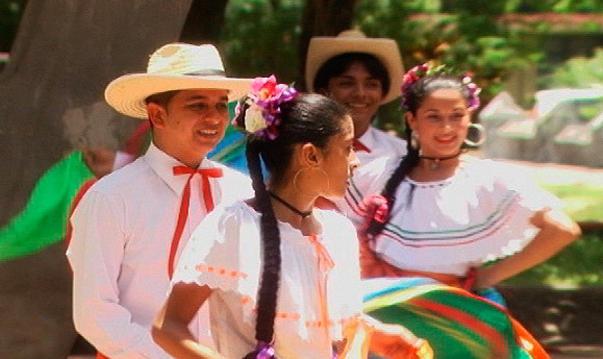
Guanacaste Day celebrations in Costa Rica

Celebrating Guanacaste Day


This year’s Guanacaste Day 2015 commemorates the 191st anniversary of the annexation. July 25 is a nationwide public holiday (banks, schools and government offices are closed).

The revelry is especially big in Guanacaste and usually lasts for several days. There are parades, concerts, folk dances, cattle and horse shows, fireworks and traditional foods. Costa Rica’s national instrument, the marimba, features prominently in typical music. Bull riding and bullfights are also traditional, although the Tico style of bullfighting does not hurt the bull.
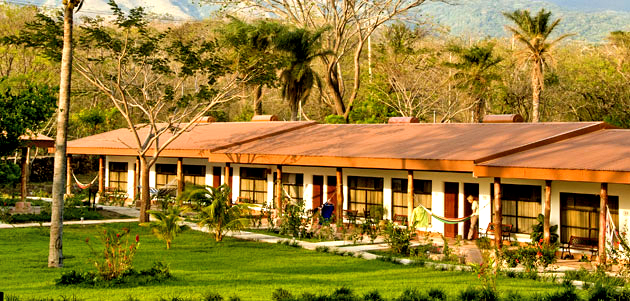
Hotel Hacienda Guachipelin rooms
Hotels in Guanacaste Costa Rica

Next to the Rincón de la Vieja Volcano National Park, 13 miles from Liberia, Hotel Hacienda Guachipelin is one of the best places to stay in Guanacaste. Since 1985, the adventure eco-tourism hotel has been hosting visitors from all over the world on their horse and cattle ranch. Hotel Hacienda Guachipelin offers the best Costa Rica adventure tours, and has been awarded the TripAdvisor Certificate of Excellence.

Article by Shannon Farley

jueves, 27 de junio de 2013

Exciting volcanic action happening at Rincon de la Vieja

With Costa Rica's most famous active volcano – Arenal – behaving quietly for the past three years, tourists to this Central American hotspot are looking elsewhere for exciting fireworks.

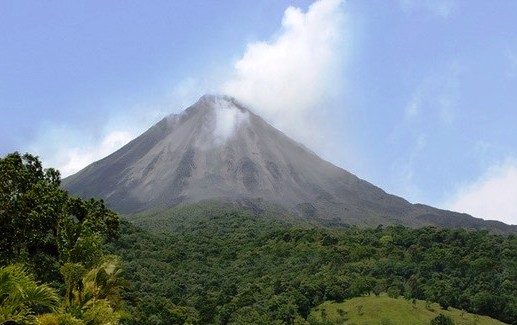
Arenal Volcano in Costa Rica is "sleeping" latelyThere are actually six active volcanoes in Costa Rica, and another 61 that are dormant or extinct. For the past 50 years, Arenal was the country's most active volcano; however, in 2010, the celebrated cone-shaped peak entered a "resting phase" – meaning that its daily and nightly fantastic eruptions have ceased for the most part. While Arenal is still one of Costa Rica's most visited sites, some of the country's other active volcanoes are equally impressive.


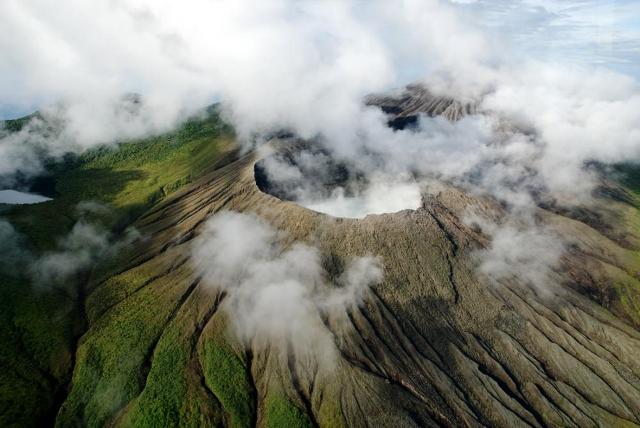
About 3 million years ago, Costa Rica and its neighbors of Nicaragua and Panama were a volcanic archipelago rising from the sea in the "Pacific Ring of Fire," Rincon de la Vieja Volcano, Guanacaste, Costa Ricaan area of the world from Asia to South America infamous for its profuse volcanic activity. Fast forward to 600,000 years ago, and that's when the geologic wonder of the Rincón de la Vieja Volcano was born. Located in Costa Rica's northern Guanacaste plains, the giant cinder cone bridges the Continental Divide as part of nine contiguous craters in the Rincón de La Vieja National Park.

Rincón de la Vieja Volcano, whose name means "Corner of the Old Woman" from an indigenous legend, is the largest volcano in the country's northwest region. Soaring 6,286 feet into the sky, its caldera is 9 miles (15 km) wide. The adjacent dormant Santa Maria Volcano stands even taller at 6,307 feet. The most active crater, called the Von Seebach, has near vertical sides denuded of vegetation near the top and frequently vents steam and gases. The last major eruption was in 1998. The mighty volcano's activity once served as a natural lighthouse for ships at sea
.
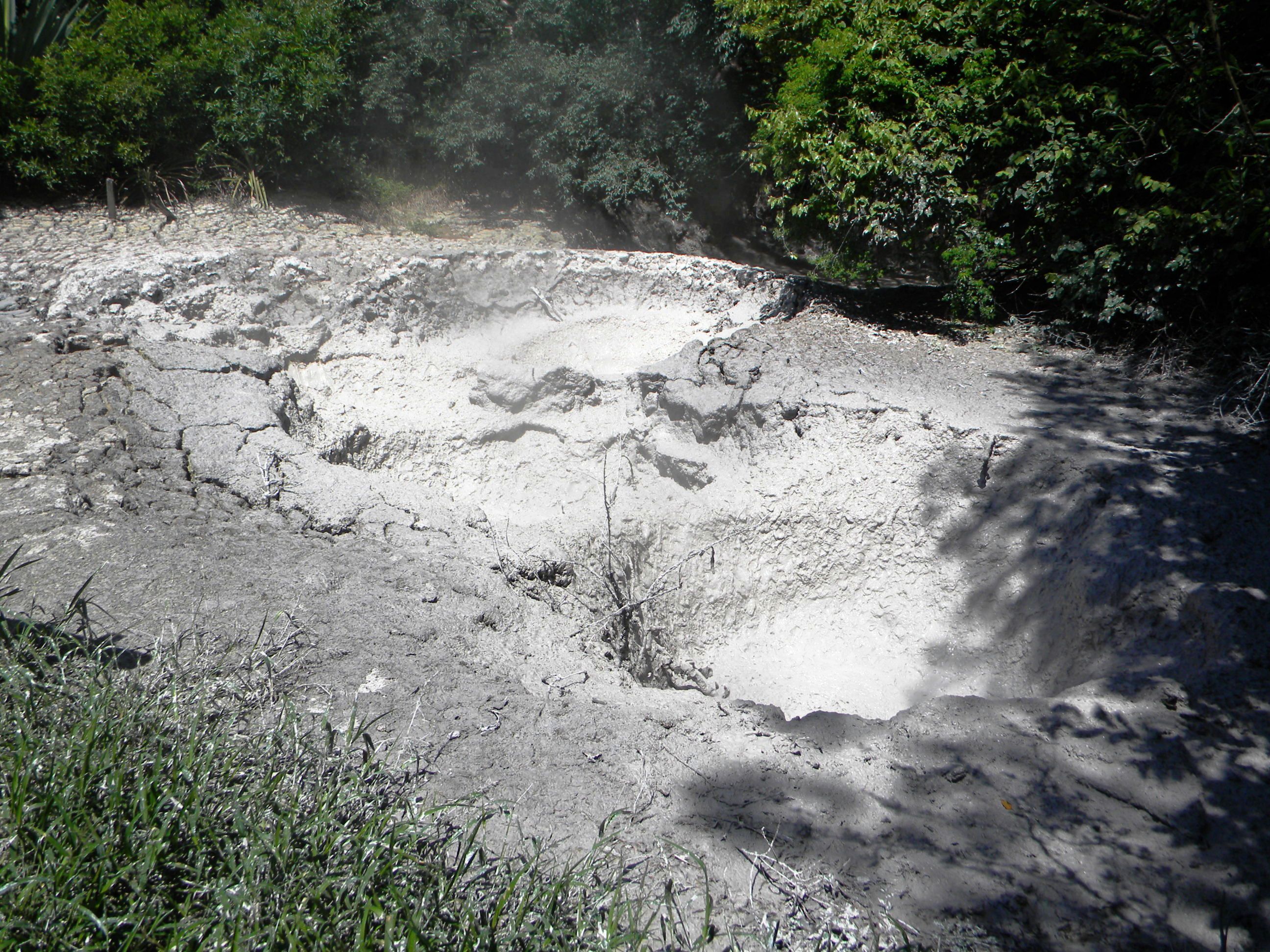
Bubbling mud pits at Rincon de la Vieja National Park, Las Pailas sectorThese days, visitors to Rincón de la Vieja Volcano are treated to quite a show. More than 30 rivers flowing down the mountainsides create countless thermal springs and waterfalls. Walk the easy 2.5 mile loop trail in the National Park's Las Pailas ("The Cauldrons") section, and you'll witness firsthand the explosive steam vents, boiling volcanic sulfur-water pools, and striking bubbling volcanic mud pits. There is a very challenging 6-mile (10 km) hike ascending 5,000 feet to the top of the active crater, however most of the time the trail is closed due to the crater's high activity.


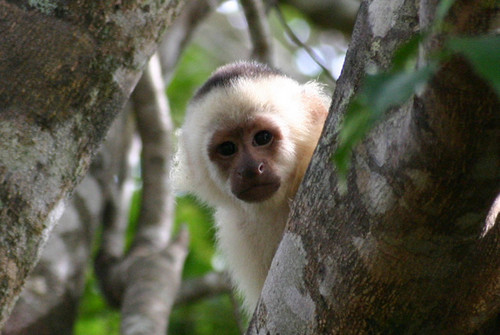
Located 15.5 miles (25 km) northeast of Guanacaste's principal city of Liberia, Rincón de la Vieja National Park's 34,800 acres are split into the two sectors of Santa María and Las Pailas, which has the active crater. The park's diverse ecosystems offer a wide Rincon de la Vieja National Park, white faced Capuchin monkeyvariety of flora. Its high forested slopes are home to gnarled dwarf trees draped in moss mats that provide the arboreal base for orchids and epiphytes. You can find numerous "Guaria Morada" (purple) orchids, Costa Rica's national flower; and in the thick dry tropical forest is an immense 800-year-old Ceiba tree. Wildlife is plentiful. Rincón de la Vieja counts 300 bird species, including the Crested Guan, Blue-crowned Motmot and Emerald Toucanet, as well as a variety of mammals such as collared peccaries, agoutis, nine-banded armadillos, white-nosed coatis, raccoons and three species of monkeys (white-faced Capuchin, howler and spider).

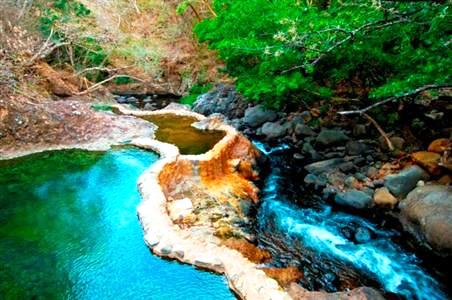
Negro River hot springs at Hotel Hacienda Guachipelin, Rincon de la ViejaNear the Santa María park entrance there are rustic hot springs and a cold water river. By the Las Pailas park entrance, Hotel Hacienda Guachipelin has developed three hot springs locationsSulphur Springs ("Azufrales"), Negro River and Colorado River – where you can soak in soothing steamy mineral waters.
Hacienda Guachipelín Hotel is the ideal place to stay at Rincón de la Vieja Volcano for an active vacation. The first-class ecotourism lodge is a thrilling center for adventure and nature lovers, offering canopy zip lines, canyoning, waterfall rappelling, river tubing, horseback riding, nature trails, and thermal springs – all on a working horse and cattle ranch.

Hacienda Guachipelín offers guided hikes in the Las Pailas sector of the Rincón de la Vieja National Park. The Park Ranger Stations at both the Pailas and Santa Maria sectors of the Park are open daily from 8 a.m. to 4 p.m.
Costa Rica's 6 active volcanoes: * Arenal Volcano (National Park) in the Northern Plains had a massive eruption in 1968 that destroyed the surrounding town. Since then, it has been Costa Rica's most active and most visited volcano; its hot springs are world famous. * Irazú Volcano (National Park), in the Central Valley above Cartago, is the tallest at 11,260 feet, with two calderas filled with water and rising steam. * Poás Volcano (National Park), in the Central Valley above Alajuela, is one of Costa Rica's largest and most active volcanoes. Although the last major eruption was in 1910, Poás still regularly gives visitors a show with geysers of steam, gases and water from its crater acid lake exploding into the air. * Rincón de la Vieja Volcano (National Park) in Guanacaste is highly active with fumaroles, bubbling volcanic mud pits, steam vents and hot springs. * Tenorio Volcano (National Park) in Guanacaste is known for its hot springs and the beautiful Rio Celeste, whose sky blue waters are caused by volcanic minerals mixing together. * Turrialba Volcano (National Park) in the Southeastern Highlands had its last major eruption in 1868; however, smoke and gas explosions have increased over the past couple of years, and today volcanologists maintain a constant vigil.
By Shannon Farley