Mostrando entradas con la etiqueta real estate costa rica. Mostrar todas las entradas

jueves, 14 de enero de 2016

8 Planning Tips For Building A Home In Costa Rica

Untitled Document

Home building Atenas Costa Rica

You’ve bought a beautiful property and now you’re building a home in Costa Rica. Maybe you’re planning to retire in Costa Rica or simply have a Costa Rica vacation home. The beginning stage of construction is the time for planning ahead for all of the features you would like in your new home – music system, alarm system, air-conditioning, appliances, aesthetic details, etc.

Home building Costa Rica

Home construction in Costa Rica is mostly solid concrete walls and floors. So, all of your electrical and plumbing planning has to be done in the beginning stages of construction when the conduits are being prepared. Even if you’re not sure you are going to want a certain feature, plan for it in the beginning so you’re prepared when you decide later that you do. Breaking concrete walls to install wiring or piping is not only labor intensive, it can be terribly expensive. In addition, if you’re moving from the United States, there are many features that you may be used to having in a home that are either not done in Costa Rica or not easy to find. You need to know this ahead of time so you can understand your home construction, and also in case you need to bring that hard-to-find element with you from the States. Home building Costa Rica initial stages

1.For instance,if you’re from the USA,you are probablyused to having agarbage disposal in your kitchen. However,until just recently, you couldn’t buy a garbage disposal in Costa Rica; they are now sold at EPA hardware stores. To be safe, if you want one in your new home, bring what you need from the U.S. But remember to let your builder know at the initial stage of your house construction so that the proper electrical wiring and plumbing are planned for and installed.

2. If you want a high-tech or surround soundHome building garbage disposal system music system in your house, or a security alarm system, make sure your builder knows at the outset to plan for the wiring in the wall conduits. Or, you will end up with wiring on the outside of your walls.

3. Ground fault circuit interrupters(GFCI), or Residual Current Devices (RCD) – a common element in U.S. homes – are not found in Costa Rica. You will need to bring these with you from the U.S. if you want them in your home. A GFCI device is an electrical outlet that shuts off the electric power circuit when it detects that current is flowing along an unintended path, such as through water or a person, or there is a short circuit with an appliance.

4. Water softeners are not common practice either in Costa Rica. You will need to plan ahead for this because the systems are hard to get in Costa Rica.

5. It is not common to have central heating or central air-conditioning systems in homesAir-Conditioning Costa Rica in Costa Rica. Central heating – it’s the tropics; and if you live in a cold mountain area, plan for a wood-burning fireplace. Central air-conditioning is a specialty item that would have to be ordered by a specialty company. Wall unit air conditioners are the norm.

6. If you live in Costa Rica’s Central Valley, you don’t want air-tight seals on your doors and windows because it will interrupt the flow of breezes during the day and hot air going out at night when it cools down. You definitely don’t want to trap heat or cold in your house, or trap humidity. This is specific to Costa Rica’s Central Valley and mountain regions where people don’t often use air-conditioning since temperatures are cooler; as compared to the beach areas which need air-tight homes for efficient air-conditioning use.

7. Like the idea of a decorative gas fireplace in your Costa Rica mountain home? Home building light bulbsThink ahead and either specialty order it in Costa Rica or bring it from the States. They are hard to find here. 8. When choosing lighting for your home, choose lamps and lights that use common size light bulbs. Otherwise you’ll be searching for forever for that specialty light bulb to fit that funky imported lamp you bought.


HOMES IN ATENAS, COSTA RICA

Atenas Costa Rica homes

Atenas, Costa Rica is not only known as a best place for international retirement, but also a fun vacation destination for its ideal location halfway between the capital city of San José and Pacific Coast beaches. Contact Atenas Costa Rica realtors Dennis Easters and Gerardo Porras Gonzalez at Pure Life Development of Atenas for your Atenas Costa Rica real estate needs. For more information about Atenas, check out the Guide to Living in Atenas, Costa Rica and the recent list of restaurants in Atenas. Article by Shannon Farley

jueves, 15 de enero de 2015

A little more about Atenas town´s history: Mules, Oxcarts and the train, how were they related?

Costa Rica has a lot to share and you, a lot to discover from this small country. Its history contains many important facts, lots of which are not so well known. This is the case of how mules, oxcarts, and trains, through time helped to create an important route for the future development and growth of the country, all happening here in Atenas, Costa Rica.

Oxcarts Let´s go back in time to give you a little stroke of what was the situation in Costa Rica in colonial times.

It was the year 1640 and the only way to get around the countries in Central America, was through a well known road, if you can call it a road, named “Camino Real” the Royal Road. These paths and trails left San José and continued its way down to a narrow bridge that crossed the Rio Grande River in Atenas, making all the way to Guatemala.  During the XIX century, the coffee export expansion started to increase and became Costa Rica´s most important export product, which led coffee growers to put a lot more interest in the building of a new road uniting the Central Valley with the port of Puntarenas, where coffee was sent to Europe through the Cabo de Hornos in South America. The road was then built in 1843, replacing mules for oxcarts and oxen giving it the commonly name of “Camino de Carretas” (Oxcart Road). 

Atenas train costa ricaThis road became very important for Atenas since it was the reason for its development and growth as many “sesteos” or boarding houses sprang up along the way to accommodate the boyeros (ox cart drivers) as well as stables where the oxen and horses could rest. Nights filled with music from guitars, accordions, and the typical marimbas surrounded the environment either serenading lovers or setting up the stage for an unforgettable “bailongo” (tradicional dancing party) , while the smell of fresh poured coffee and other typical foods such as tamales and tortillas captivated  the oxcart drivers or “boyeros”, who sometimes traveled along with their families, to spend the night in town.


The road grew very much in traffic but remained narrow in many sections causing accidents and fights and it was necessary to start setting up a set rules and fines in order to organize the oxcart movement.  Some of them restarted travelling right after the “bailongo”, where they had drunk more “Guaro de Caña” (sugar cane moonshine) than they could handle and jumped in their oxcarts and let, literally, that their good old friends, the oxen, drive them since they knew the way home by heart. This gave birth to the Costa Rican saying “montarse en la carreta” (jump on the wagon) referring to somebody who is drunk.

The road lost its importance on July 1910 when a new railway service started, loosing against progress and new technology. The camino de carretas made some of the towns along the way, including our lovely town of Atenas, become a distant memory in the heart of the people of Costa Rica.

But Atenas did not want to disappear. It  continued its way to grow back and be recognized for its importance as a coffee growing region filled with majestic landscapes and one of the best climates in the world, and since the railroad passed through the heart of the town it allowed visitors from the capital city to continue enjoying this lovely town.

 Atenas Railway MuseumNowadays, the train doesn´t work anymore and the only thing remaining which stays intact is a vast group of sweet memories from those good old railroad times, which are carefully and perfectly stored at the Atenas Railway Museum located at the same old railway station. This museum has been opened to the public since September of 2001 and receives visitors on Sundays and holidays from 9am to 6pm.

The museum shows samples of photographs, tools, and objects used during those old railroad times. It is a very nice way to come close with this piece of Costa Rica´s history and for the visitor a unique opportunity to go back in time and understand how everything combined to build what is today your very own Atenas!

Looking to move to Atenas Costa Rica? Try Atenas Real Estate. Reliable realtors Dennis Easters and Gerardo Gonzalez-Porras of Pure Life Development of Atenas offer the best Atenas homes for sale and Atenas real estate.
Article by Gabriela Serrano

miércoles, 21 de mayo de 2014

New development in Atenas, Costa Rica meets high real estate demand

Las Brisas views to San JoseTo the west of the hustle and bustle of the capital city of San Jose, lies the small town of Atenas, Costa Rica. The rural town of farms and coffee plantations sits on the far edge of the country’s Central Valley, where the steep mountains spill down to the Central Pacific Coast.

Atenas is known for having one of the best climates in the world – more sunny days than rainy and moderate temperatures. The reputation has made Atenas a major international retirement destination. AARP, the largest association of retired people in the world, calls Atenas a top 10 place to retire abroad, putting Atenas Costa Rica real estate in high demand.

If you are looking for real estate in Costa Rica, a new option is the residential development of Las Brisas del Valle (Breezes of the Valley), under construction in the Atenas neighborhood of Estanquillos. Located 20 minutes from the town center of Atenas, Las Brisas del Valle is surrounded by beautiful coffee plantations at an elevation of 1,200 meters (3,900 feet). Days are warm and nights are fresh and cool.

Las Brisas Master plan, Atenas Costa RicaLas Brisas del Valle is being developed by Pure Life Development of Atenas in two phases. Phase l features four homesites with panoramic views of San José and the Central Valley. Phase ll consists of four more homesites, with picturesque mountain vistas, naturally divided from Phase l by a beautiful, tree-lined creek that runs year-round and provides a natural wildlife corridor.

Las Brisas home plan in AtenasCustom-built homes at Las Brisas del Valle are designed in a “contemporary tropical” style with a Balinese flair. Each home has been painstakingly crafted to take advantage of the natural topography of the land, the stunning views, natural surroundings and tropical climate. The community rests on eight acres of land, with homes ranging in size from just under 3,000 square feet to nearly 4,000 square feet on lots of 0.5 acres to 1.25 acres.

Pure Life Development of Atenas specializes in real estate for sale and home rentals in Atenas, Costa Rica. Your Costa Rica real estate experts are Dennis J. Easters and Gerardo Gonzalez-Porras, both certified with the Costa Rica Chamber of Real Estate and successfully helping customers find new homes in Atenas, Costa Rica for 10 years.

Article by Shannon Farley

martes, 25 de junio de 2013

Portasol plays key role in Costa Rica biological corridor.

Central America forms a bridge literally between North and South America, which throughout its three million year history has served as a natural biological passageway between the two continents. In the last century, however, much of that corridor has been destroyed by farming and urbanization.
Biologists have determined that biological corridors are one of the most effective methods of conserving biodiversity to maintain genetic fluency between populations of species and prevent against their possible extinction. The concept of wildlife corridors has been around for many years, but in Central America it is being realized on a monumental scale.

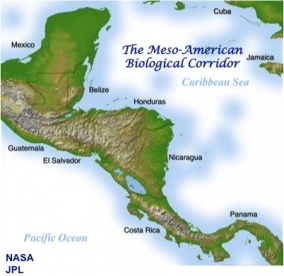
Mesoamerican Biological CorridorIn the 1990s, the eight governments of the region (Panama, Costa Rica, Nicaragua, Salvador, Guatemala, Belize, Honduras and Mexico) agreed to coordinate their efforts to prevent biodiversity loss and create a huge system of interconnected parks, reserves and wildlife corridors that seamlessly link North America to South America. The vision is for an immense biological corridor connecting the forests of southern Mexico to those in the rest of Central America, all the way down to the Panama Canal.

Originally called the "Path of the Panther" and promoted by the Wildlife Conservation Society and by Dr. Archie Carr, founder of the Caribbean Conservation Corporation (now called the Sea Turtle Conservancy) that protects sea turtles on Costa Rica's Caribbean Coast, the project was adopted in 1997 by Central America's governments and changed its name to the Mesoamerican Biological Corridor (MBC).

The scale of the undertaking is massive. So far, Costa Rica is the only country that has elected a strategy of working with community and environmental organizations to create a chain of local biological corridors, using tax incentives, preservation easements, education, decentralized administration, partnerships with international organizations, and outright land purchases. As a result, Costa Rica has experienced a higher level of success in establishing the MBC than other countries in Central America.
Nevertheless, environmental destruction by real estate developers presents a serious threat to the environment. Additionally, if overall funding from international agencies is diminished or discontinued in the near future, it could mean the death of the entire Central American biological corridor project.
Costa Rica Central-Southern Pacific biological corridor

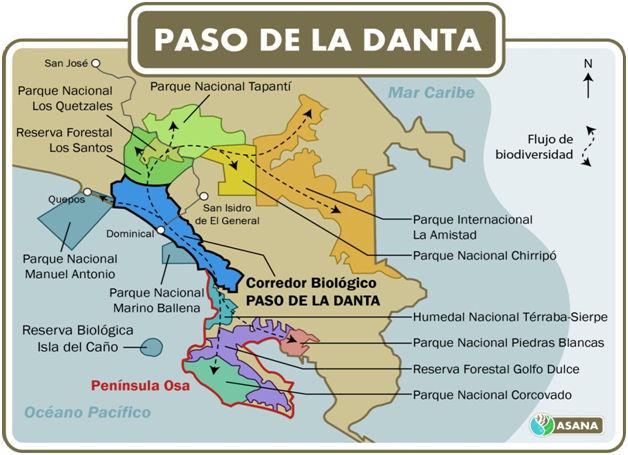
Pacific biological corridors Costa RicaA long chain of coastal mountains extends down Costa Rica's Central Pacific Coast to the Southern Pacific and the Osa Peninsula. These mountains also stretch inland up to the Cordillera Central (Continental Divide) that runs like a long spine from north to south down Costa Rica into Panama.

Here is one of Costa Rica's largest biological corridor projects. Private conservation organizations are working to link the Osa Peninsula Biological Corridor in the south with the Inter-oceanic Biological Corridor, which spreads from the Savegre River Valley in the Central Pacific to the central mountain range and La Amistad International Park into Panama. Included in this area are the Tapir's Path Biological Corridor near Dominical, the Rio Naranjo Biological Corridor and Portasol Biological Reserve, occupying the space between three of Costa Rica's most well-known national parks – Corcovado, Manuel Antonio, and Los Quetzales.
Portasol

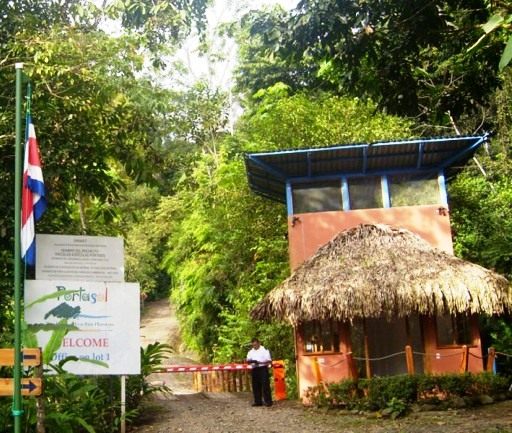
Portasol Rainforest & Ocean View Community entranceThe Portasol Biological Reserve is unique because it is part of the Portasol Rainforest & Ocean View Community land development. Real estate development and conservation of biological corridors might seemingly be juxtaposed, but in Portasol's case, they work in harmony.
"It is a radically different concept of real estate; very different from other private reserves in Costa Rica," remarks Olivier Chassot, Ph.D., land owner at Portasol and Executive Director of the Tropical Science Center in Costa Rica. "Portasol is a good example of what a green economy is. The value of Portasol is in the trees and rivers and animals, and not its houses or hectares."

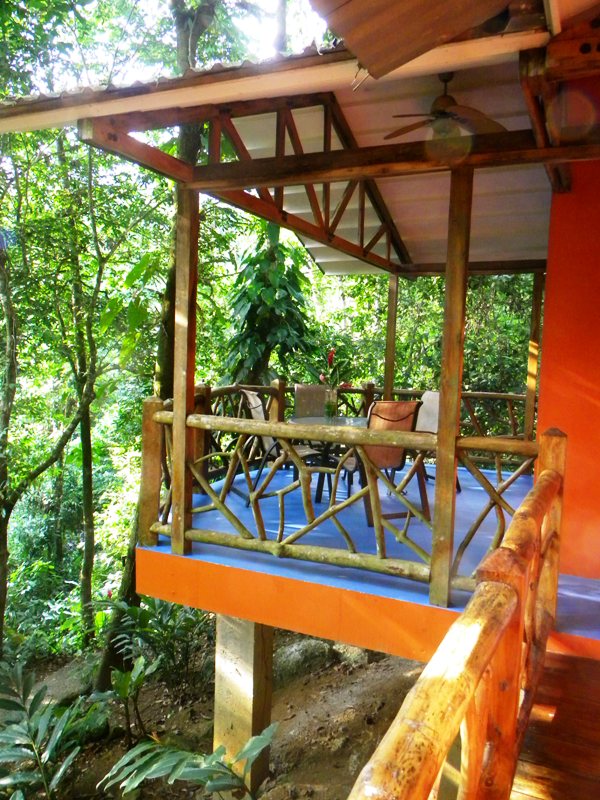
Vacation rental bungalow at Portasol Rainforest Community in Costa RicaPortasol is located in the coastal mountains half-way between Manuel Antonio and Dominical, right near Playa Matapalo and the Savegre River. Set on 1,300 acres of pure rainforest along the Portalón River Valley, the sustainable residential community has building lots for sale and also offers tourism hospitality with unique vacation rentals. Two hundred acres of virgin forest near the top of the mountain has been set aside as a private nature reserve. The development is part of the Inter-oceanic Biological Corridor.

"Portasol is important because it is perpendicular to the mountain range and the sea, in its widest part," explains Chassot. "Birds, insects, animals and trees can move in the corridor and adapt to climate change by moving up with the warming trend."
Chassot noted that Portasol has a good elevation gradient with many different ecosystems. "Portasol has a great potential for biodiversity because of its widely varied environment from flat land to high mountains, valleys, rivers, creeks and forest," he said.
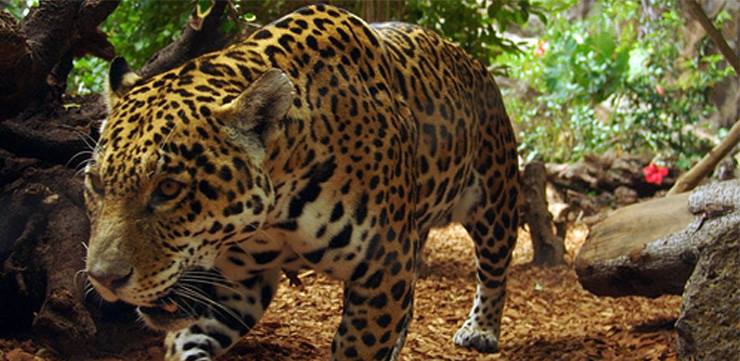
Jaguar in Corcovado National Park, part of Costa Rica's Pacific biological corridorChassot and his wife, Guisselle Monge Arias, Ph.D., both work with numerous conservation organizations in Costa Rica and Central America – the Tropical Science Center (one of the most influential institutions in Latin America in science and conservation), the Great Green Macaw Research and Conservation Project in Sarapiqui, the San Juan-La Selva Biological Corridor near Sarapiqui, and the Mesoamerican Society for Conservation Biology. They purchased a 1-hectare lot at Portasol in January 2013.
"We were really delighted by the forest environment," said Chassot. "We fell in love with the place. The sheer beauty is amazing … water everywhere, the trees. It's a real holistic development."
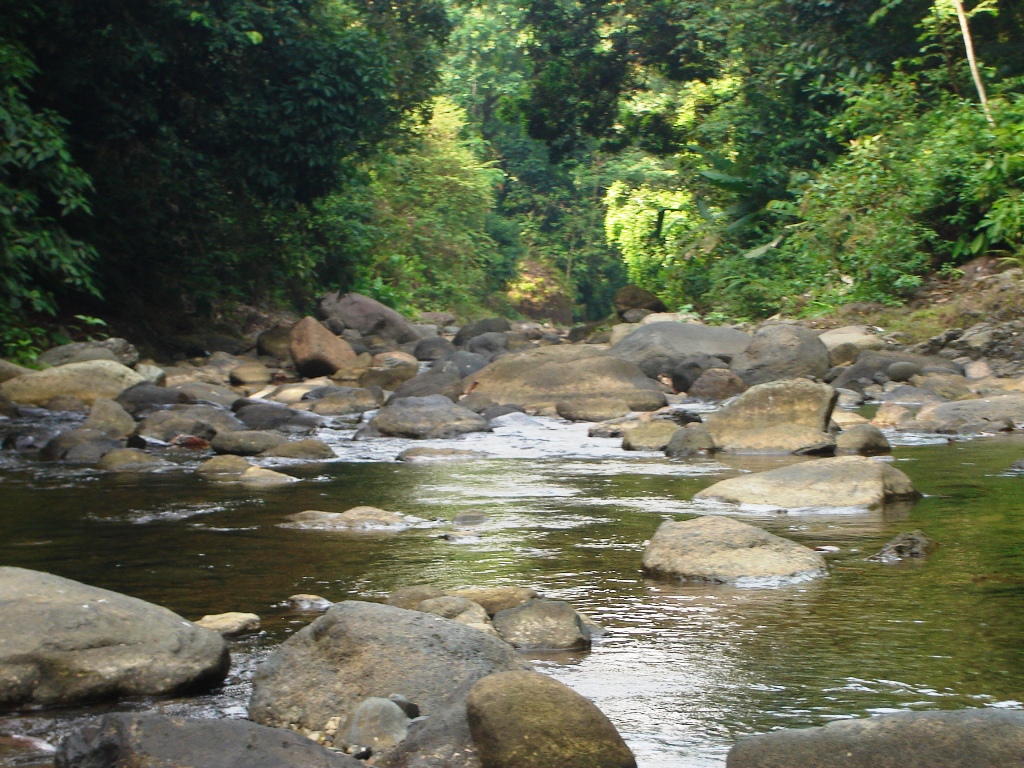
Portasol Rainforest Community river and forests are protectedChassot and Monge agree that Portasol is a model project on land use, offering large properties and a nationally registered ecological easement. The development has a rule that owners may only build on 15% of their land and must preserve the rest in green space. A conservation easement binds heirs and future landowners to comply with the easement's terms, ensuring that conservation purposes are met forever. Conservation easements were pioneered in the United States. Costa Rica, advised by The Nature Conservancy in the early 1990s, was the first country in Latin America to develop conservation easements and land trusts.
"We have been promoting ecological easements in our work," noted Chassot. "It is great that our neighbors will have to respect the terms of the easement and the land will be protected for our kids and grandkids, etc."
Added Monge: "There is much more awareness in Costa Rica today toward nature. People are thinking about preserving the natural resources of the country. Costa Rica is the most advanced nation in Central America in preserving its biological corridors."
By Shannon Farley