lunes, 28 de octubre de 2013

Learning about a country's culture before traveling is key.
Knowing a little something about a country's cultural and social nuances before you travel there could mean the difference between having a fun or a frustrating vacation.
 You'd want the same for a visitor in your own country, so why not make cultural awareness just as important as what you pack when planning an international trip. The more information you gather before traveling to a foreign country, the more open you can be to new experiences and the better memories you will take home with you.
Costa Rica is a typical Latin American country with, of course, its own idiosyncrasies. Follow these 10 cultural tips to get the most out of your trip to Costa Rica.
1. Clothing: San José is like any big city, although relatively casual. Shorts are generally not worn in the city areas; stick to long pants (dresses and skirts also work for women). You'll want dressy casual for the theatre, a concert or a nice restaurant. The high mountain areas (Monteverde, Savegre, Poás Volcano, etc.) can get chilly – pack a light sweater or jacket. Beachwear is, well, what you wear at the beach! Note: Nude or topless (women) sunbathing is not culturally acceptable. For the rainforest and jungle, quick-dry clothing, rain coat or poncho, a sun hat and sturdy comfortable walking/hiking shoes will be your best friends. Leave the fancy jewelry at home.
 2. Greetings: When greeting someone for the first time in Costa Rica, a hand shake is acceptable, or more commonly a light "air kiss" to the person's right cheek (not kissing the cheek!). Costa Ricans generally don't hug anyone who is not family or a very close friend.
3. Polite pleasantries: When greeting someone for the first time in a commercial/business situation – store, restaurant, hotel front desk, tour company, street vendor, etc. – it is customary in Costa Rica to politely greet the person with "Buenos dias" (Good day) or "Buenos tardes" (Good afternoon) and "Como esta?" (How are you?) before asking for anything.
4. Patience: Costa Ricans tend to be in less of a hurry than most Europeans or North Americans. Be patient if things take longer to be done than in your home country. However, the complete opposite is true of Costa Rican drivers, who are chronically impatient.
5. Roads: The road infrastructure (street conditions, bridges and road signage) in Costa Rica is not very developed, so be patient when traveling within the country. People will always try to help if you stop to ask directions.
 6. Try to speak the language: Costa Ricans will wholeheartedly appreciate your efforts if you try to speak a little Spanish. Go for the basics: "Buenos dias, Buenos tardes, Hola, Como esta, Por Favor, Gracias, Adios."
7. Be curious: Costa Ricans love to talk. Take interest in the people around you and ask questions.
8. Don't jump to conclusions: You may not always understand certain situations or people's behaviors for the cultural nuances.
 9. Relax. Costa Ricans are very fun-loving, friendly people. They love to joke, tease and have a good time. Be friendly back. Remember, smiles are free and you're on vacation!
10. Remember, you're in another country: Do not expect things or people to be like they are at home; the magic of traveling is discovering the world's differences. Be positive and patient with the unexpected; remember that language and cultural barriers do exist.
Now that you're culturally aware, book your Costa Rica travel itinerary with Camino Travel. The Costa Rica travel agency has more than 22 years as an incoming tour operator in Costa Rica.
Article by Shannon Farley
Can agriculture co-exist with rainforest in Costa Rica's Caribbean lowlands?
Evidence shows that Costa Rica's 17-year-old deforestation ban on cutting "mature" forests may actually be working, according to a study published recently in the journal Environmental Research Letters.
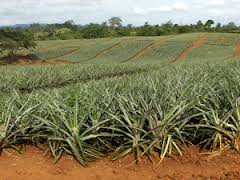 In Costa Rica's northern Caribbean lowlands, in an area where pineapple production tripled over the past decade, a study led by Matthew Fagan of Columbia University found that the annual loss rate of old-growth forest dropped 40 percent despite the region's agricultural boom. Researchers used satellite imagery to determine whether deforestation has been happening to make way for pasture and cropland in the area since the 1996 law was enacted.
"We observed that following the ban, mature forest loss decreased from 2.2% to 1.2% per year, and the proportion of pineapple and other export-oriented cropland derived from mature forest declined from 16.4% to 1.9%," the researchers wrote. "The post-ban expansion of pineapples and other crops largely replaced pasture, exotic and native tree plantations, and secondary forests."
What appears to be happening is that the primary industrial agricultural crops in the region – pineapples and bananas – have shifted to taking over pastureland and non-protected green areas. Mature forests are being protected for the most part; however, there is still not an ecological solution to the agriculture vs. rainforest issue.
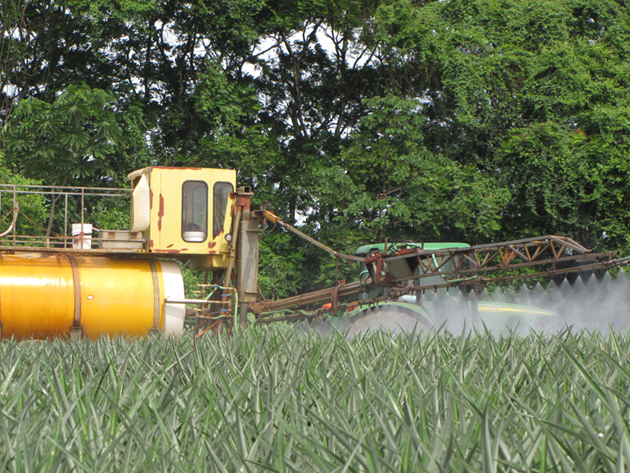 The researchers note that intensive agriculture has taken over important non-protected forests, including wetlands and secondary forests, and that their use of agricultural chemicals puts animals and aquatic habitats at risk. Additionally, they observe that these monocultures offer fewer habitats for wildlife than, for instance, a typical cattle pasture, which usually includes scattered tree cover that can be used by many species. A pineapple farm, on the other hand, is usually devoid of trees and in effect is a biological desert.
"Pineapple and banana production in Costa Rica depends on extremely high applications of fertilizer and toxic pesticides," the study's authors write. "In Costa Rica these agro-chemicals have degraded water quality and disrupted downstream ecosystems, and contaminated forests with pesticides."
Forests and coffee production
 Pineapple-producing companies could perhaps learn a lesson from Costa Rica's coffee farmers, who have found that the more trees their farms have, the more birds live in the area and help reduce pest infestations.
According to a study reported in the Nature Journal, insect-eating birds reduced damage from a devastating coffee pest, the coffee berry borer beetle (Hypothenemus hampei), by about half. The African borer beetle is invulnerable to most pesticides, and can cost farmers up to 75% of their crop.
"Based on this study, we know that native wildlife can provide you with a pretty significant benefit," states Daniel Karp, a conservation biologist at Stanford University in California, who led the study. "Incorporating their conservation into your management of pests is absolutely something you should do."
Costa Rica's success with reforestation
Costa Rica is the first tropical country in the world that has reversed a decades-long process of deforestation – dropping from 85% forest in 1940 to 35% forest by 1980. According to a 2012 World Bank report, Costa Rica was back up to 51.02% forest in January 2010.
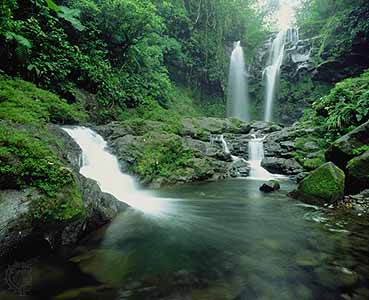 Deforestation and forest degradation, through agricultural expansion, conversion to pastureland, development, destructive logging, fires, etc., account for nearly 20% of global greenhouse gas emissions.
That is more than all of the transportation on the planet, and second only to the energy sector, according to the United Nations Collaborative Program on Reducing Emissions from Deforestation and Forest Degradation in Developing Countries (UN-REDD).
Luckily for Costa Rica, the big business of ecotourism has become an important revenue source and is pushing reforestation and greater environmental protection measures.
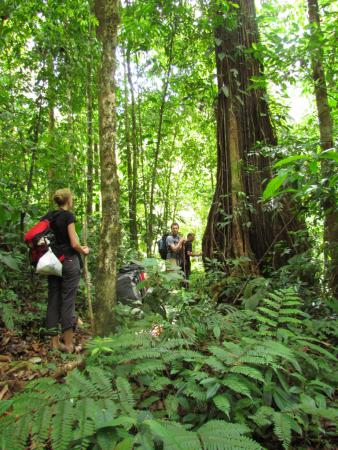 An exemplary conservation project in Costa Rica's Caribbean mountains is Veragua Rainforest Research & Adventure Park. "We're a perfect example of an ecotourism project," says Veragua owner Marti Jimenez. "We're located in a poor area that traditionally was involved in logging, mono-agriculture and hunting. We're turning the region into a conservation-focused area, giving locals jobs and teaching them to protect their resources."
Veragua Rainforest is a 1,300-hectare (3,212-acre) biology research center and adventure park, located about an hour inland from the historic Caribbean port town of Limon. It is an area of breathtaking tropical rainforest next to the Talamanca Mountain Range and the La Amistad ("Friendship") International Park.
Visitors have a complete Costa Rica rainforest experience in a one-day tour at Veragua. The park is a principal day tour for cruise line passengers docking in Limón. Attractions include wildlife exhibits and science labs, an aerial tram, canopy zipline tour, hiking trails, a river with waterfalls, and of course, the rainforest.
Article by Shannon Farley
Related articles
jueves, 24 de octubre de 2013
miércoles, 23 de octubre de 2013
Costa Rica grows as medical tourism destination
 As healthcare costs skyrocket in top nations around the globe, many people are going on sick leave and vacation at the same time.
The world medical tourism industry has become a $10.5 billion business based on the availability of high-quality medical services at reasonable rates in many developing countries. Patients are traveling abroad not only for quick-recovery cosmetic surgeries or dental procedures, but also for sophisticated surgeries, such as cardiac, orthopedics, neurosurgery, Bariatric, and others. Two factors have sparked the growth of international medical tourism even further – world economic troubles increasing the number of uninsured persons, especially in the United States, and the expanding elderly population.
In their home countries, many patients face expensive procedure costs, long wait times, and high demand for cosmetic surgeries and dental procedures that are often not reimbursed under regular health insurance policies. Traveling abroad, however, can save them from 30% to 90% on a procedure including their travel expenditures. Patients in Canada and the UK, for instance, travel to low-cost destinations for their treatments in order to avoid long waiting periods in their own countries.
ABC news in the USA recently reported that U.S. companies are turning to medical tourism to cut employee healthcare costs. They ran a story at the end of September about two U.S. factory workers whose company sent them to Costa Rica for medical procedures, paying the entire cost including travel expenses because it was less expensive than in the U.S. Nearly one million Americans presently travel overseas for medical procedures every year, according to the U.S. Centers for Disease Control and Prevention.
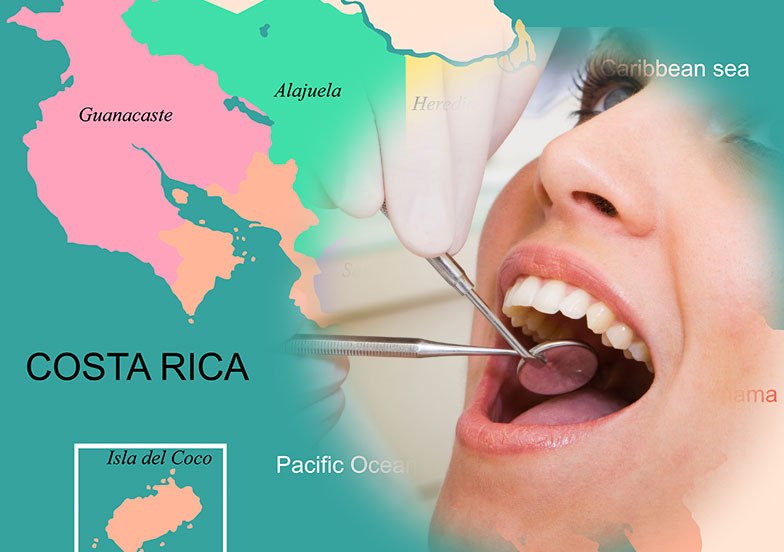 Costa Rica is emerging as a leading health tourism destination for several reasons:
Cost: Medical treatments in Costa Rica average 50% to 70% less than in the United States and Canada.
Accessibility: Americans, Canadians and most Europeans do not require an entrance visa for stays shorter than 90 days. Costa Rica has an established tourism infrastructure and international flights are plentiful.
High-quality medical services: Costa Rica is home to top private and public accredited hospitals and clinics, and many doctors have training, certifications and experience from the U.S. Top private hospitals include Clinica Biblica, CIMA and the Catholic Hospital in the San Jose area; and in Liberia, Guanacaste, the San Rafael Archangel Hospital and Medical Clinic, and ancillary facilities for CIMA and Clinica Biblica. They offer state-of-the-art surgery and recovery rooms and patient facilities.
Tourist destination: Medical patients can take advantage of Costa Rica's famous nature, beaches, volcanoes, lakes and rivers, along with leading international and local hotel chains. Many resorts specialize in yoga and wellness retreats, spas, and weight-loss programs.
 In 2011, 48,000 health tourists came to Costa Rica, mostly from the United States and Canada in search of medical care in dentistry, orthopedics, plastic surgery, preventive medicine, Gynecology and Bariatric Surgery. Costa Rica is looking to boost its numbers to 100,000 medical tourists in 2014. The country will host a national forum for health tourism, ExpoMED 2013, on October 29 in San Jose, to establish standards and guidelines for international health tourism. A new health initiative, called Guanacaste Health and Travel is aiming to attract 3,000 medical tourists to the north Pacific province. In Las Vegas, from November 3-6, the Medical Tourism Association will put on the World Medical Tourism and Global Healthcare Congress.
Visit Costa Rica for Medical Tourism with Valle Dorado Tours
Whether you want to experience paradise before or after your medical treatment in Costa Rica, top travel agency Valle Dorado Tours can take care of planning a relaxing customized vacation for you. Valle Dorado Tours will tailor your trip according to your interests in destinations, hotels, tours and medical facilities.
Article by Shannon Farley
martes, 22 de octubre de 2013
Keep the doctor away by eating these medicinal foods.
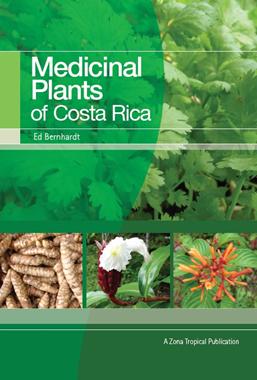 What if keeping a doctor's visit at bay is solved simply by what we eat? Even more, what if herbs grown right in our backyard and foods we can pick up at any corner store can heal what ails us, including the pesky common cold?
Humans have relied on foods and herbs for medicine for thousands of years. In Costa Rica, it turns out that plenty of easy-to-find familiar foods are actually just what the doctor ordered.
Here are 10 top medicinal foods and a list of herbs commonly found in Costa Rica. (Most information is taken from the book Medicinal Plants of Costa Rica by Ed Bernhardt.)
Pineapple: This nutritious, antibacterial tropical fruit contains bromelain, which is effective against certain throat and mouth infections. Pineapple is high in Vitamins A, B and C.
Papaya: The most common fruit in Costa Rica next to pineapple, papaya is effective at treating digestive problems – indigestion and constipation – as well as liver problems, as a diuretic for the kidneys, and to lower high blood pressure.
Coconut: Coconut palms are everywhere along Costa Rica's beaches. People here drink the young coconut water, called "Pipa", which helps revive you after too much sun, too much drink, being seasick, or when you are low on energy. Both the coconut meat and water are used for digestion problems, gastritis, ulcers and liver ailments.
Star Fruit: Called "carambola" in Costa Rica, Star Fruit hails from Malaysia and is a powerful antioxidant with lots of C and B-complex vitamins. The tart fruit is served as a natural juice in Costa Rica and as a garnish.
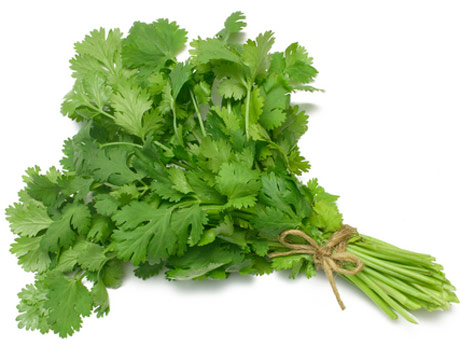 Cilantro: Cilantro, or coriander, came from Europe to the Neotropics and is used preventatively as an antioxidant and natural cleanser. As well it serves for an upset stomach, vomiting and diarrhea. Wild spiny coriander, called "culantro coyote" in Costa Rica, is native to the Neotropics and has the same properties as regular cilantro.
Ginger: Ginger has been used for centuries in India and Asia as a spice and medicine. Ginger is antibacterial and antiviral and can help prevent infections. Use it to treat colds and flu, sore throats, morning and motion sickness, and circulatory, digestive, kidney, and bladder problems. As a natural stimulant, ginger is a good substitute for coffee. Easiest way to use ginger is to boil it into a tea or cook with it as a spice. Sucking on a small piece of ginger will relieve a sore throat and help ease motion sickness.
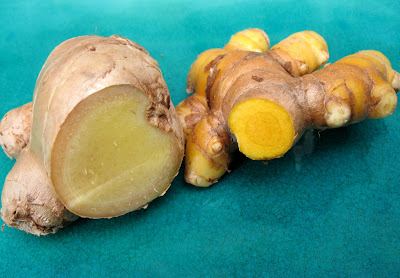 Turmeric: Bright orange turmeric (in the ginger family) has been a staple in Ayurvedic medicine for roughly 6,000 years. It is an antioxidant and has been used to purify the blood, relieve stomach problems, indigestion, liver and gallbladder diseases, arthritis and rheumatism, and for colds and flu. Raw turmeric applied to the skin is effective in treating inflammations, infections, bruises and sprains.
Lemongrass: Originally from India, lemongrass grows prolifically in Costa Rica. Lemongrass tea (made by simply boiling fresh leaves) is used to treat colds and flu, gastrointestinal disorders, nervous conditions, pain and inflammation. Add ginger and honey to your tea to really knock out a cold.
 Honey: One of the most well-known antibacterial foods in the world, honey has been used medicinally by many different cultures for centuries. Long before synthetic antibiotics were developed, honey was used as an antibacterial treatment for wounds and illness. Studies have documented honey's effectiveness in treating cuts, burns, insect bites, yeast infections, various skin conditions, and fungal infections. Honey also is nature's natural energy and immune system booster.
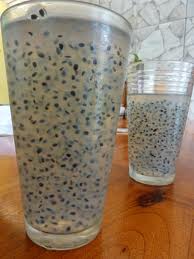 Chan: This strange seed drink is still served in many Costa Rican "sodas," or local diners, though most people don't know what it is. Native to Central America, the seeds of this roadside plant have been used to relieve indigestion, gastritis and constipation. The drink – made by mixing dry black Chan seeds in water with honey for sweetener – looks like a glass of milky frog's eggs. However, Chan is very healthy … and it doesn't taste like frog's eggs!
Herbs: There are numerous beneficial herbs, which are a great way to flavor meals and prevent disease at the same time. Here is a list of herbs you can find easily in Costa Rica with antibacterial properties:
- Basil
- Bay leaf
- Cardamom
- Chili peppers (Cayenne)
- Cilantro (Coriander)
- Cinnamon
- Cloves
- Cumin
- Dill
- Mints – spearmint and peppermint
- Oregano
- Pepper
- Rosemary
- Thyme

 All of these medicinal foods and more are served in the healthy gourmet cuisine of the Buddha Eyes Restaurant at Pranamar Oceanfront Villas & Yoga Retreat at Santa Teresa Beach. The luxury Costa Rica beachfront hotel fronts the internationally-renowned Playa Santa Teresa on the southern Nicoya Peninsula. A TripAdvisor 2013 award winner, Pranamar Villas features daily yoga classes, yoga retreats and workshops, all-inclusive yoga vacations, surfing and yoga holidays, and has a beachfront spa.
Article by Shannon Farley
Suscribirse a:
Entradas (Atom)