miércoles, 24 de septiembre de 2014

Bringing the trees back to Playa Guiones, Costa Rica

Playa Guiones at Nosara on the Nicoya Peninsula, Costa RicaLike many beaches in Guanacaste, Costa Rica, Playa Guiones doesn’t have much shade. The coastline is lined with long grasses, shrubbery, very-low-to-the-ground stubby trees and some tall palm trees here and there.

A nonprofit NGO in Costa Rica is working to change that. The Green Coasts Conservation Association (La Asociación Conservacionista Costas Verdes) is dedicated to conserving and restoring coastal ecosystems in Costa Rica by strategically reforesting beaches with native species of trees. Since its founding in 2008, the organization so far has projects on Hermosa Beach by Jacó on the Central Pacific Coast, the restoration project at Playa Guiones by Nosara in Guanacaste, and a large nursery for native species starter trees.

BarriGuiones Coastal Reforestation Project nursery at Playa GuionesReforesting the beaches not only brings much-needed shade from the blazing tropical sun, it also helps control erosion and re-introduces food sources for local wildlife.

Playa Guiones at Nosara is one of the most beautiful beaches on the Guanacaste Pacific Coast. Renowned for some of the best surfing in Costa Rica and a competition location for the national surfing circuit, the uncrowded white sand beach was recommended as one of the best places to go in 2014 by CNN and National Geographic.

The coastal reforestation project at Playa Guiones – called BarriGuiones – began in 2011. Many native trees have already been planted with the goal to reforest approximately seven kilometers along the beachfront. The region had been deforested for cattle and other livestock in the 1960s, along with much of the rest of the Guanacaste Coast.

Green coastal paradise at L'acqua Viva ResortThe small staff of Green Coasts Conservation Association attains its success by actively involving Tree planting L'acqua Viva 04the local communities, schools and businesses for economic support, education and volunteers. Nosara hotel L’acqua Viva Resort & Spa at Playa Guiones is a Gold sponsor of the organization. In addition to the extensive sustainability practices at the Costa Rica luxury hotel, they inform hotel guests about the activities of the association and promote involvement.

A symbol of L’acqua Viva Resort’s partnership with Green Coasts Conservation Association is a fledgling Kapok tree (Ceibo Barrigón) planted close to the parking area of the hotel. The Kapok joins an extensive list of trees that are already planted in the hotel’s large gardens, and which were preserved during the hotel’s construction as part of the company’s commitment to conservation.

Article by Shannon Farley

lunes, 22 de septiembre de 2014

Nature-themed hotel brings green oasis to urban José Costa Rica

Costa Rica Children's Museum, San JoseEach neighborhood in San Jose, Costa Rica has its own personality and character. The culturally-rich neighborhood of Barrio Amon in the capital city’s downtown center is urban, eclectic and funky. There are lots of art galleries, restaurants, cafés, bars, museums and cultural attractions.

The Caribbean bus station is close. So is the Costa Rica Center of Science and Culture with the Costa Rica Children’s Museum and National Gallery.
In this busy, urban setting, there is a San Jose hotel that chose to be an oasis of green amid the concrete. Inspired by butterfly gardens and the rainforest, Cocoon Hotel in San Jose, Costa Rica fits right in with the eclectic feel of Barrio Amon.
Cocoon hotel in San Jose Costa RicaCocoon Hotel is celebrating its second anniversary during this month of September, with 35% discounts on all room rates. Low season discounts also are being offered now through December 2014.
You can celebrate with Cocoon Hotel at an anniversary dinner on Friday, Sept. 26, in the fourth floor restaurant of the hotel. Dinner of typical Costa Rican dishes will be accompanied by special drinks prepared by the Cocoon Hotel chef. The intimate event also will feature popular music. The dinner begins at 6:00 p.m. and is open to the public.
As a three-star San Jose, Costa Rica hotel, Cocoon provides good value for comfortable lodging in a well-located spot. The hotel’s 43 Cocoon hotel room San Jose Costa Ricasingle, double and triple occupancy rooms offer flat-screen TV with cable channels, daily room service, safety deposit box, free Wi-Fi and local calls, soundproof windows, and a private bathroom with free toiletries. Rooms may have a fan or air-conditioning; be sure to ask for your preference when making reservations.
They have secure guarded parking and offer other amenities such as a business center, tour desk, currency exchange, hotel bar, and a deli restaurant serving lunch and snacks. Buffet breakfast is included in all room stays. An airport shuttle service is available for an extra fee.
There are always things to do in San José Costa Rica. Don’t miss the XX International Guitar Festival happens in San Jose from Sept. 24 to 28, with performances by fabulous national and international artists at the National Theatre and other downtown San Jose theatres.
Article by Shannon Farley

jueves, 18 de septiembre de 2014

Going deep into the Lost Canyon on a Costa Rica canyoneering adventure

Canyoneering in Arenal Costa Rica

Part mountaineering and part rock climbing, but in reverse, with the added challenge of pounding water, the waterfall rappelling extreme sport of canyoneering is the latest top popular adventure tour in Costa Rica.
Canyoneering waterfall in Arenal Costa RicaOne of the best places for canyoneering, also called canyoning, is by the Arenal Volcano in Costa Rica. The rugged, mountainous rainforest around the popular volcano is ideal for canyoning in Costa Rica.
Operated by Desafio Adventure Company, the Lost Canyon Canyoning Tour at Arenal is a must for adventure junkies and thrill-seekers. Deep in the Costa Rican rainforest, the Lost Canyon got its name when Desafio owners Suresh and Christine Krishnan were exploring the beautiful canyon on the outskirts of the Children's Eternal Rainforest at Arenal that was so “lost” it wasn't even on the topographical maps at the time.
You don’t need experience for this canyoning tour; just a good sense of adventure and good physical condition. What’s involved? You will hike through the rainforest, get drenched rappelling down huge tropical waterfalls – the largest is almost 200-feet-high, navigate the natural obstacle course of a river canyon, jump into refreshing pools, slip down natural water slides and splash in pure rainforest water. When you’re done, the tour serves you a great typical Costa Rican lunch at their café.
Professional guides thoroughly explain important rappelling and down-climbing techniques, along with safety procedures before you start. You will use high-quality technical climbing gear, like Edelrid helmets and Sit Work harnesses. All rappels are controlled by guides.
Canyoneering waterfall rappeling in Arenal Costa RicaThere are four rappels on the tour, including the first confidence-building 10-foot drop aptly named “Baby”, the 150-foot waterfall known as “Big Boy”, and a guided rappel and guided free-fall drop down a 200-foot majestic cascade. Feel the adrenaline surge! A photographer accompanies all trips, and during lunch after the tour, you can review the photos for purchase.
Desafio also combines Lost Canyon Canyoneering with horseback riding to the La Fortuna Waterfall or whitewater rafting; or you can do a private canyoneering tour. Extreme adventure enthusiasts will want to also try the new Gravity Falls Jumping Canyon Rainforest Adventure Course – an intense canyoning tour that involves rappelling and some waterfall jumps.
Desafio Adventure Company is an owner-operated, family business that operates Costa Rica adventure tours in Arenal of whitewater rafting, canyoneering, kayaking, mountain biking and hiking, as well as activities in other popular Costa Rica destinations.
Article by Shannon Farley

viernes, 12 de septiembre de 2014

The famous Friday Farmers’ Market in Atenas Costa Rica

Atenas farmers' market
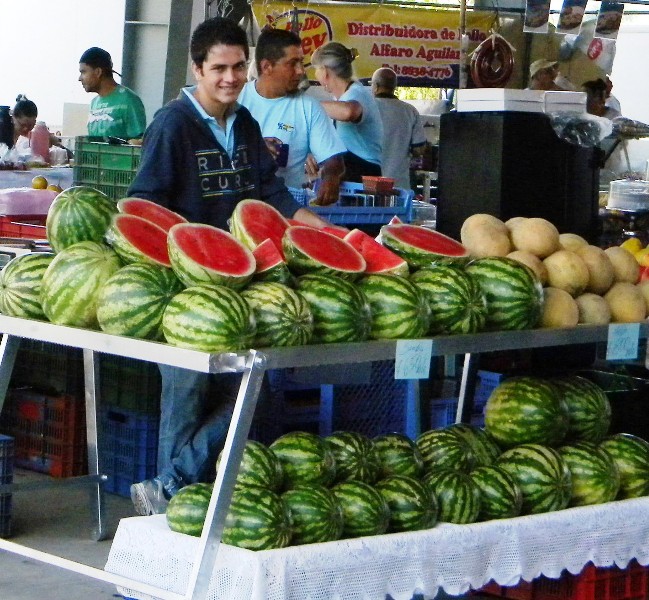
It is a Friday morning in my little mountain coffee town of Atenas, Costa Rica. The traditional Friday Farmers’ Market, called a “feria” in Spanish, is abuzz with shoppers and vendors.

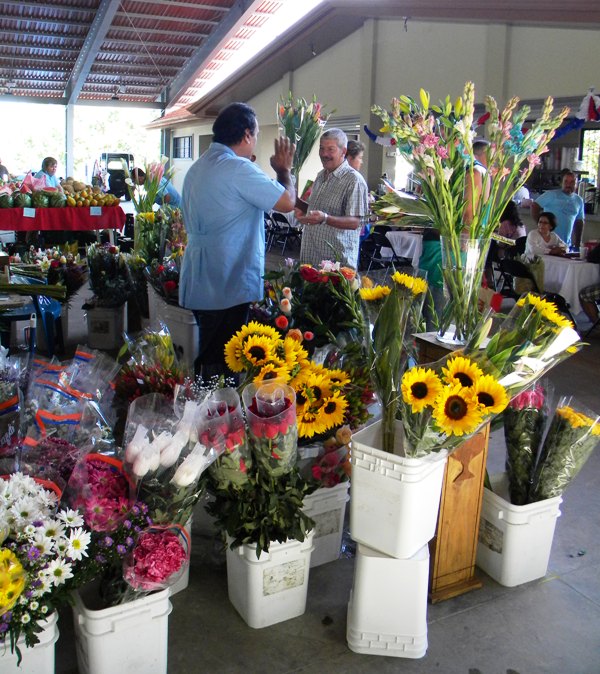
Fresh flowers at the Atenas Costa Rica marketMounds of mangoes, melons, watermelon, pineapples and a myriad of other fruits juicily beckon buyers. Crisp lettuces, spinach, cilantro and other greens glisten with water droplets. Fat potatoes, onions, sweet potatoes, yucca and carrots stack in pyramids.

The flower man
is doing brisk business cutting stems and wrapping up bright yellow sunflowers, lilies, Gerbera daisies, and a rainbow of other flowers. The herb man sits in his aromatic stall surrounded by cooking and medicinal herbs in packets, bunches and plants. 

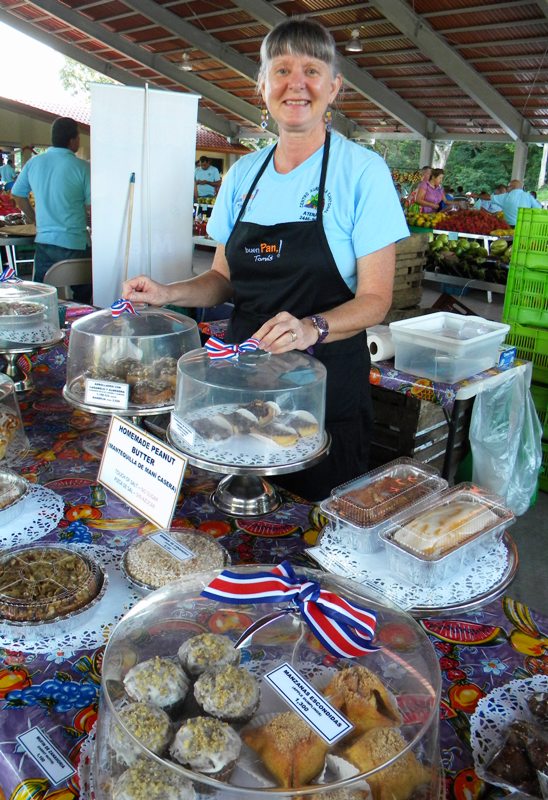
The back corner of the market resembles a mini-nursery with the amount of potted flowers and starter trees on sale. Just beyond, gleaming glass cases proudly display fresh meats, cheeses and fish. And who can pass up the sweet frosted cinnamon buns, fresh breads, and tempting pies and cookies of “Buen Pan, Tomas!” bakery run by Atenas residents Tom and Jan Yatsko, from Pennsylvania.

A hallmark of Atenas culture and tradition, reflecting small town country life, the famous Atenas Friday Farmers’ Market is one of the things I love best about living in Atenas, Buen Pan Tomas bakery at the Atenas marketCosta Rica. The market is so well-known, it has been written about in most travel guides to Costa Rica and blogged about regularly by new transplant residents.

The Farmers’ Market recently changed location and got an upgrade at the end of August. Once spread around the edge of a small park by the Central Elementary School in the center of town, the new Farmers’ Market has relocated to the radial road connecting Atenas to Highway 27 (the main highway from San Jose to the Central Pacific Coast). The new locale is quite capacious with open sides and a cavernous permanent roof – in the past vendors suffered under tents and tarps in the rain or blistering summer sun. The floor is smooth, clean concrete, and there are two little lunch counters and modern public restrooms. A free bus shuttles shoppers back and forth to the center of town (5 minutes) every hour.

Whether you are visiting Atenas in one of the many vacation homes, or have already moved to Costa Rica, the Atenas Friday Farmers’ Market is a fun way to spend an hour or two and soak up the local culture. The market is open from 6:00 a.m. to 8:00 p.m. Fridays.


The small country town of Atenas has been named a top place to retire and is renowned for its great climate. Looking to buy real estate in Costa Rica? Reliable realtors Dennis Easters and Gerardo Gonzalez-Porras of Pure Life Development of Atenas specialize in Atenas homes for sale, home rentals, and Atenas real estate.

Article by Shannon Farley

jueves, 11 de septiembre de 2014

6 Reasons Why Beach Yoga in Costa Rica is Best

Yoga on the beach Practicing yoga outdoors has many benefits, especially at the beach. In addition to beautiful scenery and fresh air, it takes balance, concentration and strength to hold yoga poses in the sand, so you get more of a workout.
Here are six reasons why yoga is fun on the beach, from Nancy Goodfellow, resident yoga instructor and co-owner of Pranamar Oceanfront Villas & Yoga Retreat in Santa Teresa, Costa Rica.


Yoga tree pose on beach1. You tune into nature. Sunshine, sand, salt air and fresh breezes are invigorating.
2. It’s relaxing at the beach. The sound of waves and seabirds, soft wind, and warm sand all have a calming effect. Doing yoga at sunrise or sunset on the beach adds an extra gentleness.

3. Rhythm of waves and breath. One of the most important elements of yoga is breathing – stimulating calmness and giving your muscles oxygen. The sound of ocean waves mirrors the sound of deep breathing. Fresh ocean air cleans out your lungs and gives you an energy boost, along with the positive vibes from negative ions.

4. Challenge your balance. Practice doing yoga poses on unsteady sand, and you’ll soon find a whole new level of balance and stability you didn’t know you had.

5. No mats needed! Sand is much softer and more shock-absorbent than a wooden or ceramic floor. It is gentler on your joints and a good cushion for practicing challenging postures like handstands or crow.
6. You can go for a swim afterward!
Santa Teresa Beach at Pranamar Villas
Yoga on beachAt the beachfront Santa Teresa, Costa Rica, hotel Pranamar Villas, you have the best of both worlds for practicing yoga. Yoga in Costa Rica and yoga retreats at Pranamar Villas are held in their stunning open-air Yoga Shala, looking out to the blue Pacific Ocean, palm trees and white sand. Step outside and you are right on the beach.
Pranamar Oceanfront Villas & Yoga Retreat holds daily yoga classes open to hotel guests and the public. International yoga retreats are open to anyone to join. Private and semi-private classes may be scheduled at any time.

Article by Shannon Farley

miércoles, 10 de septiembre de 2014

Celebrate Costa Rica Independence Day 2014 in Guanacaste

Independence Day parade Costa RicaParades, lantern ceremonies, traditional music and dancing will take place all over Costa Rica this weekend to mark the day that Costa Rica and four other Central American nations gained their independence from Spain.

Costa Rica, Nicaragua, Guatemala, El Salvador and Honduras are all celebrating 193 years of independence from Spain on Sept. 15. On this day in 1821, a Central American congress signed “The Act of Independence” asserting they were free of the Spanish Empire.

Unlike other independence declarations in the Americas, the Central American states did not have to fight for their liberation. Spain actually supported Central American independence because the region had become a burden for the empire, which was exhausted from other wars.

Independence Day Costa Rica mapAlthough Sept. 15 is the day when independence was declared, news of Costa Rica’s new freedom did not reach the territory until almost a month later on Oct. 13, because a messenger had to travel on horseback from Guatemala. Costa Rica finally became a completely independent state in 1838, when it separated from the Central American republic.

For the Mes de la Patria, or “Month of the Nation,” buildings, businesses and even cars are adorned with blue, white and red Costa Rican flags, streamers and decorations throughout September. Monday, Sept. 15, is a national holiday and businesses, banks and government institutions will be closed.

Liberia, the capital city of Guanacaste, Costa Rica, traditionally celebrates Independence Day with colorful events.
Independence Day lantern ceremonyOn Sunday, Sept. 14, the patriotic party begins at precisely 6:00 p.m. with the Costa Rica National Anthem broadcast nationally on TV and radio. Then comes the traditional nighttime lantern parade (Desfiles de Faroles) reenacting the “freedom torch” that notified Costa Rica of its freedom. Children carrying colorful homemade paper lanterns in the shape of little houses and other objects will parade with their families in town squares. There are usually also typical dances and fireworks.

Monday morning, Sept. 15, school bands and dancers in traditional costumes march through the town streets. Traditional foods are usually sold by street vendors. The celebrations are well-attended by families and are a lot of fun.

Hotel Hacienda GuachipelinOne of the best places to stay in Guanacaste near Liberia is Hotel Hacienda Guachipelin. In the foothills of the Rincon de la Vieja Volcano, the adventure eco-tourism hotel is also a working horse and cattle ranch. Now in green season, you can enjoy great Costa Rica travel deals at Hotel Hacienda Guachipelin.

Article by Shannon Farley

jueves, 4 de septiembre de 2014

Does real eco-tourism exist in Costa Rica?

Trails Playa Nicuesa Costa RicaThere is a lot of talk in travel about eco-tourism and being sustainable. But what does that really mean? Is that simply turning off a few lights, not wasting water and recycling the trash?

According to the United Nations, sustainability is “meeting the needs of the present without compromising the ability of future generations to meet their own needs.” Costa Rica pioneered sustainable tourism over the past decade through its Certification for Sustainable Tourism Program (CST), validated as a global model by the United Nations.

Created by the Costa Rican Tourism Board (ICT), the CST program rates and certifies tourism businesses based on their compliance with natural, cultural and social resource management. CST consists of five levels, called “Leaves”; Level five, or Five Leaves, signifies that the company is considered “outstanding in terms of sustainability.” The rating process can take more than a year to complete, with frequent inspections and evaluations, and the highest levels are very difficult to obtain.

Beach at Playa Nicuesa Rainforest LodgePlaya Nicuesa Rainforest Lodge is one of only three dozen hotels in Costa Rica that have received the highest rating for sustainability of Five Leaves

The extraordinary Costa Rica eco-lodge was constructed in harmony with the environment from naturally fallen trees and recycled materials. A true Costa Rica rainforest lodge, it is located on a 165-acre private preserve in the dense tropical rainforest bordering the Piedras Blancas National Park and the pristine Golfo Dulce (Sweet Gulf) by the Osa Peninsula in southern Costa Rica

Since the only way to get there is by boat across the pristine waters of the Golfo Dulce from either the towns of Golfito or Puerto Jimenez, you can imagine how difficult it was to build.
“We traveled all over Costa Rica and other parts of Central America to find and create a special place where one can intimately experience the natural world of both the tropical rainforest and the Pacific Ocean,” explained Playa Nicuesa owners, Michael and Donna Butler. “Our plan was to create a place that offers the comfort of a lodge and the activities and diversity of an adventure tour.”
    Playa Nicuesa bungalow
  • Lodge buildings are located on less than 2% of property – 98% is a private protected area.
  • Used recycled construction materials, such as: roof tiles on the lodge and cabins made from recycled plastics, including banana bags.
  • Wood came from naturally fallen trees, permitted by the government to be pulled out of the forest by oxen, or from farmed trees.
  • Electricity is provided by solar energy. Panels are located on main lodge structure. Back-up generator runs on recycled vegetable oil.
  • Solar drying room used to dry all of the lodge wash.
  • Hot water is provided by on-demand propane which means that the propane is used only when the hot water faucet is turned on.
  • Received the Ecological Blue Flag Award for clean beaches.
Check out Playa Nicuesa Rainforest Lodge Green Season Specials for adventure, nature, yoga, relaxation and comfort at great prices through Sept. 30, 2014.
Article by Shannon Farley