jueves, 4 de diciembre de 2014

Win a trip to Playa Nicuesa Rainforest Lodge in Costa Rica with cookbook photo contest

Whenever I travel anywhere that serves delicious meals, I always think, “How can I recreate this at home and enjoy it again?”
Edible Landscape Cookbook at Nicuesa LodgeIn the case of Playa Nicuesa Rainforest Lodge in Costa Rica, now I can. The Costa Rica rainforest lodge by the Osa Peninsula has released a free PDF downloadable Edible Landscape Garden Cookbook with a collection of 38 of their most popular recipes.
Read any of the TripAdvisor reviews about Playa Nicuesa Rainforest Lodge and guests always mention the delicious fresh meals, tropical fruit and creative cocktails. Now you can create a little bit of tropical paradise right in your own kitchen.
“Playa Nicuesa Rainforest Lodge was conceived in 2003 as a place where visitors would enjoy an intimate experience with the natural wonders of the Costa Rica rainforest and the Pacific Ocean, while enjoying an adventurous and sustainable vacation.

Guests enjoyed our fresh and locally-sourced food so much that our family-style meals soon became a central part of the Nicuesa Lodge experience. More and more guests would ask us for our recipes to take home with them, and so was born the idea for our Edible Landscape Garden Cookbook,” write Nicuesa Lodge owners in the book introduction. “Our recipes became a clear reflection of Nicuesa’s overall philosophy: authentic, fresh, natural, fun and sustainable.”
Edible Landscape Photo Contest at Nicuesa LodgeYou can even enter a photo contest based on the new cookbook to win a four-night vacation for two persons at the Costa Rica eco-lodge.
The photo contest is easy. Simply download the new Edible Landscape Garden Cookbook from Playa Nicuesa Rainforest Lodge, and prepare any recipe you wish from the collection. Snap a fun photo of you, your family and/or friends enjoying the delicious dish and submit your photo on Nicuesa Lodge’s Facebook photo campaign page.

Then tell all of your friends to vote for your photo. The photo with the most votes by Dec. 15 wins!
The winner will receive a four-night stay for two persons in a double Mango Guesthouse roomsRoom in the Mango Guesthouse at Playa Nicuesa Rainforest Lodge with all meals, unlimited use of kayaks, snorkeling gear and fishing equipment, self-guided hikes throughout the 165-acre preserve, and boat transfers between the lodge and either Golfito or Puerto Jimenez.

The stay at Playa Nicuesa Rainforest Lodge is valid between May 1, 2015 through September 30, 2015, or November 16, 2015 through December 15, 2015 (all dates subject to availability). See the official rules on the Facebook page for more details.
You definitely don’t want to miss this opportunity to win a trip for two to the fabulous eco-lodge located on a 165-acre private preserve by the Piedras Blancas National Park on Golfo Dulce in southern Costa Rica. So get cooking and snapping!
Article by Shannon Farley

martes, 2 de diciembre de 2014

Discover Costa Rica’s awe-inspiring volcanoes

Volcano Kilauea in Hawaii, image by USGSEmphasizing the power of Mother Nature with images of fiery lava and explosive ash plumes, volcanoes have lit up the world news lately.
Mt. Pavlof volcano in Alaska has been intensely erupting since Nov. 12, spewing ash clouds up to 30,000 feet above sea level. The lava flow from Kilauea Volcano advances slowly across the Big Island of Hawaii, continuing its 31 years of near-continuous eruptions.
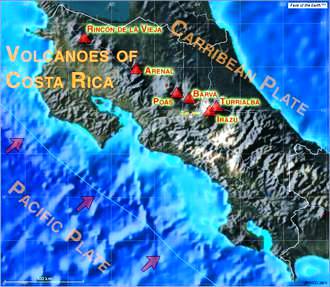
Costa Rica’s volcanoes also are in the news. The sudden eruption of Turrialba Volcano on Oct. 29 was the largest in 150 years, according to the National Seismological Network (RSN). The massive phreatic explosion ejected ash and rocks from the 3,340-meter-high volcano, the easternmost of Costa Rica's active volcanoes.
Costa Rica volcanoesPoás Volcano erupted strongly on Oct. 14, ejecting mud and water from its green acid crater lake more than 200 meters into the air, all the way to the observation platform. Northwest of the capital city of San José, Poás is one the most visited – and most active – volcanoes in Costa Rica.
Costa Rica may be a small country but it has abundant active volcanoes lined up down the center like pearls on a chain. There are 10 major volcanoes; among the most active are Poás, Turrialba, Arenal, Rincon de la Vieja, and Irazú volcanoes.
At 3,432 meters, Irazú is Costa Rica's highest volcano, and is opposite Turrialba Volcano. Since a major eruption in 1968 brought it to life, Arenal Volcano has become one of the major tourist attractions in Costa Rica.
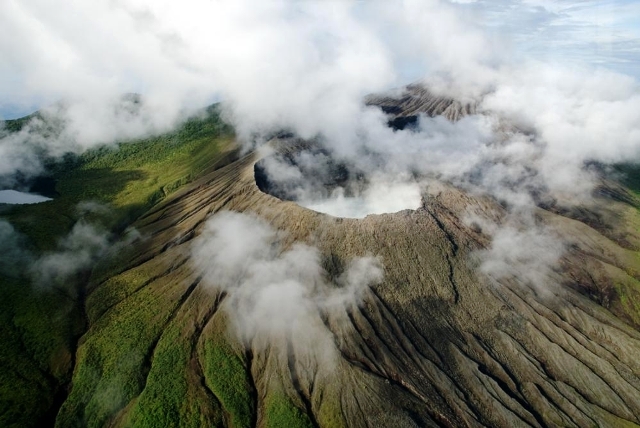
Rincon de la Vieja Volcano in Costa RicaRincón de la Vieja is the largest and most active volcano in the Guanacaste Range in northwest Costa Rica. At 15 kilometers wide, the approximately 9,000-year-old caldera, is known as the “Colossus of Guanacaste.” Rincón de la Vieja also recently increased activity, with phreatic explosions from the main crater starting Sept. 17.
In Guanacaste, Costa Rica, you are ideally located to visit Rincón de la Vieja Volcano when you stay at Hotel Hacienda Guachipelin. The adventure eco-tourism hotel is one of the best Guanacaste hotels, and received the TripAdvisor Certificate of Excellence for 2014.

Providing the best Guanacaste, Costa Rica adventure tours, Hacienda Guachipelin also hosts the annual adventure races of the North Face Endurance Challenge and the Rincon de la Vieja Challenge.
Article by Shannon Farley

Great Green Macaws return to northern Costa Rica Eco Lodge


One of the most magnificent birds in Costa Rica is the Great Green Macaw.
This time of year, from October through December, Great Green Macaws (Ara ambiguus) return to the Maquenque Wildlife Refuge, Costa RicaMaquenque National Wildlife Refuge in northern Costa Rica from the Indio Maiz Biological Reserve in Nicaragua. Following their main food source of mountain almond tree fruits that are now in season, the Macaws return to this vital habitat of rainforest and wetlands in Costa Rica.
The Maquenque National Wildlife Refuge preserves nearly 150,000 acres that contain mountain almond trees (Dipteryx panamensis) which endangered Great Green Macaws use for food and nesting. Formed in June 2005, the refuge is one of the biggest habitats for Great Green Macaws in Costa Rica, and is an important part of the Mesoamerican Biological Corridor.
Great Green Macaws at Maquenque LodgeGreat Green Macaws are the largest parrots native to Costa Rica, along with Scarlet Macaws. “The Great Green Macaw is a stunning parrot with vibrant plumage,” notes Wildscreen Arkive.org. The head, back and upper wings are bright green in color with turquoise blue on the edges of the wings and tip of the tail. There is a scarlet red patch on the tail and across the forehead; the rest of the face is bare with distinctive lines of black feathers.
Great Green Macaws are only found in the Atlantic wet lowlands of Central America, from Honduras to northern Colombia, with a small isolated population in Ecuador. Loss of habitat and logging of mountain almond trees has largely caused their population to decline to only between 1,800 to 2,500 mature Great Green Macaws left in the world, according to Bird Life International.
Maquenque Eco-lodge bungalowsVisit Maquenque Eco-lodge now in November and December to see the Great Green Macaws. The Costa Rica eco-lodge is located next to the Maquenque National Wildlife Refuge on 68 acres of tropical rainforest with eight kilometers of trails. With more than 410 identified species of birds, Maquenque is one of the top bird-watching hotels in Costa Rica.
Article by Shannon Farley

Travel trends: Vacation rentals are the new way to stay

Vacation rental Atenas Costa Rica

Planning your next vacation? You might be used to staying in hotels and resorts, but maybe you should consider vacation rentals. More independent travelers are choosing to rent private homes and apartments these days instead of hotels, using websites like Airbnb and VRBO.
Vacation rentals are often the most economic travel option for families and groups of friends, giving more space and amenities at better value than a hotel room. Living like the locals also helps to give that authentic travel experience.
Luxury vacation rental Atenas Costa RicaWhat is a vacation rental?
Vacation rentals are typically privately-owned apartments or homes that are rented by the day, week or month. They tend to be second homes for owners who live somewhere else and use the property for income and their own vacations.

M
ost vacation rentals are fully stocked with towels, linens, all appliances, fully-equipped kitchens with the basics such as spices, cooking oil and coffee, once-weekly housekeeping, internet, cable TV, and a property manager who is on call 24/7. Other services often can be arranged at an extra cost, such as daily maid service, private cook, and transportation and area tours.
Why are vacation rentals so popular over hotels?
Vacation home rental Atenas Costa Rica“In most cases, a vacation rental home is more economical. There is more space, a stocked kitchen, the ability to do laundry, more privacy, and the feeling of being ‘home’,” explained Florida native Dennis Easters, a world traveler living in Atenas, Costa Rica. “Also, a vacation rental allows you to live a bit more like the locals, even if for only a short time.
“For the past five years or so, our family has only stayed in vacation rentals because this mode of lodging best fits our lifestyle. I like to wake up early, have a cup of coffee, check e-mails and go for a walk, all before everyone else rolls out of bed. In a traditional hotel, this is a challenge without waking everyone up. Another advantage is that with a home or apartment, you have enough room to spread out and have a break from one another after a long day of sightseeing.”
Vacation rental Atenas Costa RicaOver the past seven years, vacation rentals have become very popular in Costa Rica, said Easters, who is co-owner of Pure Life Development of Atenas real estate. The charming mountain town of Atenas, Costa Rica, is a top place to retire and is popular for vacation rentals for the same reasons: location and climate. Less than an hour’s drive away are the capital city of San Jose to the east and some of the best Pacific Coast beaches to the west. The San Jose international airport is only 30 minutes away, and Atenas is known for having the “best climate in the world.”
Planning a Costa Rica vacation or looking to buy real estate in Costa Rica? Don’t miss Atenas Costa Rica vacation rentals and Atenas homes for sale.
Article by Shannon Farley

lunes, 1 de diciembre de 2014

Educational tourism at Lirio Lodge in Costa Rica helps community

Students canoeing at Lirio Lodge Costa Rica

Educational tourism
is one of the fastest growing areas of travel and tourism. Not just for students, educational travel is about learning and being involved in community action projects while traveling and relaxing on vacation.
Costa Rica offers a wide variety of educational travel and volunteer opportunities for people of all ages. An excellent destination for educational tourism and volunteer groups is Lirio Lodge by Tortuguero in Costa Rica.
Lagoon by Lirio Lodge Costa RicaThe Costa Rica eco-lodge is located in an area of the northern Caribbean Coast, between the port city of Limon and the Tortuguero National Park, where the famous whitewater rafting river, the Pacuare, meets the Caribbean Sea.
“It is like Tortuguero 20 years ago before it was developed, with the same wetlands and lowland rainforest, lagoons, beaches and turtles that come to nest,” noted Lirio Lodge operations manager Helberth Chavarria Madrigal.
Lirio Lodge location in Costa RicaThe closest community of Pacuare Sur (South Pacuare) is tiny with maybe 100 persons in residence. The area is surrounded by water between the ocean, the Pacuare River and the immense Mother of God Lagoon (named after the “Madre de Dios” river that forms it).
“The community here is very poor. There is no electricity. There is only one classroom with one professor for 10 students, each in different grades. And this one professor must give classes to all of them. He has to travel 25 kilometers each way every day to teach; one hour by bus and 15 minutes by boat each way,” Chavarria explained.
Resources in the community are precious and meager, he said. For this reason, Lirio Lodge focuses on Costa Rica educational tourism to bring student groups to the Costa Rica jungle lodge both to experience and learn about the amazing nature of the area, and to contribute to the community with betterment projects.
“When groups ask us for volunteer projects, we try to help the community and the school as much as we can,” said Chavarria.
Lirio Lodge Costa RicaLirio Lodge primarily receives groups of university students who are in Costa Rica on language study programs for several months. The students come to the lodge on weekends to do community work. Among the community improvements educational tourism students have made are: building a dining room for the school, constructing dry pathways above the swamp mud to the school entrance, creating gardens, cleaning up trash, building a new bathroom for the school, and improving the school’s water storage and usage.
Lirio Lodge offers one-day tours, and a two-day-one-night package with boat and hiking tours, lodging, all meals and roundtrip transport from San Jose.
Article by Shannon Farley

Fascinating facts about plants of Costa Rica

Else Kientzler botanical gardens Costa Rica

The fascinating fact about plants and trees in Costa Rica is that each one has a story, or a folk tradition or a specific use. There is much more than meets the eye in this tropical paradise.
Ovido Esquivel, director of the Else Kientzler Botanical Garden in Sarchi, Costa Rica, uncovered the mystique of some of Costa Rica’s commonly found plants and trees, which you will more than likely see in your travels around Costa Rica.
Bougainvillea

Bougainvillea
(veranera in Spanish): Native to South America, the vibrantly-colored thorny climbing bush is a favorite plant in Costa Rica gardens, and can be found in shades from purple to fuchsia, red, pink, orange, white, and a myriad of hues in between. “People like to grow these in their gardens because they produce flowers all year long,” noted Esquivel. “In rural areas on farms, chickens use bougainvillea vines to make nests to sleep up off the ground. My grandmother had a bougainvillea and it was always full of chickens.”
Calathea lutea

Cuban cigar plant
(Bijagua in Spanish; scientific name: Calathea lutea): In Costa Rica, this plant is very popular in gardens and it also grows frequently along roadsides, especially in the Caribbean region. The Bijagua plant is so common in Costa Rica, that the town of Bijagua de Upala in northern Costa Rica is named after it. “The indigenous used the leaves to wrap their tamales and to cook fish over coals,” said Esquivel. “Field workers in Costa Rica use the leaves to wrap up their lunch in a pouch and carry it to work.”
Wandering Jew plant

Wandering Jew
(cucaracha in Spanish; scientific name: Zebrina pendula): This colorful and fast-growing plant grows wherever it touches soil. Wandering Jew can grow as a thick groundcover, or vertically on trellises or on the sides of buildings, or in hanging baskets. “Traditionally, grandmothers planted these in old buckets around the house, and used the leaves to regulate menstruation, for gastritis, or to cure cuts and skin rashes,” said Esquivel.
Walking palm

Walking Palm
(palmera maquenque or palmito amargo in Spanish; scientific name: Socratea exorrhiza): Native to Costa Rica, this palm tree produces a bitter fruit that traditionally was eaten during Easter Week, Esquivel noted. “It is very unique the wood of this tree,” he said. “It is super flexible and at the same time very hard and resistant. Indigenous people use this wood for their houses.”
Kapok tree

Kapok tree
(Ceiba in Spanish; scientific name: Ceiba pentandra): This tree is considered one of the giants of the tropics. Kapok trees can grow up to 165 feet (50 meters) tall, and are popular for their shade and quick growth. “In the indigenous culture of Central America the tree is sacred; they believe that the first humans were conceived from the Ceiba tree from the womb of the immense trunk,” Esquivel explained.
The Else Kientzler Botanical Garden in Sarchi is open every day from 8:00 a.m. to 4:00 p.m. Guided walks are available in English, Spanish and German with advance reservations, or you can go on a self-guided tour.
Article by Shannon Farley

miércoles, 26 de noviembre de 2014

The best ways to get to Santa Teresa Costa Rica

Santa Teresa Beach by Hotel Tropico Latino

You want to visit Santa Teresa, Costa Rica – named one of the most beautiful beaches in the world with some of the best surfing in Costa Rica. But where is it and how do you get there?
Santa Teresa Beach is located on the Pacific Coast of Costa Rica on the southern Nicoya Peninsula. There are three ways to get to Santa Teresa, Costa Rica: driving, domestic flight or boat taxi.
Hotel Tropico Latino beachfront suiteHotel Tropico Latino is a Santa Teresa beachfront hotel at beautiful Playa Carmen. Hotel Tropico Latino specializes in Costa Rica surf holidays and yoga retreats in Santa Teresa, Costa Rica. They feature a charming property of four acres of lush gardens right on the sand, comfortable and luxurious accommodations, a beachfront spa, yoga classes and an award-winning restaurant.
To drive to the beach towns of the southern Nicoya Peninsula – Santa Teresa, Mal Pais, Montezuma and Tambor – you take the ferry from Puntarenas to Paquera. Be sure not to take the ferry to Playa Naranjo. The ferry takes about 75 minutes to cross the Nicoya Gulf. Arrive to the ferry terminal at least one hour early if it is high tourist season or a holiday.
In Paquera, follow the signs for Cobano and Mal Pais. In Cobano, drive straight through town and turn left after 1 kilometer, toward Mal Pais. The road turns into dirt. After 8 km, you will arrive at the Mal Pais crossroads; turn right to Hotel Tropico Latino and Santa Teresa. Drive time from Paquera is about 90 minutes.
Ferry schedules can be found here. Maps can be found here.
Buses: There are public buses daily from San Jose to Santa Teresa / Mal Pais.
Sansa AirlinesHow to get to Santa Teresa, Costa Rica by plane
There are many daily flights from San Jose to Tambor on Sansa Airlines and Nature Air; flights are a quick 35 minutes. From Tambor, Hotel Tropico Latino can arrange taxi transport for you or you can rent a car; drive time is about 40 minutes.
How to get to Santa Teresa, Costa Rica by boat taxi
Zuma Tours boat taxi from Jaco to MontezumaZuma Tours operates daily boat taxis from Herradura Beach near Jacó to Montezuma. This is a good transportation option in summer season. Boats travel in the morning, when the weather is usually nicer. Travel time is one hour. Boats range in size between 26 and 30 feet long and carry 12 to 30 passengers with luggage. From Montezuma, Hotel Tropico Latino can arrange a taxi to Santa Teresa.
Article by Shannon Farley